Rheumatoid Arthritis: How Biologic DMARDs Can Lead to Disease Remission
 Dec, 1 2025
For many people with rheumatoid arthritis (RA), the daily pain, swelling, and stiffness aren’t just inconvenient-they’re life-limiting. Before the 2000s, RA was often a slow, steady march toward joint destruction and disability. Today, that’s no longer the norm. Thanks to biologic DMARDs, remission isn’t a dream-it’s a realistic outcome for a growing number of patients.
What Are Biologic DMARDs and How Do They Work?
Biologic DMARDs, or disease-modifying antirheumatic drugs, are targeted therapies made from living cells. Unlike older drugs like methotrexate that broadly suppress the immune system, biologics zero in on specific parts of the immune response that drive inflammation in RA. They block proteins like tumor necrosis factor (TNF), interleukin-6 (IL-6), or T-cell signals that tell your body to attack its own joints. These drugs didn’t appear out of nowhere. The first one, etanercept (Enbrel), got FDA approval in 1998. Since then, more than a dozen have followed. They’re not magic pills. But they change the game. Studies show that 20-50% of patients on biologics reach remission, compared to just 5-15% on traditional drugs alone. That’s a huge jump.Types of Biologic DMARDs: TNF vs. Non-TNF
Not all biologics are the same. They’re grouped by what they target. TNF inhibitors are the oldest and most widely used. This group includes:- Etanercept (Enbrel)
- Adalimumab (Humira)
- Infliximab (Remicade)
- Golimumab (Simponi)
- Abatacept (Orencia): Slows down T-cell activation
- Rituximab (Rituxan): Depletes B-cells involved in autoimmunity
- Tocilizumab (Actemra): Blocks IL-6, a key inflammatory signal
- Anakinra (Kineret): Inhibits IL-1, less commonly used now
How Effective Are They at Achieving Remission?
Remission doesn’t mean RA is gone forever. It means inflammation is so low that symptoms are minimal or absent, joint damage stops progressing, and you can live normally. For many, that’s life-changing. Clinical trials show:- Up to 50% of patients on biologics reach remission
- Only 10-15% do so on methotrexate alone
- Patients on JAK inhibitors like tofacitinib or upadacitinib show even higher remission rates in head-to-head trials

Cost, Access, and the Rise of Biosimilars
There’s no sugarcoating it: biologics are expensive. In the U.S., annual costs range from $50,000 to $70,000. That’s 5 to 10 times more than methotrexate. But things are changing. Since 2016, biosimilars-highly similar versions of originator biologics-have entered the market. They’re 15-30% cheaper. By mid-2023, they made up 35% of TNF inhibitor prescriptions in the U.S. On Reddit, patients using biosimilars reported 27% lower out-of-pocket costs. But some worry about switching from the original drug. Studies show biosimilars are just as safe and effective. Still, insurance approval can take 7-14 days, and not all plans cover them equally. In countries with public healthcare, access varies wildly. In the U.S. and Western Europe, 25-30% of RA patients get biologics. In lower-income regions, that number drops to 5-10%.Side Effects and Safety Concerns
Biologics aren’t risk-free. Because they dampen parts of the immune system, you’re more vulnerable to infections. Serious infections like tuberculosis or pneumonia happen more often than with traditional DMARDs-about 1.4 times higher risk. Other common issues:- Injection site reactions (redness, itching, swelling)-reported by 45% of users
- Headaches, nausea, fatigue
- Increased risk of certain cancers (rare, but monitored)
How to Use Biologic DMARDs Successfully
Getting the most out of these drugs isn’t just about taking the shot-it’s about how you manage your treatment. Self-injection: Most biologics are given by subcutaneous injection (under the skin). It sounds scary, but 75% of patients master it after just two training sessions with a nurse. Tools like auto-injectors make it easier than ever. Adherence matters: Missing doses reduces effectiveness. If you’re struggling to remember, use apps like ArthritisPower or MyRApath to track symptoms and medication. Monitor your health: Regular blood tests and check-ins with your rheumatologist are non-negotiable. Watch for fever, chills, or unusual fatigue-signs of infection. Support helps: Manufacturer patient assistance programs can cover 40-100% of costs for qualifying patients. Specialty pharmacies handle delivery, storage, and education. Don’t be afraid to ask for help.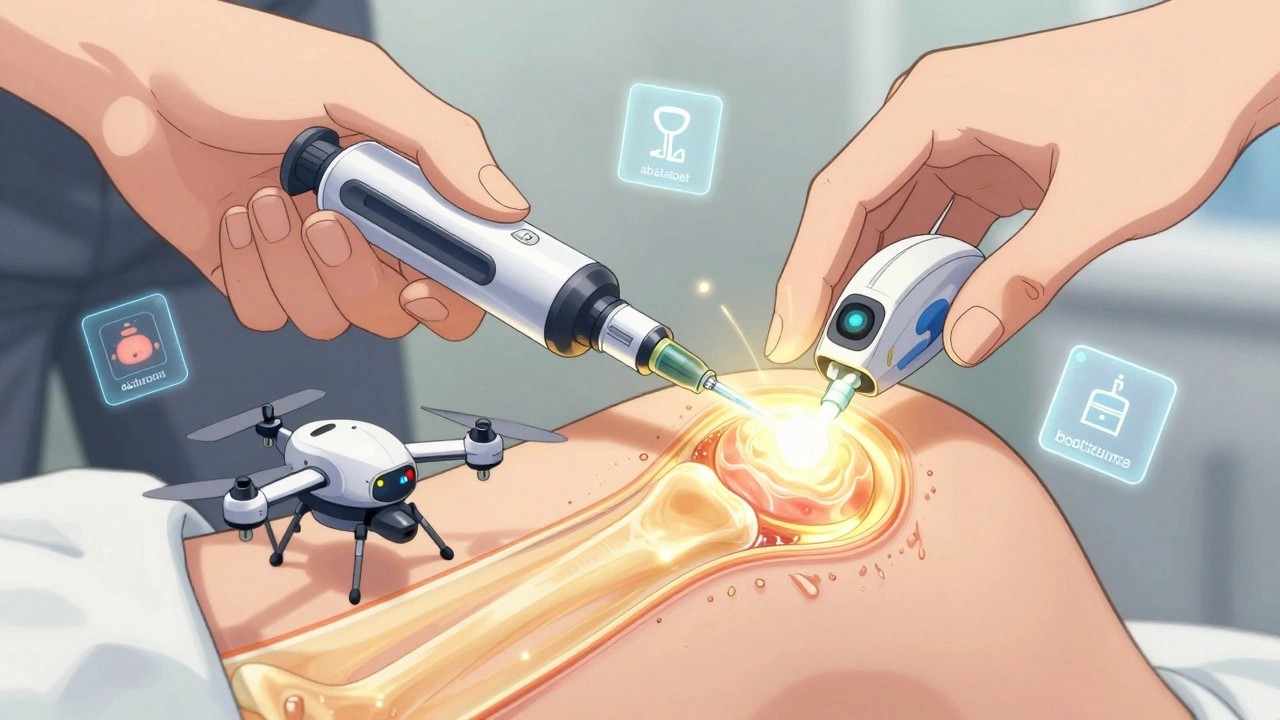
The Future: Personalized Treatment and New Options
The next wave of RA treatment is personalization. Researchers are studying synovial tissue samples to predict which biologic will work best for you. One 2022 study in Nature Reviews Rheumatology showed that molecular profiling could guide drug selection better than guesswork. New drugs are coming fast. Upadacitinib (Rinvoq), a JAK inhibitor, beat adalimumab in direct trials. Baricitinib showed 28% higher remission rates in real-world data. Longer-acting versions are in development-like a twice-yearly tocilizumab injection now in Phase III trials. By 2027, biosimilars are expected to make up 60% of the biologic RA market. That means more access, lower costs, and more people reaching remission.What If It Doesn’t Work?
If your first biologic fails, don’t give up. But don’t just try the next one randomly. Research shows diminishing returns with each switch. Joel Kremer, a rheumatologist at Albany Medical College, says: “The benefit of each new biologic gets smaller. Choose wisely.” Your doctor should consider:- Why the first drug failed-was it lack of response, side effects, or cost?
- Which mechanism it targeted-switching to a different class (e.g., from TNF to IL-6 blocker) works better than staying in the same group
- Your biomarker profile, if tested
Final Thoughts: Remission Is Possible
Rheumatoid arthritis used to mean lifelong pain and decline. Now, thanks to biologic DMARDs, remission is within reach for many. It’s not easy. It’s expensive. It requires patience and monitoring. But for thousands, it’s working. If you’re still struggling with RA symptoms despite methotrexate, talk to your rheumatologist. Ask about biologics. Ask about biosimilars. Ask about testing. You don’t have to live in pain. The tools to change that are here-and they’re getting better every year.Can biologic DMARDs cure rheumatoid arthritis?
No, biologic DMARDs don’t cure rheumatoid arthritis. But they can induce remission-where inflammation drops so low that symptoms disappear and joint damage stops. Many patients live symptom-free for years while on treatment. Stopping the drug often leads to flare-ups, so most people stay on it long-term.
How long does it take for biologic DMARDs to work?
TNF inhibitors like adalimumab or etanercept often start working in 2-6 weeks. Non-TNF biologics like abatacept or rituximab may take 3-6 months to show full effect. Some patients notice less morning stiffness or swelling within days. But remission usually takes several months of consistent use.
Are biosimilars as good as the original biologics?
Yes. Biosimilars are highly similar to the original biologic in structure, safety, and effectiveness. The FDA and EMA require rigorous testing before approval. Studies show no meaningful difference in outcomes or side effects. Many patients switch successfully, especially when cost is a barrier.
What’s the biggest risk of taking biologic DMARDs?
The biggest risk is serious infection, including tuberculosis, pneumonia, and fungal infections. Before starting, you’ll be tested for latent TB. You should avoid live vaccines and report fevers, coughs, or unusual fatigue immediately. Skin reactions and injection site issues are common but usually mild.
Can I take biologic DMARDs with methotrexate?
Yes, and often it’s recommended. Combining a biologic with methotrexate improves effectiveness and reduces the chance of your body developing antibodies against the biologic. Many patients start on methotrexate first, then add a biologic if needed. This combo is one of the most proven strategies in RA treatment.
What if I can’t afford biologic DMARDs?
You’re not alone. Many manufacturers offer patient assistance programs that cover 40-100% of costs for qualifying incomes. Biosimilars are significantly cheaper-often 15-30% less. Talk to your rheumatologist and pharmacy. Specialty pharmacies can help navigate insurance and financial aid. Never skip treatment because of cost-there are resources available.
Do biologic DMARDs cause weight gain?
Weight gain isn’t a direct side effect of biologic DMARDs. But as inflammation decreases and pain improves, some people become more active or eat more comfortably, which can lead to weight changes. Corticosteroids, sometimes used alongside biologics, are more likely to cause weight gain. Monitor your diet and activity levels, and discuss any changes with your doctor.
Can I stop biologic DMARDs if I feel better?
Most doctors advise against stopping, even if you’re in remission. Stopping increases the risk of flare-ups by 60-80% within a year. Some patients in deep remission may try tapering under close supervision, but this is rare and requires careful monitoring. Don’t stop without talking to your rheumatologist.
मनोज कुमार
December 2, 2025 AT 17:37Biologics are just fancy immunosuppressants with a $70k price tag. TNF inhibitors? Overhyped. Most patients still end up on corticosteroids long term. The data looks good on paper but real world? Half the people I know quit after 6 months because of infections or insurance nightmares. Biosimilars are the only reason this is even remotely accessible.
Joel Deang
December 2, 2025 AT 19:46omg this is sooo true!! i started on humira last year and like?? my hands stopped hurting in 3 weeks 😭 i was crying in the shower like legit. also biosimilars saved my ass 💸🙏 my copay dropped from $450 to $120!!
Roger Leiton
December 4, 2025 AT 14:46Just want to say how cool it is that we’re finally moving away from one-size-fits-all RA treatment. The shift to biomarker-guided therapy is huge. I’ve been tracking my synovial fluid markers with my rheum and it’s wild how much it changed my drug path. From TNF to IL-6 blocker in 4 months. No more flares. Also, auto-injectors? Game changer. My 70-year-old mom does hers without help now 😎
Rebecca M.
December 6, 2025 AT 07:29Oh wow. So we’re supposed to be grateful now that Big Pharma found a way to make us pay $70k a year to not die? How noble. Let me just sell my kidney to afford my next injection. Meanwhile, my insurance still won’t cover the biosimilar because ‘it’s not the same’ - even though the FDA says it is. Classic.
Alicia Marks
December 6, 2025 AT 08:49You got this. Even if it takes time, remission is possible. Keep going. 💪
Paul Keller
December 6, 2025 AT 22:32It is imperative to underscore that the statistical efficacy of biologic DMARDs, while statistically significant in clinical trials, does not universally translate into clinically meaningful outcomes across heterogeneous patient populations. The attrition rate due to adverse events, particularly serious infections and loss of response, remains alarmingly high. Moreover, the economic burden imposed by these agents exacerbates health disparities, particularly in regions without universal healthcare infrastructure. One must not conflate statistical remission with functional recovery.
Shannara Jenkins
December 7, 2025 AT 16:57I switched from adalimumab to rituximab after 2 years and honestly? Life changed. I was tired all the time, then suddenly I could play with my kids without needing a nap. The infusion center staff were amazing. Also, the patient support program mailed me a cute little cooler for my meds. Small things matter. ❤️
Elizabeth Grace
December 8, 2025 AT 17:11I just want to say I hate how everyone acts like biologics are this miracle cure. I’ve been on three of them. Two made me sicker. One gave me shingles. I cried in the parking lot after my last infusion. My husband says I’m lucky I’m not dead. I don’t know if I’m lucky. I just know I’m tired.
Steve Enck
December 8, 2025 AT 22:53One must interrogate the epistemological foundations of the so-called 'remission' paradigm. Is it truly remission if the disease is merely suppressed under pharmacological coercion? Or is it merely a chemical suspension of systemic collapse? The body is not a machine to be calibrated. The immune system is not a bug to be patched. We are trading autonomy for temporary relief - and calling it progress. This is not medicine. This is techno-spiritual capitulation.
Jay Everett
December 9, 2025 AT 16:43Bro, I went from being housebound to hiking mountains on abatacept. The first month was rough - my legs felt like wet noodles - but by week 8? I cooked Thanksgiving dinner. No pain. No meds for the flu. Just me, my cat, and my stupidly happy life. And guess what? I’m on a biosimilar now. Saved $18k a year. My rheum said ‘you’re doing great.’ I said ‘I’m alive.’ That’s the win. 🙌
Laura Baur
December 11, 2025 AT 12:20It is deeply concerning how casually the medical community promotes these drugs as ‘safe’ while ignoring the long-term immunological consequences. The suppression of TNF-alpha, a cytokine involved in tumor surveillance, is not without oncological risk. Furthermore, the reliance on biomarker-guided therapy is a dangerous illusion - biomarkers are proxies, not truths. We are engineering patients based on incomplete data. This is not precision medicine. This is statistical gambling with human lives. And the pharmaceutical industry profits from every failed trial, every flare, every hospitalization. You are not a patient. You are a revenue stream.
Jack Dao
December 13, 2025 AT 04:55People act like biologics are the endgame. Newsflash: they’re not. They’re just the latest band-aid. You still need to move, eat clean, sleep, and manage stress. Otherwise, you’re just a walking IV bag with a side of depression. I’ve seen too many people on Humira who gained 50 lbs, stopped exercising, and still complained. The drug doesn’t fix your life. You have to fix your life.
dave nevogt
December 13, 2025 AT 09:38I think about how much suffering this disease causes - not just the pain, but the isolation, the loss of identity. I remember being 32 and unable to hold my niece because my hands were too stiff. Then came the biologic. Not a cure. Not magic. But it gave me back the ability to hug without crying. I don’t talk about it much. It’s too personal. But if you’re reading this and you’re scared? You’re not alone. And it’s okay to need help. Even if it’s expensive. Even if it’s scary. You deserve to feel better.