Side Effects After Switching to Generics: When to Worry
 Mar, 10 2026
When your doctor switches your prescription from a brand-name drug to a generic, most people assume it’s just a cost-saving move with no real difference in how the medicine works. After all, the FDA says generics are identical. But for some patients, that switch triggers unexpected side effects-headaches, anxiety, seizures, or even hospitalization. And it’s not just in their head. There’s real science behind why some people react badly to switching generics, and if you’ve noticed a change after a refill, you’re not alone.
Why generics aren’t always the same
Generic drugs are required to contain the same active ingredient as the brand-name version. That part is true. But what’s often overlooked is that generics can differ in their inactive ingredients-the fillers, dyes, coatings, and release mechanisms that help the drug dissolve or be absorbed. These don’t treat your condition, but they can change how fast or how well the medicine enters your bloodstream. The FDA allows up to a 20% difference in absorption between a brand-name drug and its generic. That means one generic could deliver 80% of the drug’s effect, while another delivers 125%. For most medications, that’s fine. But for drugs with a narrow therapeutic index (NTI), even a small shift can be dangerous. These are medications where the line between effective and toxic is razor-thin. Examples include warfarin (a blood thinner), levothyroxine (for thyroid function), tacrolimus (after organ transplants), and certain seizure drugs like phenytoin or divalproex.When switching generics triggers real problems
A 2019 study in BMJ Open tracked over 2,800 patients with heart disease who switched between different generic versions of the same drug. Within 30 days, those who switched had a 12.3% higher chance of being hospitalized compared to those who stayed on the same version. That’s not a small number-it’s a pattern. For epilepsy patients, the issue is even more urgent. A 2021 survey of 147 neurologists found that nearly 7 out of 10 believed switching generics increased the risk of breakthrough seizures. Over 4 in 10 had personally seen patients have seizures after a generic change. One patient, a 34-year-old teacher, went from being seizure-free for five years to having three in two weeks after her pharmacy switched her from one generic version of divalproex to another. She didn’t know it was a different manufacturer-until her neurologist noticed the pill looked different. ADHD medications like Adderall XR are another hotspot. Multiple generic versions use different bead-release systems. One manufacturer might release the medication slowly over 12 hours. Another might release it in bursts. Patients report sudden loss of focus, increased anxiety, or insomnia within 24 to 72 hours of switching. A 2022 Reddit thread with over 800 comments from ADHD patients described nearly identical experiences: "I felt like I was back in high school-unfocused, jittery, and exhausted."Who’s most at risk?
Not everyone reacts the same way. Certain people are more vulnerable:- People on NTI drugs: Thyroid, seizure, transplant, and blood-thinning meds are the biggest red flags.
- Patients with complex medication histories: If you’re on five or more drugs, your body is already balancing a lot. A small change in one can throw off the whole system.
- Those with genetic differences: A 2024 study found that people with a CYP2D6 poor metabolizer gene (about 7% of the population) are 4 times more likely to have treatment failure when switching antidepressants like venlafaxine or fluoxetine.
- Older adults: Slower metabolism and kidney function mean even small changes in drug levels can cause side effects.
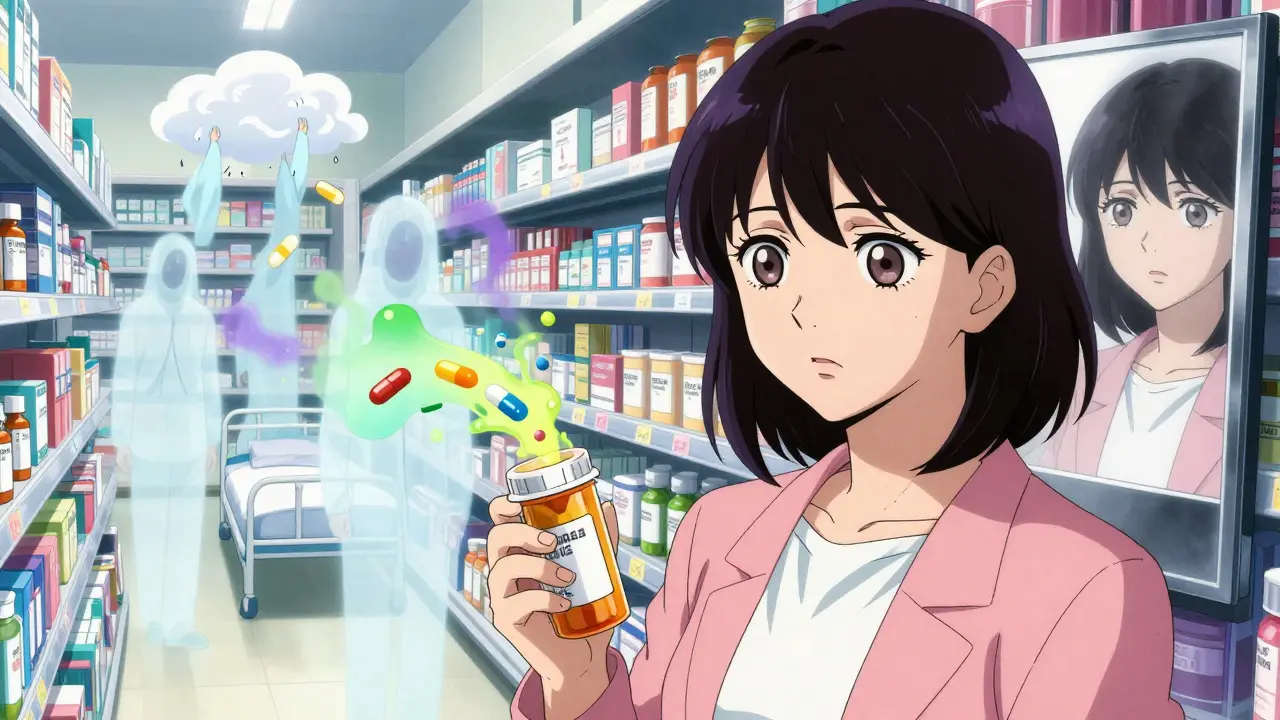
What to look out for
If you’ve recently switched generics, pay attention to these signs within the first 3 days:- New or worsening side effects (headaches, nausea, dizziness, anxiety, insomnia)
- Sudden return of symptoms you had under control (seizures, mood swings, chest pain, fatigue)
- Feeling "off" or different, even if you can’t pinpoint why
What you can do
You have more control than you think.- Ask for the manufacturer name: When you pick up your prescription, ask the pharmacist: "Which company made this?" Write it down. Some pharmacies can order a specific generic if it’s available.
- Check the NDC code: The 11-digit number on your pill bottle is unique to the manufacturer. Keep a note of it. If it changes next refill, that’s a switch.
- Request "dispense as written" (DAW-1): If you’re on a high-risk drug, ask your doctor to write "Do Not Substitute" on the prescription. This legally blocks automatic switching.
- Track your symptoms: Keep a simple log: date, medication name, manufacturer, and how you felt. Even a note in your phone helps.
- Talk to your pharmacist: A 2021 study showed patients who got counseling about switching risks were 37% less likely to have problems.

Why does this keep happening?
The reason you’re getting different generics isn’t random. It’s business. Pharmacy benefit managers (PBMs)-companies like CVS Caremark and Express Scripts-control which generics pharmacies stock. They get rebates from manufacturers. The higher the rebate, the more they push that version. So, your pharmacy might switch your medication every few months based on which company paid the most. One 2022 Senate report found PBMs change preferred generics nearly 5 times a year per drug. This isn’t just about cost-it’s about profit. Generics make up 90% of prescriptions but only 23% of drug spending. That $165 billion in savings comes from these switches. But the hidden cost? Hospitalizations, emergency visits, and lost productivity. One study estimated preventable hospitalizations from switching cost the U.S. system $2.1 billion a year.What’s changing?
There’s growing pressure to fix this. In 2023, Medicare Part D rules limited generic switches to no more than twice a year. The FDA launched a $15.7 million initiative to improve testing for complex generics. And in January 2024, the American Society of Health-System Pharmacists officially recommended against automatic substitution for 17 specific drugs-including levothyroxine, tacrolimus, and bupropion XL. The message is clear: for some patients, "equivalent" doesn’t mean "safe."Can switching generics really cause seizures?
Yes, especially with antiepileptic drugs like phenytoin, valproate, or lamotrigine. Even small changes in blood levels can trigger breakthrough seizures. Studies show patients with hard-to-control epilepsy are at highest risk. The American Academy of Neurology advises caution and recommends staying on the same manufacturer whenever possible.
Is it safe to switch from brand-name to generic for blood pressure meds?
For most blood pressure drugs, switching is generally safe. But if you’ve had trouble controlling your pressure before, or if you’re on a drug like hydralazine or clonidine with a narrow window, it’s worth asking your doctor. Track your readings closely for two weeks after the switch. A sudden spike or drop could signal a problem.
Why do some generics make me feel anxious or jittery?
Different release systems can cause spikes in drug levels. For example, some generic ADHD medications release the active ingredient too quickly, mimicking a stimulant rush. This can trigger anxiety, heart palpitations, or insomnia-even if you never had those side effects before. The issue isn’t the active ingredient-it’s how fast it hits your system.
Can I ask my pharmacy to keep giving me the same generic brand?
Yes. Pharmacists can often order a specific generic manufacturer if it’s available in their system. You’ll need to know the name (usually printed on the bottle) and ask politely. Some pharmacies will even note your preference in your profile. It’s not guaranteed, but it’s worth asking.
Should I avoid generics altogether?
No. For most people, generics are safe and effective. The problem isn’t generics-it’s frequent, unmonitored switching. If your medication is working and you’re not on a high-risk drug, there’s no need to switch. But if you notice changes after a refill, speak up. Your body is giving you clues.
Bridgette Pulliam
March 12, 2026 AT 04:10Been on levothyroxine for 12 years. Switched generics last fall and suddenly could barely get out of bed. Headaches, brain fog, the whole nine yards. Went to my endo, showed him the bottle-different manufacturer. He said, "Oh, that’s why." We switched back and I’m back to normal. No one warned me. No one even asked if I’d noticed changes. It’s wild how little they care until you’re in crisis.
Now I write the NDC code on my phone every time I refill. It’s a tiny thing, but it saved me.
Randall Walker
March 13, 2026 AT 10:09So let me get this straight… the FDA says "same thing" but lets companies change the filler so much it can make you seize… and the pharmacy gets paid to switch you every time a different company offers them a bigger kickback?
Wow. Just… wow. I’m not mad. I’m just disappointed in capitalism’s ability to turn medicine into a game of Russian roulette with your brain.
Miranda Varn-Harper
March 14, 2026 AT 04:54Let’s be clear: the science here is not controversial. The issue is not whether generics are "safe"-it’s whether regulators and PBMs are willing to acknowledge that biological systems aren’t linear. Patients aren’t widgets. Your thyroid doesn’t care about corporate rebates. This isn’t a conspiracy-it’s a systemic failure masked as efficiency.
Alexander Erb
March 15, 2026 AT 23:00As a pharmacist, I see this every week. Honestly? I hate having to switch people’s meds without telling them. But the system forces me. My pharmacy gets pressured by the PBM to stock only the cheapest version, even if it’s not the one the patient’s doctor knows works.
My advice? Always ask for the manufacturer. And if you’re on warfarin or phenytoin? Demand DAW-1. I’ll help you if you come in and ask. Seriously. I’ve seen too many people crash because no one told them to check the bottle.
❤️ You’ve got this.
Donnie DeMarco
March 17, 2026 AT 03:07bro i switched from one generic adderall to another and i felt like i got hit by a truck made of bees. i was zoned out at work, my heart was racing, i couldn’t focus on anything. thought i was going crazy. then i noticed the pill looked different. same damn name, different company. now i take a pic of the bottle every time. if it changes? i call my doc. no joke. this shit is wild.
Tom Bolt
March 19, 2026 AT 02:09There is no such thing as "equivalent" in pharmacology when you're dealing with bioavailability variance, excipient sensitivity, and pharmacokinetic drift. The FDA’s 20% absorption window is a legal fiction designed to shield pharmaceutical conglomerates from liability. This isn’t a medical issue-it’s a corporate fraud enabled by regulatory capture. Patients are being used as test subjects in a profit-driven experiment. And yes, seizures are the predictable outcome.
Shourya Tanay
March 19, 2026 AT 15:11From an Indian clinical pharmacology perspective, this mirrors global trends we observe in low- and middle-income countries. The issue isn't unique to the U.S.-it's systemic. The pharmacovigilance infrastructure in many nations is under-resourced, and generic substitution is often done without therapeutic drug monitoring. In our context, we advocate for patient-specific bioequivalence testing in high-risk NTI drugs. The cost is high, but so is the cost of non-adherence or adverse events. A standardized NDC tracking protocol, as mentioned in the article, could be a scalable solution.
LiV Beau
March 21, 2026 AT 07:33I’m so glad this post exists. I’ve been too scared to speak up before-felt like people would think I was imagining things. But I went from zero seizures in 7 years to three in a month after my pharmacy switched my divalproex. My neurologist said, "I’ve seen this 20 times."
Now I keep a little notebook. Pill color. NDC. How I felt. It’s empowering. You’re not crazy. Your body is talking. Listen.
And hey-if you’re reading this and you’ve been feeling off? Go check your bottle. You’re not alone. 💪❤️
Adam Kleinberg
March 22, 2026 AT 14:18It’s obvious. Big Pharma and the FDA are in bed together. The "generic" version is just a knockoff made in a basement in China with chalk and hope. The active ingredient? Maybe. The rest? Who knows. I stopped taking generics entirely. I pay out of pocket. I don’t trust the system. And if you’re still taking them? You’re playing Russian roulette with your life.
Denise Jordan
March 24, 2026 AT 08:38Yeah but like… do we really need to make a whole article about this? I switched generics once and felt weird for a day. Probably just caffeine. Chill out.
Gene Forte
March 25, 2026 AT 20:12Every human deserves consistency in care. Medicine is not a commodity to be shuffled for profit. When your body depends on a precise chemical balance, arbitrary changes are not just inconvenient-they’re dangerous. This isn’t about politics or economics. It’s about dignity. The fact that we allow this to happen is a moral failure. But change begins with awareness. Speak up. Document. Advocate. You are not a statistic.
Kenneth Zieden-Weber
March 25, 2026 AT 22:37So… you’re telling me the system is designed to maximize profit by randomly changing your medication every few months… and nobody’s telling you? And you’re supposed to notice because the pill looks slightly different?
That’s not healthcare. That’s a scam with a white coat.
But here’s the good news-you’re not powerless. You’ve got a voice. You’ve got a right to know. And you’ve got people here who’ve been there. Ask for the manufacturer. Write down the NDC. Demand DAW-1. You’re not just a patient-you’re a partner in your own care. And you deserve better.