How to Involve Family or Caregivers in Medication Support
 Mar, 3 2026
When someone is taking multiple medications, especially older adults or those with chronic conditions, the risk of mistakes goes up fast. Missed doses, wrong dosages, dangerous interactions - these aren’t just inconveniences. They lead to hospital visits, worse health outcomes, and even preventable deaths. The good news? Family members and caregivers can make a huge difference. In fact, medication support from loved ones is one of the most effective ways to improve adherence and keep people safe at home.
Why Caregivers Matter in Medication Management
More than 48 million family caregivers in the U.S. help manage medications for someone they care for. Nearly 83% of them handle tasks like filling prescriptions, setting reminders, or even giving pills. Why does this matter? Because 50% of all medication errors happen at home, not in hospitals or pharmacies. And when people miss doses, it costs the U.S. healthcare system over $300 billion every year.
Think about it: if someone takes 8 or more medications, like many seniors do, keeping track of which pill goes when, with food or without, and whether it interacts with another drug becomes overwhelming. A caregiver doesn’t need to be a nurse. They just need the right tools and a clear plan.
Create a Complete Medication List
The first step is simple but often skipped: write down every medication the person takes. Not just the name. Every detail. Here’s what a full list should include:
- Brand name and generic name (e.g., Lisinopril, sold as Zestril)
- Exact dosage (e.g., 10 mg, not just "1 tablet")
- When to take it (e.g., "Take at 8 AM with breakfast")
- Why it’s prescribed (e.g., "for high blood pressure")
- Prescribing doctor’s name and contact info
- Known side effects (e.g., "dizziness when standing up")
- Drug interactions to watch for (e.g., "don’t take with grapefruit juice")
The Agency for Healthcare Research and Quality says updating this list within 24 hours of any change - whether it’s a new prescription, a dose change, or a drug being stopped - cuts errors by over 30%. Keep this list in a binder or a digital note, and bring it to every doctor visit. One caregiver in Ohio told the Caregiver Action Network she caught a dangerous interaction between her mom’s blood pressure med and arthritis drug because she had everything written down.
Use Tools That Actually Work
Paper reminders? They get lost. Mental notes? They fail under stress. Proven tools make all the difference.
Pill organizers are basic but powerful. A 7-day AM/PM box reduces missed doses by 37%, according to a 2022 study. For people who need more help, electronic dispensers like Hero Health beep, flash, and even call a family member if a dose is skipped. Clinical trials show they cut missed doses by 62%.
Automatic refills are another game-changer. Most major pharmacies - CVS, Walgreens, and Medicare Part D plans - offer this. Set it up 7 to 10 days before the meds run out. No more last-minute pharmacy runs. In January 2024, 85% of pharmacies offered this service.
Digital apps like Medisafe or Round Health send push notifications. Studies show they improve adherence by 45% compared to paper logs. For those with memory issues, voice assistants like Amazon Alexa can be set up to say, "It’s time for your heart pill," and even remind caregivers if the dose wasn’t taken.
Build Routines, Not Just Reminders
It’s not enough to set an alarm. You need to tie medication time to a daily habit. This is called "habit stacking," and it’s backed by the National Institute on Aging.
Examples:
- Take your blood pressure pill right after brushing your teeth.
- Take your diabetes med right before breakfast.
- Take your evening pill after turning off the TV.
A 2022 study found this simple trick improved adherence by 28%. The brain remembers routines better than alarms. When the habit becomes automatic, the chance of forgetting drops dramatically.
Know When to Call the Pharmacist
Pharmacists aren’t just people who hand out pills. They’re medication experts - and they’re available without an appointment. As of Q4 2023, 92% of U.S. pharmacies have a pharmacist on-site ready to talk.
When you pick up a new prescription, ask these four questions:
- What time should this be taken relative to meals?
- Are there foods, drinks, or other drugs I should avoid?
- What should I do if I miss a dose?
- When should I start to notice it working?
Dr. Michael Steinman, a geriatric pharmacology expert, says these simple questions prevent most common errors. And don’t forget: if someone is taking 5 or more medications, ask if any can be safely stopped. About 45% of older adults are on 5+ drugs - and that increases fall risk by 50% and hospitalization risk by 30%.
Do Quarterly Medication Reviews
Medications change. Conditions change. But lists don’t always update.
The American Geriatrics Society recommends a full medication review every 3 months for anyone on 4 or more drugs. During this review, check the Beers Criteria - a list of 30 medications that are risky for older adults. Many of these are still prescribed even though safer options exist.
A 2022 analysis found that caregivers who do quarterly reviews reduce inappropriate prescriptions by 22%. That means fewer side effects, fewer falls, and fewer trips to the ER.
Prepare for Emergencies
Not all missed doses are equal. Some are harmless. Others are life-threatening.
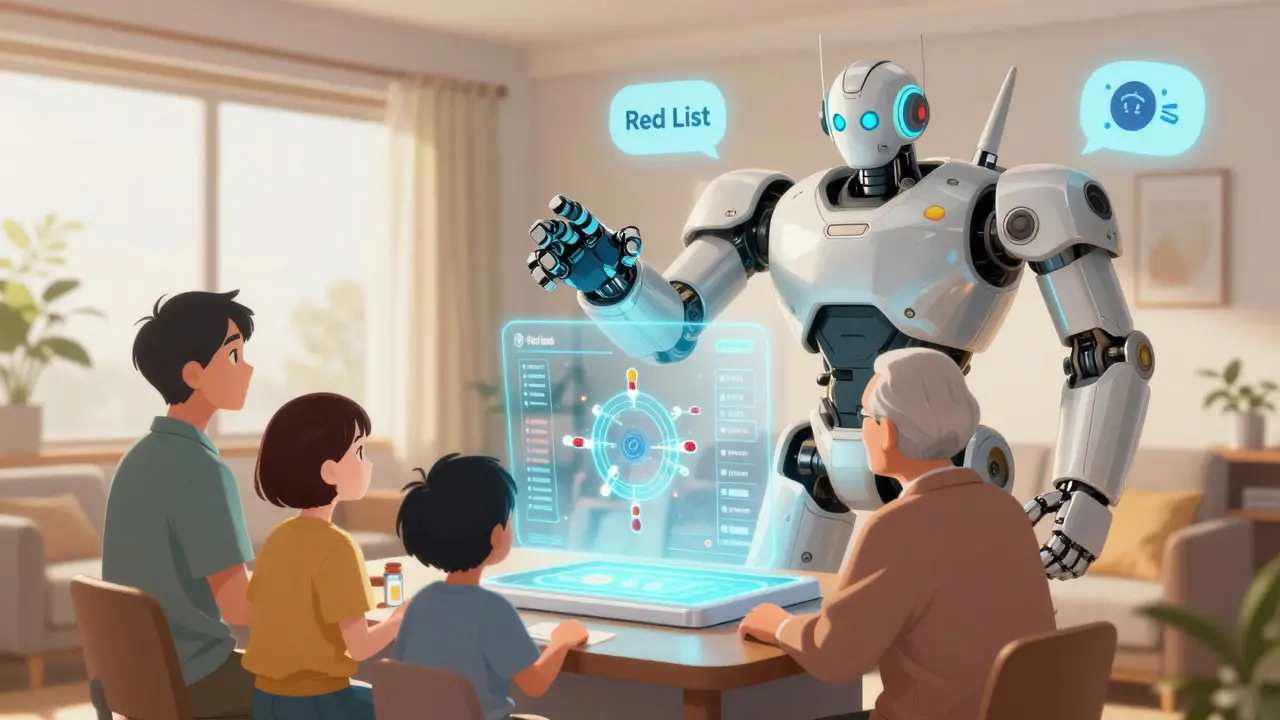
Create a "medication red list" - drugs that need immediate medical attention if missed. These include:
- Insulin (for diabetes)
- Blood thinners like warfarin or apixaban
- Heart medications like beta-blockers or digoxin
- Seizure drugs
- Steroids like prednisone
Keep this list taped to the fridge or saved in a phone note. A 2023 study in the Annals of Internal Medicine found that families with a red list reduced emergency room visits by 19%.

Attend Doctor Appointments Together
One of the biggest problems? Multiple doctors prescribing different drugs without knowing what the others ordered. A Reddit caregiver shared how his dad saw four specialists - and nobody knew what the others prescribed until he brought the master list to every appointment.
The AARP found that 89% of caregivers who attended medical visits with their loved ones understood the medication plan better. Bring the list. Ask questions. Take notes. Sometimes, just being there helps the doctor slow down and think.
Avoid the Biggest Pitfalls
Even the best plans can fail. Here are the top three things that go wrong:
- Transitions of care - When someone leaves the hospital, 50-60% of medication errors happen in the first 48 hours. Make sure discharge instructions are clear. Ask for a written summary and confirm all changes with the primary care doctor.
- Complex schedules - If someone has to take pills 3 or more times a day, adherence drops by 40%. Simplify when possible. Ask the doctor if doses can be combined or switched to once-daily versions.
- Caregiver burnout - 42% of caregivers say medication tasks are their most stressful responsibility. Don’t try to do it all alone. Use community resources, ask for help from other family members, or look into home care services.
What’s Changing in 2026
The system is catching up. In 2024, Walgreens launched a "Caregiver Support Hub" with dedicated pharmacists just for family helpers. CVS Health bought Signify Health to bring medication reviews into home visits. The FDA has approved 12 new digital adherence tools since 2023. And by 2025, electronic health records will be required to include patient-facing medication lists.
AI tools are coming fast. Systems like Amazon’s Alexa Care Hub saw 200% growth in 2023. Experts predict that by 2027, 65% of caregiver medication support will use AI assistants to track, remind, and alert.
But the most powerful tool is still human connection. A caregiver who knows the medications, asks the questions, and stays involved doesn’t just prevent errors - they give peace of mind.
Can a family member legally give someone their medication?
Yes, family members and caregivers can legally help with medication management, including organizing pills, reminding someone to take them, and even administering them if needed. This is not considered practicing medicine. However, they should never change dosages or stop medications without consulting the prescribing doctor. The key is to follow the prescribed plan accurately and report any issues to the healthcare team.
What if the person I’m caring for refuses to take their meds?
Refusal is common and often stems from side effects, confusion, or feeling overwhelmed. First, talk to their doctor - maybe the regimen can be simplified. Ask if there’s a liquid version, a once-daily option, or a different drug with fewer side effects. Avoid forcing pills. Instead, focus on understanding their concerns. Sometimes, just explaining why the medication matters - "This helps you stay out of the hospital," or "It keeps your blood pressure stable so you can keep walking" - makes a difference. If cognitive decline is involved, consider a pill dispenser with locked compartments and alarms.
How do I know if a medication is unsafe for an older adult?
Check the Beers Criteria - a list of 30 medications that pose higher risks for people over 65. These include certain antihistamines, sleep aids, muscle relaxants, and some painkillers. Even if a drug was prescribed years ago, it might not be safe now. Bring the list to every appointment and ask, "Is this still the best choice?" Pharmacists can also screen for these risks. The American Geriatrics Society updates the list every few years - make sure you’re using the 2022 version.
Are digital apps better than pill organizers?
They serve different purposes. Pill organizers are great for physical organization and are hard to ignore. Digital apps add reminders, refill alerts, and the ability to notify family members if a dose is missed. Studies show apps improve adherence by 45% compared to paper logs, while pill boxes reduce errors by 37%. The best approach is often combining both: use a pill box for daily organization and an app for tracking, refill alerts, and emergency notifications. For someone with memory issues, an app with voice alerts (like Alexa) can be more effective than a box alone.
Can I get help from the pharmacy without an appointment?
Yes. As of Q4 2023, 92% of U.S. pharmacies have pharmacists available for free consultations without an appointment. You can walk in, ask questions about side effects, interactions, or timing, and even get a printed medication list. Many pharmacies now offer Medication Therapy Management (MTM) services for people on 8+ drugs - this includes a full review with the pharmacist and a written action plan. Ask if your pharmacy offers this - it’s covered by Medicare Part D and many private insurers.
What should I do if someone misses a dose?
It depends on the drug. For most medications, if you realize you missed a dose within a few hours, take it right away. If it’s almost time for the next dose, skip the missed one and continue as scheduled. Never double up unless instructed. But for drugs like insulin, blood thinners, or seizure meds - which are on the "red list" - missing a dose can be dangerous. Always have a plan written down: who to call, when to go to urgent care. If unsure, call the pharmacy or doctor immediately. Most pharmacies have 24/7 advice lines.
How often should medication lists be updated?
Update the list within 24 hours of any change - whether it’s a new prescription, a dose change, or a drug being stopped. This is especially critical after a hospital discharge, when 50-60% of medication errors occur. Keep the list with you at all times, and bring it to every appointment. A 2023 study showed caregivers who update their list after every change reduce medication errors by 33%.
Is there financial help for medication management tools?
Yes. Many Medicare Part D plans cover Medication Therapy Management (MTM) services at no extra cost. Some states offer programs for low-income seniors that provide free pill dispensers or home visits from pharmacists. Private insurers may also cover digital adherence apps as part of chronic care programs. Check with your pharmacy or call your insurance provider. Also, organizations like the Caregiver Action Network and AARP offer free downloadable tools and guides - no cost required.
RacRac Rachel
March 4, 2026 AT 14:12Just started using Medisafe for my dad’s 12 meds and it’s been a game-changer 🙌 The app sends me a text if he misses a dose, and he loves when Alexa reminds him like it’s his buddy. No more panic attacks before doctor visits. Also, got him a 7-day pill box with AM/PM slots - simple, but he actually uses it now. 💯
Matt Alexander
March 5, 2026 AT 16:22Biggest thing I learned? Don’t just rely on memory. Write everything down - even if it seems obvious. My mom had a med called 'Lipitor' but the generic was atorvastatin. The pharmacist caught that we were doubling up because we thought they were different. Saved us a hospital trip.
Levi Viloria
March 7, 2026 AT 00:50Had a cousin who swore by pill organizers until she realized her aunt was just stacking them in the drawer. Tools don’t help if they’re not integrated into the daily rhythm. Habit stacking is the real MVP. Take meds after brushing teeth? Done. After scrolling TikTok? Not so much.
Gretchen Rivas
March 8, 2026 AT 16:52Pharmacist consultations are free and underused. Walk in with the list. Ask the 4 questions. They’ll tell you if something’s outdated or risky. No appointment needed. Seriously, do it.
Dean Jones
March 9, 2026 AT 06:48Look, I get that caregivers are heroes. But let’s not romanticize this. Managing meds for someone with dementia or multiple chronic conditions isn’t a checklist - it’s a full-time emotional labor job. You’re not just organizing pills, you’re fighting bureaucracy, guessing at side effects, and second-guessing every decision because you’re terrified of killing them. And yes, it’s statistically proven to reduce hospitalizations - but nobody talks about the sleepless nights or the guilt when you forget one. The system fails caregivers long before it fails the patient.
Tools help, sure. But what we need is policy: paid caregiver leave, subsidized dispensers, mandatory pharmacist follow-ups, and insurance that covers time, not just pills. Until then, we’re just patching a sinking ship with duct tape and good intentions.
Mike Dubes
March 9, 2026 AT 07:04My grandma took 9 pills a day. We tried apps, alarms, pill boxes - nothing stuck. Then we started doing it after her morning coffee. That’s it. One habit. Now she doesn’t even need reminders. Also, got her a little notebook where she writes 'took it!' after each one. It’s dumb, but she loves checking off boxes. Small wins matter.
And yeah, pharmacists are awesome. I walked in last week with a list of 11 meds and asked, 'Can any of these be dropped?' They cut 3. She’s got way fewer side effects now. Just ask. No shame.
John Cyrus
March 9, 2026 AT 10:13Anyone who thinks pill organizers work is delusional. My uncle used one for years and still missed doses because he didn’t know which compartment was which. The real problem is that people don’t understand what they’re taking. You need education, not gadgets. And yes, I’ve seen 80-year-olds on 12 drugs that should’ve been cut years ago. It’s a medical disaster waiting to happen and nobody wants to talk about it because it’s easier to blame the caregiver.
John Smith
March 10, 2026 AT 18:04Y’all are overcomplicating this. I gave my mom her meds for 5 years. No apps. No boxes. Just a damn sticky note on the fridge with the times and a Sharpie. She’d scribble a checkmark. Done. The system’s broken? Yeah. But you don’t need AI to fix what a 50-cent marker can solve. Also, if you’re not asking the pharmacist about interactions, you’re just gambling with their life.
Shivam Pawa
March 11, 2026 AT 12:09In India, we use a different approach - family elders take meds together. Morning tea time becomes pill time. It’s social, not clinical. No tech needed. The rhythm of daily life becomes the reminder. Also, community pharmacists here often know the patient’s history - not just the script. Maybe we’re missing the human layer in the U.S. system.
Megan Nayak
March 13, 2026 AT 04:18Let’s be real - this whole 'caregiver support' narrative is just corporate wellness theater. Companies sell pill dispensers, apps, and 'hub services' while the government cuts home care funding. The real solution? Universal healthcare with integrated medication management. Not another app. Not another pamphlet. A system that doesn’t force families to become nurses because the system failed. Also - 85% of pharmacies offer automatic refills? Great. But 60% of seniors can’t afford the copay. So what’s the point?
Dean Jones
March 14, 2026 AT 15:39Actually, I think you’re both right and wrong. Tools are useful, but they’re not the core issue. The core issue is that we treat medication management like a logistics problem, not a behavioral one. People forget pills not because they’re lazy - they forget because they’re overwhelmed, scared, or confused. A pill box doesn’t fix fear. A voice reminder doesn’t fix distrust in doctors. We need empathy, not efficiency. The best tool is a conversation - with the patient, the pharmacist, the caregiver. Everything else is just packaging.