Questions to Ask Your Pharmacist About Prescription Medications
 Dec, 1 2025
Most people know to read the label on their prescription bottle. But how many actually ask the person handing it to them - the pharmacist - the real questions that could keep them safe? You’re not just picking up medicine. You’re getting a free, expert consultation with someone trained to catch mistakes, spot dangerous combinations, and help you actually use your meds right. And yet, most of us walk out without asking a single thing.
Here’s the truth: 30% of medication errors happen because patients don’t understand what the drug is for. Another 45% misread or ignore dosing instructions. And 15% of hospital admissions are caused by drug interactions that could’ve been avoided with a simple chat at the counter. Your pharmacist isn’t just filling a script. They’re your last line of defense before something goes wrong.
What is this medicine for, and how will it help me?
It sounds basic, but too many people take pills without knowing why. You might get a prescription for a blood pressure med, but if you don’t know it’s meant to lower your risk of stroke, you might stop taking it once your headache goes away. Or you might think it’s for weight loss when it’s actually for heart rhythm issues. Ask: “What condition is this treating?” and “How will I know it’s working?”
Some meds take weeks to show effects. Others kick in fast. If you don’t know what to expect, you might think it’s not working and quit - or panic and double the dose. A 2023 study found that 68% of patients couldn’t say when their medication should start helping. Don’t be one of them.
How and when should I take this?
“Take one by mouth daily” doesn’t cut it. You need specifics. Ask:
- Should I take this with food or on an empty stomach?
- Is there a best time of day - morning, night, or with meals?
- Do I need to avoid alcohol, caffeine, or certain foods like grapefruit?
- Should I avoid driving, operating machinery, or sun exposure?
Some antibiotics must be taken two hours before or after dairy. Blood thinners like warfarin react badly to leafy greens. Statins can cause muscle pain if taken with grapefruit. These aren’t minor details - they’re safety rules. And yes, your pharmacist remembers what’s in your file. They’ve seen the other meds you’re on. They can tell you if this one clashes with your morning coffee or your evening wine.
What side effects should I watch for?
Everyone gets the list of possible side effects printed on the bag. But most of them are rare. What you need to know is: Which ones are common? And which ones mean I need to call a doctor right away?
For example, if you’re on an antidepressant and feel dizzy or nauseous, that’s normal at first. But if you start having suicidal thoughts, trouble breathing, or a rash that spreads - that’s an emergency. Ask your pharmacist: “What side effects should I expect? Which ones mean I need to stop this and get help?”
They’ll also tell you how to manage the annoying ones. If the pill gives you dry mouth, they might suggest sugar-free gum. If it makes you sleepy, they’ll recommend taking it at bedtime. No need to suffer in silence.
Could this interact with my other meds, supplements, or herbs?
This is the one question most people forget - and it’s the most dangerous. You might be taking five prescription drugs, three over-the-counter painkillers, a daily vitamin, and that “natural” supplement your cousin swears by. Your pharmacist sees them all.
St. John’s Wort can make birth control fail. Garlic supplements can thin your blood too much if you’re on warfarin. Hawthorn berry can drop your blood pressure too far when mixed with lisinopril. One Reddit user found out their blood pressure med reacted badly with hawthorn berry - their doctor never asked about the herbal tea they drank daily. The pharmacist did. That’s the difference.
Bring your full list. Every pill, every drop, every capsule. Even the ones you only take once in a while. Your pharmacist will scan for interactions you didn’t even know existed. The FDA says 15% of hospital visits for drug problems are preventable - and most happen because no one asked this question.

What if I miss a dose?
You’re rushing out the door. You forget. You’re not sure what to do next. Should you double up? Skip it? Take it late? Each med has its own rules.
For some, like antibiotics, missing a dose can let bacteria survive and come back stronger. For others, like insulin or blood pressure meds, skipping can cause immediate danger. Your pharmacist will tell you exactly what to do - not just “take it when you remember.” They’ll say: “If you miss it by more than four hours, skip it. Don’t double up.” Or: “Take it as soon as you remember, even if it’s midnight.”
They can also suggest tools - phone alarms, pill organizers, blister packs - to help you stay on track. Non-adherence costs the U.S. healthcare system $300 billion a year. You don’t have to be part of that statistic.
Is there a cheaper or generic version?
Brand-name drugs cost 80-85% more than generics. And here’s the kicker: they work the same. The FDA requires generics to have the same active ingredient, strength, and effect as the brand. The only differences are color, shape, or inactive fillers - things that don’t affect how the drug works.
Ask: “Is there a generic version?” If not, ask: “Can you check if a different brand is covered better by my insurance?” Some pharmacies offer $4 lists for common meds. Others have manufacturer coupons. Pharmacists know these programs better than your insurance rep.
One patient in Melbourne was paying $120 a month for a blood pressure med. The pharmacist found a generic that cost $18. That’s not saving money - that’s saving your ability to afford your rent.
Are there non-drug options I should consider?
Not every problem needs a pill. Sometimes, lifestyle changes - diet, exercise, sleep - can do the job better. Your pharmacist isn’t just a dispenser. They’re a health coach.
If you’re on a statin for high cholesterol, they might ask: “Have you tried reducing saturated fats?” If you’re taking sleep aids, they might suggest cutting screen time before bed. If you’re on acid reflux meds, they might point out that late-night snacks or tight clothing could be the real culprits.
They won’t push you to stop your meds. But they’ll tell you what else might help - and sometimes, what you can safely reduce or even stop.
How will I know if this is working?
Some meds make you feel better right away. Others need blood tests. Others take months. You need to know which one you’re on.
Ask: “Will I need lab work? When? What numbers are we watching?” For diabetes, it’s HbA1c. For thyroid meds, it’s TSH. For depression, it’s mood tracking over weeks. Your pharmacist can tell you what to monitor and when to follow up with your doctor.
Too many people assume if they feel fine, the medicine isn’t needed. That’s how chronic conditions get out of control. You don’t need to wait for a crisis. Ask for a plan.
Where can I find trustworthy info about this drug?
Google can give you scary stories. YouTube has influencers selling “miracle cures.” Your pharmacist will point you to real sources: the FDA’s patient guides, MedlinePlus, or the drug’s official manufacturer site.
They’ll also warn you about red flags: claims like “100% natural cure,” “no side effects,” or “miracle weight loss.” If something sounds too good to be true, it is. Your pharmacist has seen the data. They know what works - and what’s just marketing.
How do I prepare for my pharmacy visit?
Don’t wing it. Bring:
- Your current list of all meds - prescriptions, OTC, vitamins, herbs
- Your insurance card
- Any new symptoms you’ve noticed
- A notebook or phone to write down answers
Use the FDA’s My Medicine Record form. It’s free online. Fill it out before you go. It’s 17 questions - but it saves you 17 minutes of guesswork at the counter.
And here’s a pro tip: Use the “teach-back” method. After they explain something, say: “So, just to make sure I got it - you’re saying I take this after dinner, avoid grapefruit, and call if I get a rash?” If you can explain it in your own words, you’ll remember it. Studies show this boosts adherence by 40%.
What if I don’t have time to ask?
Pharmacists are busy. The average consultation lasts 2.7 minutes. Chain pharmacies process over 300 scripts a day per pharmacist. But here’s the thing: you’re not asking for a 30-minute talk. You’re asking for three critical questions.
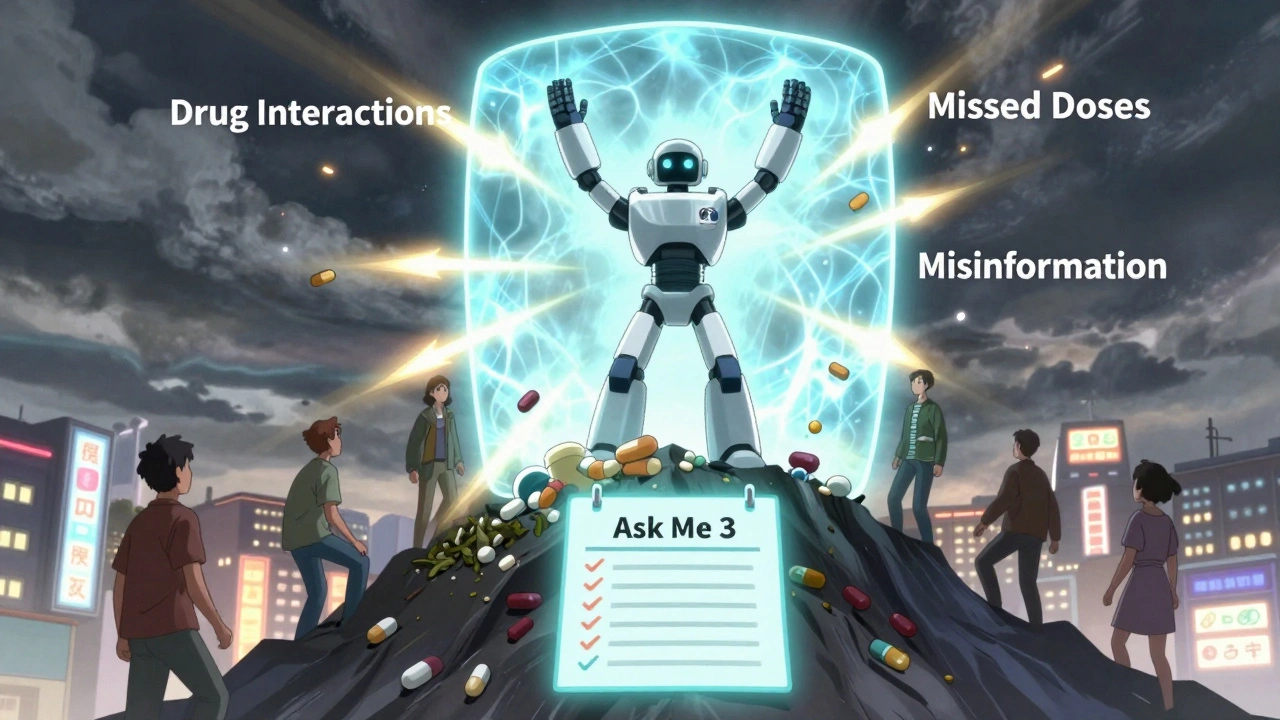
The American Pharmacists Association’s “Ask Me 3” campaign says: What’s my main problem? What do I need to do? Why is it important? That’s it. Those three cover 90% of what you need to know.
If you’re in a rush, say: “I only have a minute - can you tell me the one thing I need to know about this pill?” They’ll give you the most important safety point. It’s better than nothing.
And if the pharmacy is too busy? Ask to schedule a free consultation. Most pharmacies offer 10-15 minute private chats - no appointment needed. Just ask at the counter. They’ll set it up.
Final thought: Your pharmacist is your ally
You don’t need to be afraid to ask. Pharmacists don’t mind questions. They expect them. They’re trained for them. In fact, patients who ask at least three specific questions have 65% fewer medication-related problems.
This isn’t about being difficult. It’s about being smart. You’re not just getting a prescription filled. You’re getting a safety check. A cost saver. A second opinion. A person who knows your meds better than your doctor does - because they see them every day, in every form, for every patient.
Next time you pick up a script, don’t just say thanks. Ask something. Anything. You’ve got nothing to lose - and your health to gain.
Should I always ask my pharmacist about new medications, even if my doctor prescribed them?
Yes. Your doctor prescribes based on your medical history, but your pharmacist sees your full medication list - including over-the-counter drugs, supplements, and past reactions. They catch interactions your doctor might miss. They also know how the drug actually works in real life, not just in textbooks. Even if your doctor explained it, your pharmacist can clarify, simplify, or warn you about things your doctor didn’t have time to mention.
Can pharmacists change my prescription if something doesn’t work?
No, pharmacists can’t change your prescription. But they can flag problems. If a drug isn’t working, causes bad side effects, or costs too much, they’ll contact your doctor with suggestions - like switching to a generic, changing the dose, or trying a different class of drug. In 45 states, pharmacists can now prescribe certain medications like naloxone or smoking cessation aids, but they still need a doctor’s order for most prescriptions.
Do pharmacists know about my other prescriptions from different doctors?
They can, if you let them. Most pharmacies link your records across all your prescriptions filled there. But if you use multiple pharmacies, they won’t see everything. Always bring a full list - even if you think they already have it. Some meds are only filled at specialty pharmacies, and those aren’t always connected. The more complete your list, the safer you are.
Is it worth asking about side effects if the pill seems harmless?
Absolutely. Many dangerous side effects don’t show up right away. For example, long-term use of proton pump inhibitors (like omeprazole) can lead to bone loss or kidney damage - but you won’t feel it until it’s advanced. Your pharmacist knows which meds have hidden risks and when to monitor for them. Even “harmless” pills need context.
What if I’m embarrassed to ask about sexual side effects or mental health impacts?
Pharmacists hear these questions every day. They’re trained to answer them without judgment. If you’re uncomfortable, say: “I’d prefer to talk about this privately.” Most pharmacies have a quiet consultation room. Or ask to speak over the phone later. Sexual side effects from antidepressants, blood pressure meds, or even some painkillers are common - and fixable. You’re not alone, and you’re not weird for asking.
Louise Girvan
December 1, 2025 AT 06:00Jaswinder Singh
December 2, 2025 AT 10:16Linda Migdal
December 3, 2025 AT 11:01Tommy Walton
December 5, 2025 AT 03:05Sean McCarthy
December 6, 2025 AT 14:35Courtney Co
December 8, 2025 AT 07:55Priyam Tomar
December 9, 2025 AT 16:46Irving Steinberg
December 9, 2025 AT 20:32Lydia Zhang
December 11, 2025 AT 01:50soorya Raju
December 11, 2025 AT 03:13Lucinda Bresnehan
December 12, 2025 AT 18:36