Insulin Biosimilars: What You Need to Know About Cost, Safety, and Market Options
 Dec, 1 2025
Insulin isn’t just a drug-it’s life support for millions of people with diabetes. But for many, the price tag makes it impossible to afford. That’s where insulin biosimilars come in. These aren’t cheap copies. They’re scientifically complex, rigorously tested versions of brand-name insulin that work the same way but cost significantly less. In 2025, they’re already saving patients hundreds of dollars a month. But getting them isn’t as simple as walking into a pharmacy and asking for a generic. There are rules, risks, and regional differences that matter a lot.
What Makes Insulin Biosimilars Different From Generics
You’ve heard of generic pills-like metformin or lisinopril. Those are easy to copy because they’re made of simple chemicals. Insulin? Not even close. It’s a protein, a complex molecule folded in a very specific way to work in your body. Even tiny changes in how it’s made can affect how your body responds. That’s why insulin biosimilars can’t be called generics. They’re not identical. They’re highly similar. To get approved, manufacturers have to prove they match the original insulin in structure, function, safety, and effectiveness down to the last detail. The European Medicines Agency (EMA) and U.S. Food and Drug Administration (FDA) require full clinical trials, not just chemical tests. The goal? No meaningful difference in how it lowers blood sugar or how often side effects happen. This is a big deal. A 2025 study in Diabetes, Obesity and Metabolism confirmed that patients switching from brand-name insulin to biosimilars showed no increase in hypoglycemia or antibody reactions. But the process? It’s expensive and takes years. That’s why biosimilars still cost more than traditional generics-but far less than the originals.How Much Do Insulin Biosimilars Actually Save?
The numbers speak for themselves. In 2025, the average price of a branded insulin like Lantus or Humalog was around $280 per vial in the U.S. The biosimilar version? About $120. That’s a 57% drop. For someone needing three vials a month, that’s $480 saved every 30 days. In Australia, where the Therapeutic Goods Administration actively promotes cost-effective alternatives, patients on biosimilar insulin pay as little as $30 per month under the Pharmaceutical Benefits Scheme. In India, where 141 million people have diabetes, biosimilars cost 60-70% less than branded versions. Dr. Arjun Patel, an endocrinologist in Mumbai, says nearly half his patients now use them because they’re the only option they can afford. Even in the U.S., where pricing is messy, Medicare and private insurers are starting to favor biosimilars. As of Q1 2025, the average selling price for all biosimilar insulins was $1,840 per unit-down from $2,100 just two years ago. The Centers for Medicare & Medicaid Services (CMS) now reimburses providers at ASP plus 8% of the originator’s price, giving clinics a financial incentive to switch. And it’s working. One patient, ‘DiabetesWarrior87’, posted on the American Diabetes Association forum: “Switched to Basaglar. My A1C dropped from 7.8 to 7.2. My monthly cost went from $450 to $90.” That’s not an outlier. A 2025 survey found 68% of patients reported no change in effectiveness or side effects after switching.Why Are Insulin Biosimilars Still Hard to Get?
Despite the savings, adoption is slow. Only 26% of insulin biosimilars reach significant market share after five years, compared to 81% for oncology biosimilars. Why? First, fear. Many doctors and patients grew up on brand-name insulins. They trust them. Switching feels risky-even when science says it’s not. One Reddit user wrote: “My doctor switched me without warning. I had more lows. Switched back in two weeks.” That’s real. But it’s rare-and often tied to poor transition planning, not the drug itself. Second, rules vary wildly. In Europe, once a biosimilar is approved, pharmacists can substitute it automatically. In the U.S., only 17 states allow that for insulin. The rest require a new prescription. And even then, insurers often block access unless you’ve tried the brand first. Third, the original manufacturers fight back. Sanofi sells both Lantus and a cheaper, unbranded version under the same name. That keeps prices high and confuses patients. Eli Lilly and Novo Nordisk have extended patents, tweaked delivery devices, and offered patient assistance programs to lock people in.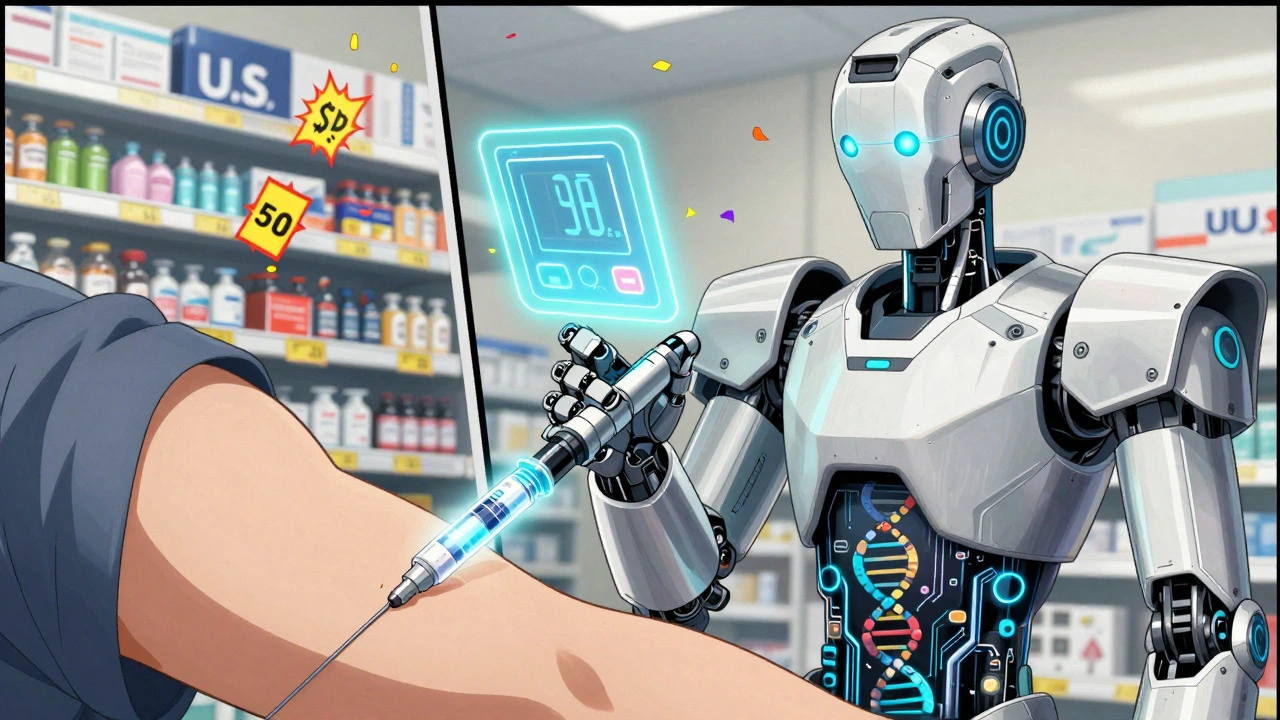
Market Leaders and Key Products in 2025
Here’s who’s leading the insulin biosimilar race right now:- Semglee (insulin glargine-yfgn): Made by Biocon and Viatris. Approved by the FDA in 2021 as interchangeable with Lantus. Now the most prescribed biosimilar insulin in the U.S.
- Basaglar (insulin glargine): Launched by Lilly in 2015. Not interchangeable, but widely used due to lower cost and broad insurance coverage.
- Admelog (insulin lispro): A biosimilar to Humalog. Offers rapid-acting control at half the price.
- Fiasp biosimilar: Expected in 2026, targeting the fast-acting market currently dominated by Novo Nordisk.
- Insulin glargine biosimilars from BGP Pharma and Aspen: Dominating markets in Latin America and Africa with prices under $40 per vial.
What You Need to Know Before Switching
If you’re considering switching to a biosimilar insulin, here’s what to do:- Check your prescription. Is it written for a specific brand? If so, your pharmacy can’t switch it unless your doctor approves.
- Ask your doctor about interchangeability. In the U.S., only Semglee has the FDA’s “interchangeable” label. Others are biosimilars but not automatically substitutable.
- Expect a transition period. The American Association of Clinical Endocrinologists recommends 3-6 months of close glucose monitoring after switching. Your dose might need a tiny tweak.
- Track your numbers. Keep a log of your blood sugar, any lows, and how you feel. If something changes, tell your provider right away.
- Know your insurance rules. Some plans require step therapy-you must try the brand first. Call your insurer before switching.
The Future: Where Is This Headed?
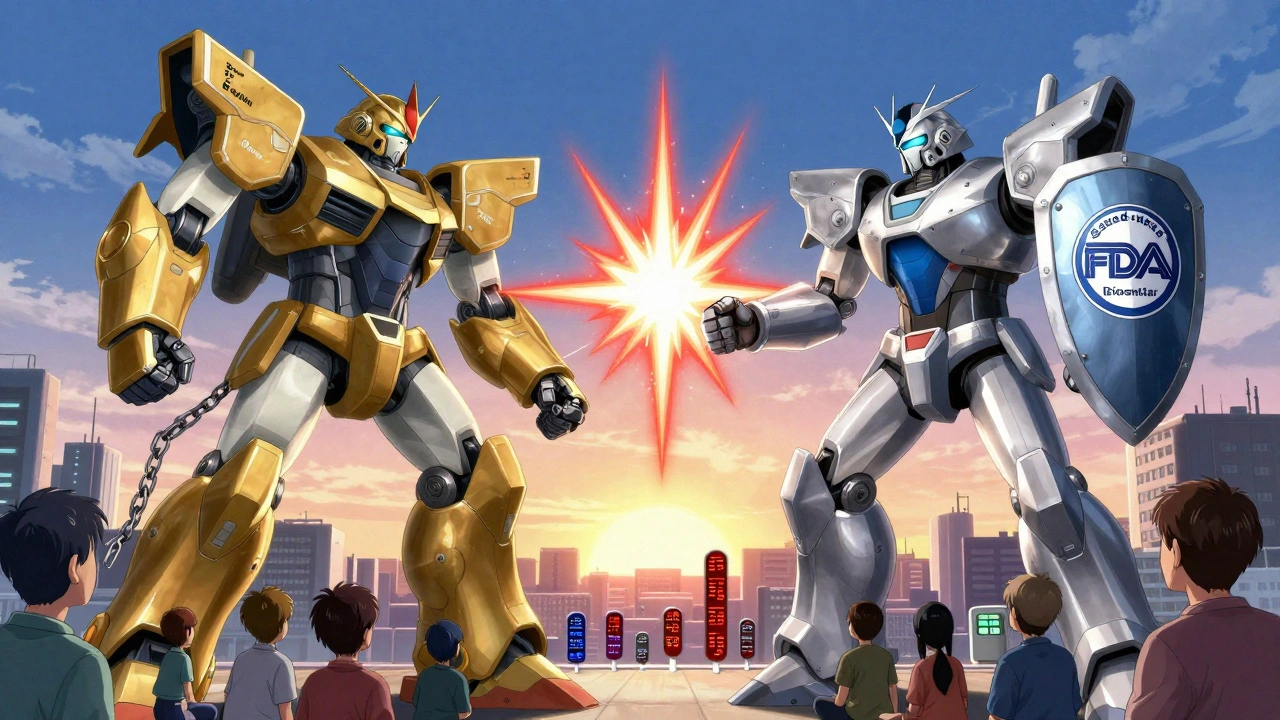
The insulin biosimilar market is growing fast-faster than any other segment in biosimilars. Projected to hit $5.8 billion by 2035, it’s expected to grow at 18% annually, nearly double the overall biosimilar market. Why? Three reasons:- Patent cliffs. Lantus, Humalog, and Toujeo patents are expiring between 2025 and 2027. More biosimilars are coming.
- Global diabetes surge. Over 500 million people have diabetes worldwide. Most can’t afford $300/month insulin.
- Regulatory alignment. The FDA and EMA are working together to standardize approval processes. That could cut development time by 18 months.
Roger Leiton
December 2, 2025 AT 19:02Just switched to Semglee last month and my A1C went from 8.1 to 7.3 🎉 No more panic attacks at the pharmacy counter. My doc said it’s interchangeable so no fuss, just cheaper life-saving stuff. Also, my cat now stares at my insulin pen like it’s a magic wand. Weird, but worth it.
Shannara Jenkins
December 3, 2025 AT 16:47I know this sounds cheesy but I cried when I saw my first biosimilar bill. $90 instead of $480? That’s not just savings-that’s pizza nights, gas for the car, and not choosing between insulin and my kid’s braces. Seriously, if you’re on insulin and scared to switch, just talk to your doc. You’ve got nothing to lose but the debt.
Elizabeth Grace
December 5, 2025 AT 02:50Ugh I hate how people act like biosimilars are some kind of miracle cure. My sister got switched without consent and had 3 hypoglycemic episodes in two weeks. They don’t work the same for everyone. And don’t even get me started on how pharma companies are just rebranding their old crap as ‘biosimilar’ to keep profits rolling. This isn’t progress-it’s exploitation dressed up in science jargon.
Steve Enck
December 6, 2025 AT 08:50While the empirical data demonstrates a statistically non-inferior glycemic profile across randomized controlled trials, one must interrogate the epistemological foundations of interchangeability. The FDA’s ‘biosimilar’ designation, while regulatoryy expedient, conflates pharmacokinetic equivalence with clinical homogeneity. The protein folding dynamics of insulin glargine-yfgn, though structurally analogous, may induce unforeseen allosteric modulation in subpopulations with comorbid autoimmune dysregulation. One cannot reduce human physiology to a cost-benefit spreadsheet. The moral hazard of commodifying life-sustaining biologics is not mitigated by market penetration metrics.
मनोज कुमार
December 8, 2025 AT 05:51US overprices everything. In India biosimilar insulin cost 300 rupees per vial. No drama. No insurance battles. Just buy and use. Doctors here dont care what brand. Only thing that matters is sugar down. Why US still stuck in 2005? Pharma lobby. Simple.
Joel Deang
December 8, 2025 AT 07:54so i switched to basaglar and like??? my life changed?? like i could finally afford to go out with friends again?? like i didnt have to cry in the parking lot after pharmacy?? i mean i know its just a drug but like… it’s not. its freedom. also my insulin pen is now my emotional support object 💙
Arun kumar
December 9, 2025 AT 22:39When I first heard about biosimilars, I thought it was just another corporate trick. But then I saw my neighbor-diabetic for 20 years, works two jobs, no insurance-using a vial from BGP Pharma for $35. He didn’t even know the difference until I told him. That’s when it hit me: science isn’t about patents. It’s about people. If we can make life-saving medicine affordable without sacrificing safety, then why are we still arguing? We’re not fighting biology here. We’re fighting greed. And we’re losing.
Zed theMartian
December 10, 2025 AT 00:31Let’s be real. Biosimilars are just the pharmaceutical-industrial complex’s way of saying ‘we’ll let you live… but only if you’re grateful.’ This isn’t progress-it’s a PR stunt wrapped in clinical trials. Meanwhile, the real solution? Universal healthcare. But no, let’s keep selling hope in vials while the rich keep getting richer. I’m not buying it. And neither should you.