Current Drug Shortages: Which Medications Are Scarce Today in 2025
 Dec, 27 2025
As of December 2025, over 270 medications remain in short supply across the United States - a number that’s still dangerously high despite a slight dip from last year. This isn’t just an inconvenience. It’s a daily crisis for hospitals, pharmacies, and patients who rely on these drugs to survive. From cancer treatments to basic IV fluids, the gaps in supply are real, growing, and often life-threatening.
What’s Actually in Short Supply Right Now?
The most critical shortages are in generic sterile injectables - drugs that are cheap to make but hard to produce reliably. These aren’t fancy new pills. They’re the backbone of modern medicine. Here’s what’s running out:- 5% Dextrose Injection (small bags): In shortage since February 2022. Expected to last until August 2025. Used to deliver medications, hydrate patients, and treat low blood sugar.
- 50% Dextrose Injection: Shortage began in December 2021. Won’t be fully resolved until September 2025. Critical for emergency hypoglycemia cases.
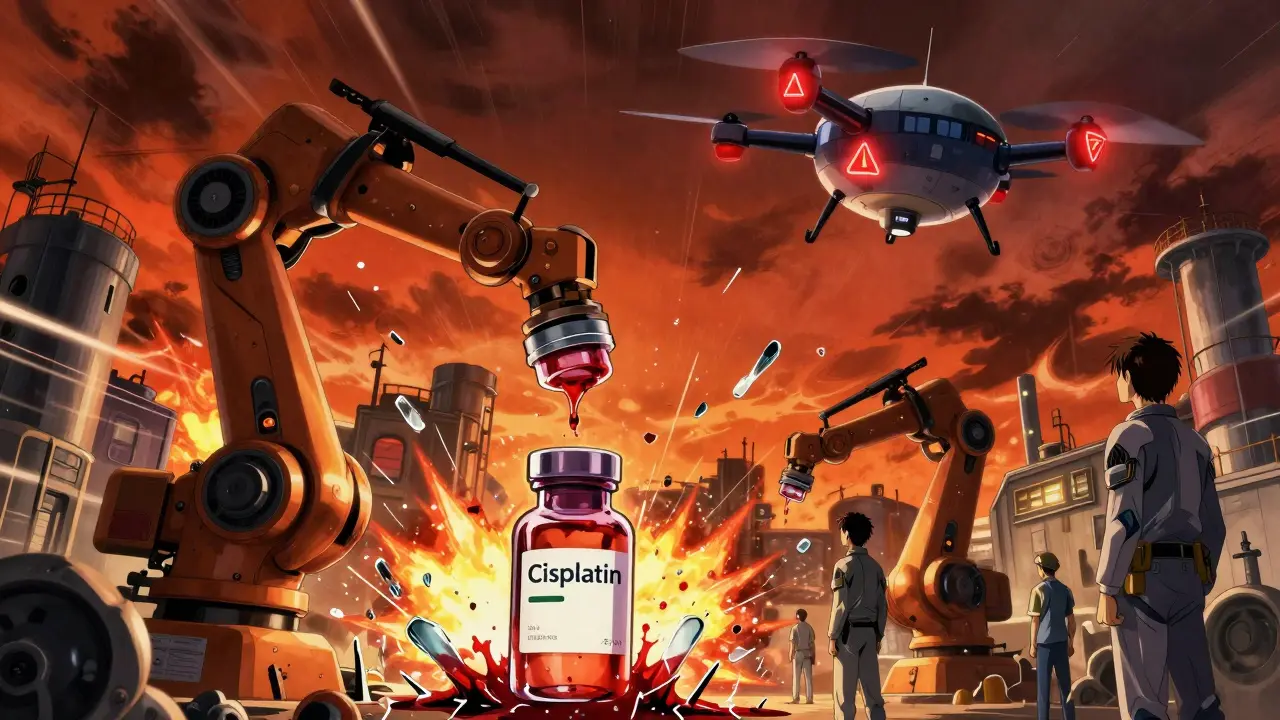
- Cisplatin: A key chemotherapy drug for testicular, ovarian, and lung cancers. Production halted in 2022 after an Indian facility failed FDA inspections. Hospitals now ration it, prioritizing patients with the best chance of survival.
- Saline Solution (0.9% Sodium Chloride): Still in limited supply. Used in nearly every hospital procedure - from IVs to flushing catheters.
- Vancomycin: A last-resort antibiotic for deadly infections like MRSA. Shortages have forced doctors to delay treatments or use less effective alternatives.
- Levothyroxine: The main drug for hypothyroidism. Demand has surged 35% since 2020, outpacing production.
- GLP-1 agonists (e.g., semaglutide, tirzepatide): Weight loss and diabetes drugs. Demand exploded, but manufacturing hasn’t kept up. Some patients wait months for refills.
These aren’t rare cases. The American Society of Health-System Pharmacists (ASHP) reports that 1 in 5 hospital patients in 2024 faced a delay or substitution because a needed drug wasn’t available.
Why Are These Drugs So Hard to Find?
It’s not one problem - it’s a chain of failures.First, manufacturing is concentrated overseas. About 80% of the active ingredients in U.S. drugs come from just two countries: India (45%) and China (25%). If a single factory in Hyderabad or Shanghai has a quality issue - like contaminated water or improper sterilization - it can knock out supply for the entire country.
Take cisplatin. One Indian plant made half of America’s supply. When the FDA shut it down in 2022 for repeated violations, there was no backup. No one else was making enough to fill the gap.
Second, generic drugs have razor-thin profits. They make up 90% of prescriptions but only 20% of drug spending. Manufacturers can’t afford to keep extra stock or invest in modern equipment. Why spend $10 million upgrading a line that only earns $2 per vial? So they run close to capacity - no safety buffer. One breakdown, one delay, and the drug vanishes.
Third, demand is rising fast. Drugs for diabetes and obesity - like semaglutide - have seen demand jump 35% a year since 2020. But production hasn’t scaled. No one expected this surge, and no one planned for it.
Finally, the FDA can’t force companies to make more. They can inspect, warn, and delay approvals - but they can’t require a company to ramp up production. In 2025, FDA Commissioner Robert Califf admitted the agency prevents about 200 potential shortages each year - but only because manufacturers voluntarily tell them about problems. Many still don’t.
Who’s Getting Hurt?
It’s not just hospitals. It’s people.Patients with cancer are being told their chemo will be delayed by weeks. Some get substituted with less effective drugs. A 2024 study by Patients for Affordable Drugs found that 31% of cancer patients experienced treatment interruptions due to shortages - with an average delay of nearly 15 days per interruption.
Diabetics are running out of insulin alternatives. People with thyroid conditions are skipping doses because pharmacies can’t restock levothyroxine. Emergency rooms are rationing saline. One Ohio pharmacist described on Reddit how his hospital now gives cisplatin only to patients with testicular cancer - the only group where it’s proven to save lives. Others get experimental options or nothing at all.
And the stress is overwhelming for staff. A 2025 ASHP survey found that 92% of hospital pharmacists spend more than 10 hours a week just tracking shortages. Two-thirds say they’ve made a medication error because they had to substitute a drug they weren’t fully trained on.
What’s Being Done?
Some progress is happening - but slowly.In January 2025, the FDA launched a new public portal where doctors and pharmacists can report shortages that aren’t yet on the official list. In three months, they received over 1,200 reports - and acted on 87% of them. That’s a step forward.
Some states are trying local fixes. New York is building an online map showing which pharmacies still have scarce drugs. Hawaii now allows Medicaid to cover foreign-approved versions of medications during shortages - a move that could save lives when U.S. supplies run dry.
Pharmacists are getting more power too. 47 states now let them swap a shortage drug for a therapeutically similar one. But only 19 states let them do it without calling a doctor first. That delay can cost time - and lives.
The federal government has proposed bills like the End Drug Shortages Act, which would require manufacturers to report demand spikes and export restrictions. But nothing’s passed yet.
What Can You Do?
If you’re a patient:- Ask your doctor or pharmacist: "Is my medication currently in shortage?"
- Don’t wait until your prescription runs out. Call ahead to your pharmacy - ask if they have stock.
- If your drug is unavailable, ask: "Is there a generic or alternative that works just as well?" Don’t assume substitutions are unsafe.
- Check the ASHP Drug Shortages Database online. It’s updated daily and free to use.
If you’re a caregiver or family member:
- Keep a list of all medications the person takes - including dosages and why they’re prescribed.
- Be ready to advocate. If a doctor says, "We don’t have it," push for: "What’s the next best option?"
- Don’t stop medications without guidance. Some drugs, like thyroid or seizure meds, can cause serious harm if stopped suddenly.
What’s Next?
The Congressional Budget Office predicts drug shortages will stay above 250 per year through 2027 - unless something changes. If proposed tariffs on Chinese and Indian pharmaceutical ingredients go through, that number could jump to 350+.Experts agree: we need three big fixes.
- Financial incentives to bring API manufacturing back to the U.S. or allied countries.
- Mandatory stockpiles of critical drugs - like saline, insulin, and chemotherapy agents - held by the government or hospitals.
- A national early warning system that connects manufacturers, distributors, and hospitals in real time - so shortages are spotted before they hit.
Right now, we’re reacting - not preventing. And every day without action, someone’s treatment gets delayed. Someone’s life gets put at risk.
The problem isn’t going away. But it’s not inevitable. We know what’s broken. We know how to fix it. The question is - who will make it happen?
What are the most common drugs in shortage right now?
As of late 2025, the most common shortages include 5% and 50% Dextrose injections, saline solution, cisplatin (a chemotherapy drug), vancomycin (an antibiotic), levothyroxine (for thyroid conditions), and GLP-1 drugs like semaglutide used for weight loss and diabetes. These are mostly generic sterile injectables and high-demand medications with fragile supply chains.
Why are generic drugs more likely to be in shortage than brand-name drugs?
Generic drugs make up 90% of prescriptions but only 20% of drug spending. Manufacturers earn very little profit per unit - often just 5-8% - so they can’t afford to keep extra inventory or invest in reliable production. Brand-name drugs, with 30-40% margins, can absorb costs and maintain backup supply chains. That’s why generics are the first to run out.
Can I get my medication from another country if it’s unavailable in the U.S.?
Legally, importing prescription drugs from other countries is restricted in the U.S. - except under very limited circumstances like FDA emergency exceptions. However, some states like Hawaii now allow Medicaid to cover foreign-approved versions during shortages. Always talk to your doctor before trying to get medication from overseas sources - safety and legality are major concerns.
How do I know if my pharmacy has the drug I need?
Call your pharmacy directly and ask if they have your medication in stock. Don’t rely on online status tools - they’re often outdated. You can also check the ASHP Drug Shortages Database for official updates. If your drug is listed as in shortage, ask if they can get it from another supplier or if a therapeutic substitute is available.
Are there any safe alternatives if my drug is unavailable?
Yes - but only if approved by your doctor. For example, if saline is unavailable, oral rehydration may be used for mild dehydration. If cisplatin is out, carboplatin may be substituted for some cancers. These aren’t perfect replacements, but they’re often safer than skipping treatment. Never switch medications on your own - always consult your provider.
How long will these shortages last?
Some shortages will resolve in 2025 - like the dextrose solutions expected to return by August and September. But many others, especially those tied to global manufacturing issues, could last into 2026 or beyond. Without policy changes, experts warn the number of shortages won’t drop below 250 per year until at least 2027.
Samantha Hobbs
December 28, 2025 AT 02:25Nicole Beasley
December 28, 2025 AT 05:12sonam gupta
December 28, 2025 AT 17:19Julius Hader
December 30, 2025 AT 12:53Vu L
December 31, 2025 AT 15:33James Hilton
January 1, 2026 AT 04:45Payton Daily
January 1, 2026 AT 21:56Kelsey Youmans
January 3, 2026 AT 12:41Sydney Lee
January 5, 2026 AT 05:23oluwarotimi w alaka
January 6, 2026 AT 16:47Debra Cagwin
January 8, 2026 AT 16:23Hakim Bachiri
January 9, 2026 AT 10:10Celia McTighe
January 11, 2026 AT 00:41Samantha Hobbs
January 11, 2026 AT 22:56