Alcohol and Diabetes Medications: What You Need to Know About Hypoglycemia and Liver Risks
 Dec, 1 2025
Alcohol & Diabetes Medication Risk Calculator
Personal Risk Assessment
Select your medication type, alcohol consumption, and food intake to calculate your specific risk level.
Drinking alcohol while taking diabetes meds isn’t just a bad idea-it can be dangerous. For people using insulin, sulfonylureas, or metformin, even one or two drinks can trigger a sudden, silent drop in blood sugar. And if you’re not paying attention, you might mistake the warning signs for just being drunk. This isn’t hypothetical. In Melbourne, where weekend social drinking is common, emergency rooms see multiple cases each month where people with diabetes end up hospitalized after mixing alcohol with their meds. The liver, already working hard to control blood sugar, gets overloaded trying to process alcohol. The result? A dangerous combo that can leave you confused, unconscious, or worse.
Why Alcohol Causes Hypoglycemia with Diabetes Meds
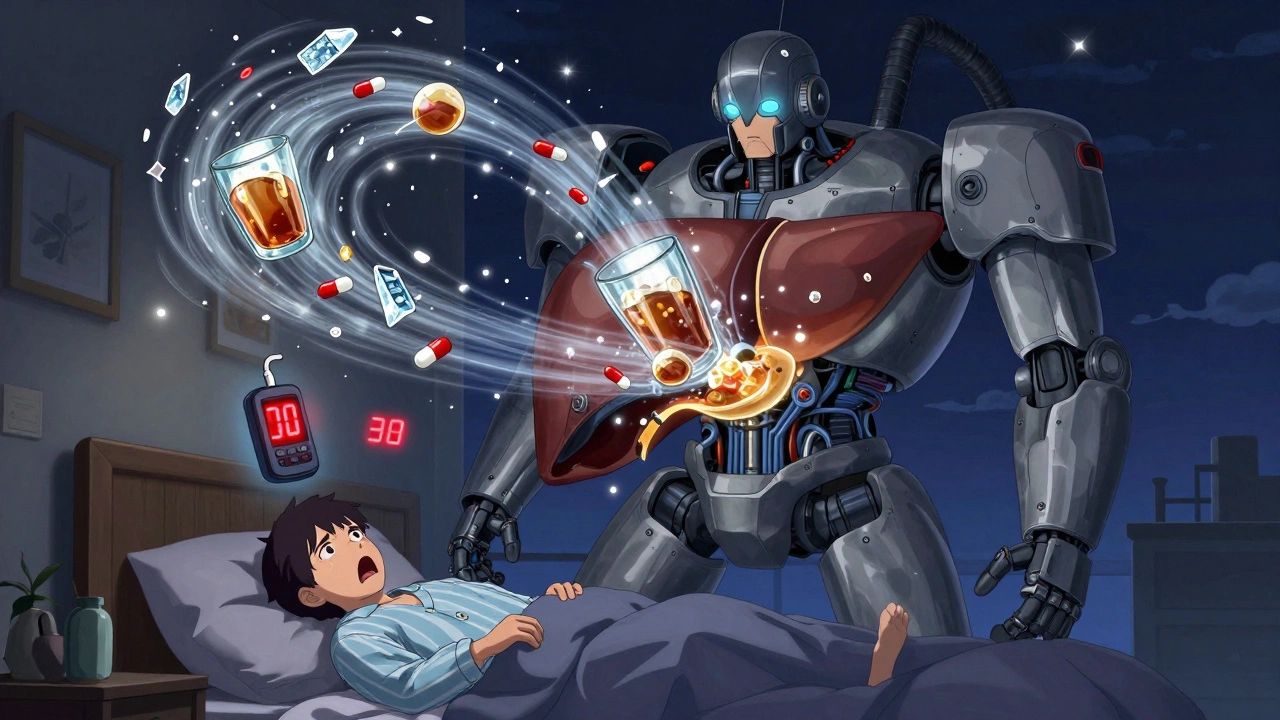
Your liver does two big jobs: it stores glucose and releases it when your blood sugar drops, and it breaks down alcohol. When you drink, your liver drops everything else to deal with the alcohol first. That means no glucose gets released into your bloodstream. If you’re on insulin or a sulfonylurea like glipizide or glyburide, your body is already pushing insulin to lower blood sugar. Without glucose from the liver, your blood sugar plummets-sometimes hours after your last drink.
This isn’t just a risk while you’re drinking. Hypoglycemia can hit at 2 a.m., long after you’ve gone to bed. People with diabetes often wake up sweaty, shaky, or confused, thinking they had a bad dream. But it’s low blood sugar. And because alcohol dulls your senses, you might not feel the usual warning signs like trembling, hunger, or rapid heartbeat. Slurred speech, dizziness, or trouble walking? That looks like intoxication. But it could be a medical emergency.
Studies show that people on insulin are up to five times more likely to have severe hypoglycemia after drinking than those not on insulin. The risk is highest when alcohol is consumed on an empty stomach. One study in the Journal of Diabetes Science and Technology found that 37% of participants who drank without eating experienced blood sugar below 60 mg/dL within four hours. That’s dangerously low.
Metformin and Alcohol: A Silent Threat to Your Liver
Metformin is the most common diabetes pill worldwide. It’s generally safe-but when mixed with alcohol, things get risky. Both metformin and alcohol are processed by the liver. When you drink, your liver has to handle both at once. That increases the chance of lactic acidosis, a rare but life-threatening condition where lactic acid builds up in your blood. Symptoms include nausea, vomiting, abdominal pain, weakness, and rapid breathing. It’s rare, but alcohol raises the risk.
Chronic drinking makes this worse. If you drink regularly, your liver can develop fatty liver disease or inflammation. Metformin doesn’t cause this, but it doesn’t help either. Together, they stress the liver more than either would alone. People with existing liver issues-like those with obesity or long-term type 2 diabetes-are at even higher risk.
And it’s not just about the liver. Metformin already causes stomach upset: bloating, diarrhea, nausea. Alcohol does the same. Mix them, and you’re doubling the discomfort. One patient in a Melbourne diabetes support group said, “I thought I had food poisoning after two beers. Turns out, it was the metformin and alcohol teaming up.”
Which Diabetes Medications Are Riskiest with Alcohol?
Not all diabetes meds react the same way. Here’s how they stack up:
| Medication Type | Risk Level | Primary Concern |
|---|---|---|
| Insulin | High | Severe hypoglycemia, delayed onset |
| Sulfonylureas (glipizide, glyburide) | High | Hypoglycemia even without food |
| Metformin | Moderate | Lactic acidosis, liver stress, GI upset |
| GLP-1 agonists (semaglutide, liraglutide) | Low | Increased nausea, but low hypoglycemia risk |
| SGLT2 inhibitors (empagliflozin, dapagliflozin) | Moderate | Dehydration, ketoacidosis risk with heavy drinking |
| DPP-4 inhibitors (sitagliptin, linagliptin) | Low | Minimal interaction |
If you’re on insulin or a sulfonylurea, you need to be extra careful. These drugs force your pancreas to release insulin regardless of your blood sugar. Alcohol shuts off your liver’s glucose release, so your body has no backup. It’s like turning off the fuel pump while the engine is still running.
Safe Drinking Tips for People with Diabetes
You don’t have to quit alcohol entirely-but you do need to be smart about it. Here’s what works:
- Always eat with alcohol. Have a meal or snack with carbs before and while drinking. A sandwich, some crackers, or a small bowl of oatmeal helps slow alcohol absorption and gives your liver glucose to work with.
- Choose low-sugar drinks. Skip sugary mixers like juice, soda, or tonic water. Stick to light beer, dry wine, or spirits with soda water and lime. One can of regular soda can add 40 grams of sugar-that’s like eating a candy bar.
- Limit how much you drink. Stick to one drink per day for women, two for men. That’s one 12-oz beer, 5 oz of wine, or 1.5 oz of spirits. More than that? You’re increasing your risk without adding benefit.
- Check your blood sugar before, during, and after. Test before you start drinking. Test again every 1-2 hours while drinking. Test before bed-even if you feel fine. If your sugar is below 100 mg/dL, eat a small snack with carbs.
- Wear a medical ID. If you pass out, someone needs to know you have diabetes. A bracelet or necklace saying “Diabetic on Insulin” could save your life.
- Tell someone you’re with. Make sure a friend or family member knows you have diabetes and what low blood sugar looks like. They might think you’re just drunk. You need them to know it’s an emergency.
One man in Adelaide told his story: “I had two glasses of wine with dinner, checked my sugar at 9 p.m.-it was 110. I went to bed. At 3 a.m., my CGM screamed ‘LOW.’ I was at 48. I didn’t feel a thing. If I hadn’t had the monitor, I might not have woken up.”
What About the ‘Heart Health’ Myth?
You’ve probably heard that a glass of red wine is good for your heart. It’s not that simple. Some studies suggest moderate alcohol might slightly raise HDL (good cholesterol). But for people with diabetes, the risks almost always outweigh the benefits. Alcohol can worsen nerve damage (neuropathy), raise blood pressure, interfere with sleep, and make weight loss harder-all of which hurt diabetes control.
The American Diabetes Association says there’s no universal safe amount. What’s okay for one person might be dangerous for another. It depends on your meds, your liver health, your weight, your blood sugar patterns, and whether you’ve had low blood sugar episodes before.
If you’re thinking about cutting back or quitting, talk to your doctor. They can help you adjust your meds or suggest alternatives. Don’t assume it’s fine just because your friend drinks and doesn’t have diabetes.
What to Do If You Think You’re Having Hypoglycemia
If you feel dizzy, confused, sweaty, or weak after drinking-don’t wait. Treat it like a medical emergency.
- Check your blood sugar immediately.
- If it’s below 70 mg/dL, take 15 grams of fast-acting carbs: 4 glucose tablets, ½ cup of juice, or 1 tablespoon of honey.
- Wait 15 minutes. Check again.
- If it’s still low, repeat.
- If you’re too confused to treat yourself, or if symptoms don’t improve, call emergency services. Don’t try to sleep it off.
And never, ever drive after drinking if you’re on diabetes meds. Even if you feel fine, your judgment and reaction time are impaired-and your body might be crashing.
Bottom Line: It’s Not About Abstinence-It’s About Awareness
You don’t need to give up alcohol completely. But you do need to treat it like a medicine-with caution, timing, and supervision. The liver doesn’t care if you’re celebrating or just relaxing. It’s still working overtime. And your brain? It’s not always telling you the truth about what’s happening inside.
Know your meds. Know your limits. Know your body. And if you’re unsure, talk to your doctor. There’s no shame in asking. Better safe than in the ER at 3 a.m. with your glucose meter flashing red.”
Can I drink alcohol if I’m on metformin?
You can, but with serious caution. Metformin and alcohol together increase the risk of lactic acidosis and worsen liver stress. It’s safest to avoid alcohol entirely if you have liver disease, kidney issues, or drink heavily. If you choose to drink, limit it to one drink occasionally, always eat first, and avoid binge drinking. Check your blood sugar before bed.
Why does alcohol cause low blood sugar hours after drinking?
The liver prioritizes breaking down alcohol over releasing stored glucose. This effect lasts for several hours-even after you’ve stopped drinking. If you’re on insulin or sulfonylureas, your body keeps pushing insulin down, but your liver can’t respond with glucose. That’s why lows can happen at night, often without warning.
Do all diabetes medications interact with alcohol the same way?
No. Insulin and sulfonylureas carry the highest risk for hypoglycemia. Metformin increases liver stress and lactic acidosis risk. GLP-1 agonists and DPP-4 inhibitors have minimal interaction. SGLT2 inhibitors can raise the risk of ketoacidosis with heavy drinking. Always check with your doctor about your specific medication.
Can I drink alcohol if I use a CGM?
Yes, and it’s actually safer. CGMs like Dexcom G7 or FreeStyle Libre 3 show real-time trends and can alert you to drops-even while you’re asleep. But they don’t detect alcohol. You still need to eat, limit intake, and check manually if your sensor shows a sudden drop. Don’t rely on the device alone.
What should I do if I’m confused and my blood sugar is normal?
Don’t assume it’s just alcohol. Hypoglycemia can cause confusion even if your blood sugar reads normal-especially if it dropped quickly. If you feel off, treat for low blood sugar anyway. It’s safer to take 15 grams of glucose than risk missing a real low. Always get help if you’re unsure.
Is it safe to drink alcohol if I have type 1 diabetes?
It’s riskier. People with type 1 diabetes are more prone to severe hypoglycemia, especially overnight. Alcohol masks symptoms and delays recovery. Many experts recommend avoiding alcohol entirely. If you do drink, use a CGM, eat carbs, check frequently, and never drink alone. Inform someone you’re with about your diabetes.
Shubham Pandey
December 2, 2025 AT 21:09Just had a beer with pizza. Glucose was 112. Went to bed. Woke up at 3 a.m. at 49. CGM screamed. Didn't feel a thing. Don't be me.
Elizabeth Farrell
December 4, 2025 AT 08:23I know it’s hard to give up social drinking, especially when everyone else is doing it-but your body is already carrying so much. I used to think ‘one glass’ was harmless, until my partner had a night where their blood sugar dropped so low they couldn’t speak. We called 911. They were fine, but it changed everything. Now we always eat before, always check before bed, and I carry glucose tabs in my purse like it’s my job. You’re not alone in this. Small changes make all the difference. ❤️
Sheryl Lynn
December 4, 2025 AT 22:38Oh please. The real tragedy here is that people treat alcohol like it’s some demonic substance. It’s just ethanol-a simple molecule. The problem isn’t the drink, it’s the lack of metabolic literacy. If you can’t manage your hepatic glucose flux while processing a modest ethanol load, maybe you shouldn’t be on sulfonylureas in the first place. The system’s broken, not the wine.
Paul Santos
December 5, 2025 AT 17:15Alcohol + metformin = lactic acidosis risk? Cute. But let’s be real-how many people actually die from this? Like, statistically, it’s rarer than getting struck by lightning while winning the lottery. Meanwhile, the real villain is insulin resistance. Alcohol’s just the scapegoat for a broken system. 🤷♂️
Eddy Kimani
December 7, 2025 AT 08:38Interesting breakdown on the meds. I’m on semaglutide and had a glass of dry wine last weekend. No issues. But I did check my CGM every hour. Wonder if the GLP-1 agonists actually blunt the hypoglycemic response by slowing gastric emptying? Anyone have data on that?
Chelsea Moore
December 8, 2025 AT 17:01THIS IS WHY PEOPLE DIE. You think you’re being ‘responsible’ with ‘one drink’-but you’re not. You’re gambling with your brain, your liver, your LIFE. And then you blame the meds? No. It’s YOU. You chose to drink. You chose to ignore the warnings. You chose to think ‘it won’t happen to me.’ Well guess what? It happens EVERY DAY. Wake up. Stop being selfish. Your family doesn’t want to bury you because you had ‘just one glass.’
John Biesecker
December 9, 2025 AT 15:30man i used to drink all the time till i got diagnosed... now i just sip wine on friday nights with cheese and crackers. my sugar stays chill. i think it’s less about the alcohol and more about the chaos. when you got a routine, your body knows what’s up. also 🍷🫶
Genesis Rubi
December 10, 2025 AT 22:32Why are we even talking about this like it’s a big deal? In America we have real problems-like insulin prices and junk food empires. But some guy in Australia drinks wine and now we’re all supposed to panic? Get a grip. This isn’t a crisis. It’s a lifestyle choice. And if you can’t handle it, don’t drink. Simple.
Doug Hawk
December 12, 2025 AT 06:25Just want to say the part about wearing a medical ID is huge. My buddy passed out at a BBQ last year. No one knew he had diabetes. They thought he was drunk. Took 20 minutes for someone to find his bracelet. He’s fine now but it scared the hell out of us. Seriously-get one. It’s cheap. It’s simple. It might save you.
John Morrow
December 13, 2025 AT 03:49Let’s not romanticize ‘moderation.’ The entire premise of this article assumes that people with diabetes have the cognitive bandwidth, emotional stability, and metabolic predictability to engage in ‘safe drinking.’ But most of us are already fighting insulin resistance, sleep deprivation, anxiety, and financial stress. Alcohol is a luxury we can’t afford-not because it’s toxic, but because our systems are already on life support. This isn’t advice. It’s a privilege.
Kristen Yates
December 13, 2025 AT 19:57I’m from Kenya. Here, people with diabetes drink fermented millet beer. It’s traditional. It’s low sugar. No one uses CGMs. They just eat ugali before. They live. Maybe the answer isn’t more tech-but more culture. We don’t need to be afraid. We need to adapt.
Saurabh Tiwari
December 13, 2025 AT 22:57cool article. i drink occasionally and check my sugar. no drama. just know your body. if you feel weird, eat something. if you sleep, tell someone. easy. 🍺😌