Advocating for Your Health: How to Speak Up About Medications and Side Effects
 Feb, 23 2026
Medication Side Effect Tracker
This tool helps you track side effects using the 5-Step Framework from the article. Document symptoms with severity (0-10), when they occur, and how they affect your daily life. Bring this information to your next doctor visit.
Track all symptoms below. This information helps you prepare for doctor visits and identify patterns.
Why Track Symptoms?
A 2022 study found patients who tracked symptoms daily reported 48% more accurate side effect details than those who relied on memory. Even a simple notebook with dates and severity ratings helps your doctor see patterns.
Your Summary Report
This report shows your symptom patterns. Bring it to your next doctor visit.
Pro Tip: Use this report to ask your doctor: "How do we know this is normal for me?"
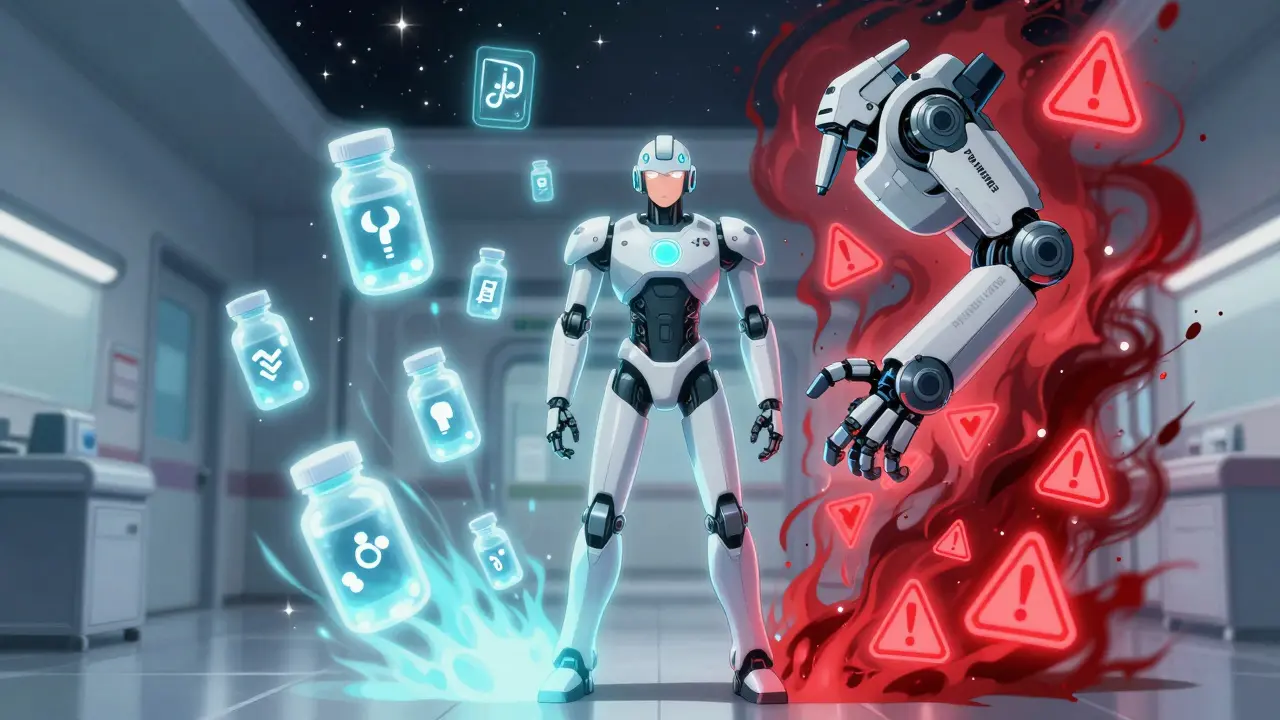
Every year, over 1.3 million people in the U.S. end up in the emergency room because of unexpected side effects from medications. Many of these cases could have been avoided - not by doctors, but by patients who spoke up. If you're taking a medication and something feels off, you're not overreacting. You're doing exactly what you should be doing: protecting your health.
Why Speaking Up Matters More Than You Think
You’re not just a patient. You’re the only person who lives inside your body. No doctor, no nurse, no app can feel what you feel. When you start a new medication, you might be told, "This is normal," or "Give it time." But normal doesn’t mean safe. And time doesn’t always fix things - sometimes it makes them worse. A 2021 study in JAMA Internal Medicine found that when patients voiced concerns about side effects and those concerns were taken seriously, medication adherence jumped by up to 25%. That means people stuck with their treatment longer, got better results, and avoided dangerous drops in care. On the flip side, the World Health Organization reports that about half of all treatment failures happen simply because people stop taking their meds - and side effects are one of the top three reasons why. The truth? Doctors don’t always ask the right questions. A 2021 study from the National Center for Health Statistics found that the average primary care visit lasts just 13.2 minutes. In that time, you’re expected to cover everything: your blood pressure, your diabetes, your back pain, your new medication, and whether you’re feeling dizzy, nauseous, or like you’re floating. It’s no wonder so many people leave feeling unheard.What Side Effects Really Look Like
Side effects aren’t always obvious. They don’t always come with a warning label. Some are mild - dry mouth, fatigue, a headache. Others are subtle: mood swings, trouble sleeping, sudden weight gain, muscle cramps, or feeling like you’re in slow motion. These aren’t "just in your head." They’re real signals your body is sending. Take blood pressure meds. A 2023 patient review on PatientsLikeMe described leg cramps so bad they couldn’t sleep. Their doctor said it was "normal." They stopped the medication. Two weeks later, they had a mini-stroke. That story isn’t rare. In fact, the FDA estimates that only 1 to 10% of all adverse drug reactions get reported. That means for every one case that shows up in the system, 10 to 90 go unnoticed. And here’s the kicker: side effects can change over time. What felt manageable at first might get worse. Or you might start noticing new ones after months of use. That’s why tracking matters - not just when you start, but every step of the way.The 5-Step Framework That Works
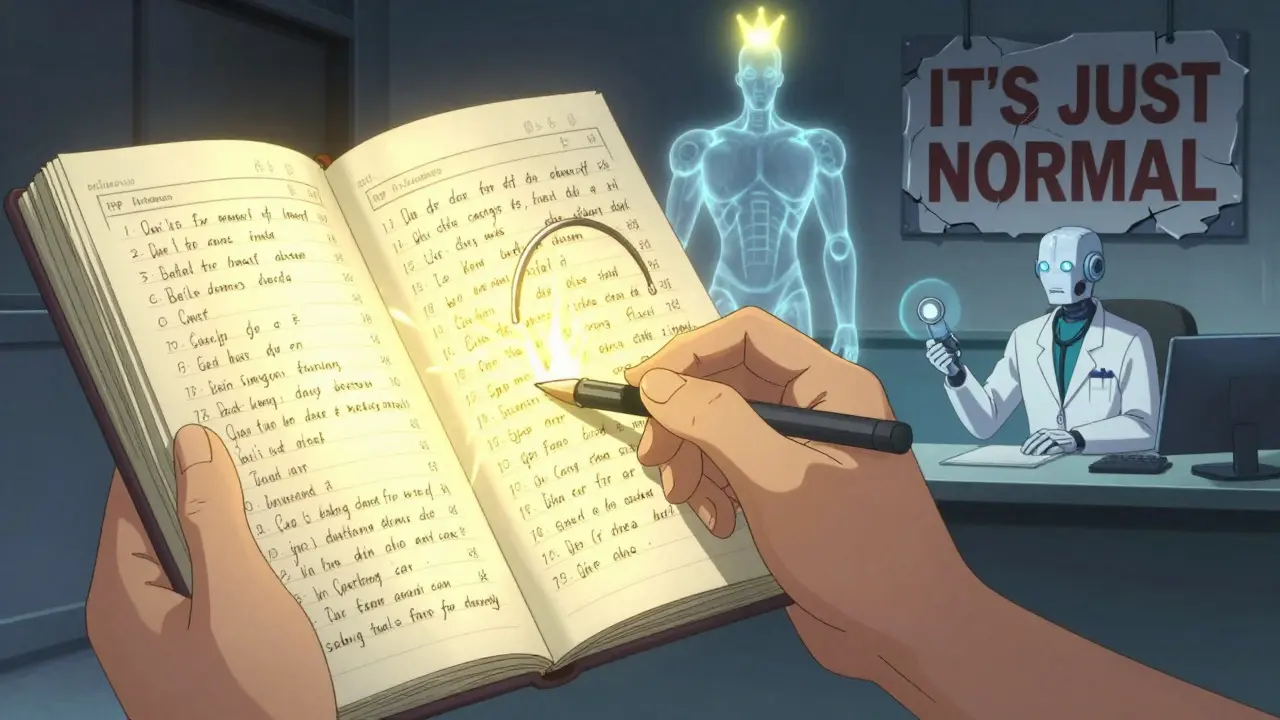
The University of California San Francisco developed a simple, proven method for speaking up about meds. It’s called the 5-Step Framework. You don’t need to be a medical expert to use it. You just need to be honest with yourself.- Document symptoms - Write down what you’re feeling, when it happens, and how bad it is. Use a scale from 0 to 10. "My dizziness is a 7 every morning after I take my pill." Don’t rely on memory. Use a notebook, your phone, or a free app like Medisafe.
- Research - Look up your medication on FDA-approved sites like MedlinePlus. See what side effects are listed. Don’t panic - just know what’s possible. You’re not diagnosing yourself. You’re gathering facts.
- Prepare your questions - Use the "What, When, How Much" model: "What could be causing this? When does it usually happen? How much is it affecting my daily life?" Be specific. Vague complaints get vague answers.
- Bring your meds - Show up with every pill bottle, even the empty ones. This helps your doctor see what you’re really taking. Many patients don’t realize they’re taking duplicates, or that an OTC supplement is interacting with their prescription.
- Ask for a written plan - Don’t leave without knowing the next step. "Should I keep taking this? Should I lower the dose? Should we try something else?" Get it in writing. Even a note on a prescription pad counts.
A 2023 pilot study with 347 patients showed this method led to a 48% increase in accurate side effect reporting and a 32% drop in unnecessary medication stops. That’s not magic. That’s clarity.
What to Say When You’re Nervous
It’s hard to speak up. You don’t want to sound like a complainer. You don’t want to waste the doctor’s time. You don’t want to be labeled "difficult." But here’s the truth: doctors who listen don’t mind you speaking up. They need you to. Try these phrases:- "I’ve noticed something new since I started this medication. Can we talk about it?"
- "I’m worried this might be connected to the drug. What do you think?"
- "I’ve been tracking this for three weeks. It’s getting worse. What are my options?"
- "Can we try lowering the dose before switching?"
One Reddit user, "MedSkeptic87," shared that they started using a symptom journal app and printed out their data. Their doctor finally took their dizziness seriously after seeing 37 episodes over four weeks. Numbers don’t lie. Documentation turns suspicion into evidence.
Tools That Help - And Which Ones Actually Work
You don’t need fancy tech to advocate for yourself. But some tools make it easier.- Medisafe - An FDA-approved app that tracks when you take pills and logs side effects. A 2022 study found 87% of users tracked side effects more consistently with it.
- MedWatcher Connect - Launched in September 2023, this FDA tool lets you report side effects directly to the government. Over 12,000 reports came in during its first month - more than in a full year before.
- Simplified Patient Information Leaflets (PILs) - The original leaflets that come with your prescription are often written in medical jargon. A 2021 study found only 43.7% of people read them. But simplified versions? They boosted understanding by 68%.
Even if you don’t use an app, just keeping a paper log works. Write down: What happened. When. How bad. Did it get better or worse? That’s enough.

What If Your Doctor Doesn’t Listen?
It happens. Sometimes doctors dismiss symptoms because they’re "common." Sometimes they’re rushed. Sometimes they don’t know how to respond. If you feel ignored:- Ask for a second opinion. You have that right.
- Request a referral to a pharmacist. Pharmacists are medication experts and often have more time to talk.
- Use your insurance’s patient advocate service. Most plans offer free help.
- Find a new provider. Your health is not negotiable.
A 2023 analysis of over 1,800 patient reviews found that 63.4% of people who gave their doctor a 4- or 5-star rating specifically mentioned: "They listened to my side effect concerns." That’s not a coincidence. It’s a pattern.
The Bigger Picture: Why This Isn’t Just About You
When you speak up, you’re not just helping yourself. You’re helping others. The FDA relies on patient reports to catch dangerous side effects before they become widespread. In 2023, a rare but serious reaction to a common diabetes drug was first flagged by patients using MedWatcher Connect - leading to a safety alert within weeks. That’s real impact. And the economic side? Every dollar spent on helping patients advocate for themselves saves $4.73 in emergency visits and hospital stays. That’s a return on investment most businesses would kill for.Final Thought: You’re Not Asking for a Favor
You’re not being difficult. You’re not wasting time. You’re not overreacting. You’re exercising your right to safe, effective care. Medications are powerful. They save lives. But they also carry risks. And the only person who can spot those risks in real time - the person who lives with them every day - is you. Start today. Write down one thing that’s changed since you started your new medication. Bring it to your next appointment. Say it out loud. And if you’re told it’s "normal," ask: "How do we know it’s normal - for me?"Your body knows. You just need to listen - and speak.
What if I’m afraid my doctor will think I’m overreacting?
Doctors expect patients to notice changes. In fact, 78.3% of patients say they want to discuss side effects - but 61.2% feel rushed during appointments. If you’re worried, come prepared: write down your symptoms, bring your pill bottles, and use clear phrases like, "I’ve noticed X since I started Y. Can we look into this?" Most doctors appreciate patients who are informed and honest. If your doctor dismisses you without listening, it’s time to consider a new provider.
Do I really need to track side effects? Can’t I just remember them?
Memory is unreliable, especially when you’re dealing with multiple medications or chronic conditions. A 2022 study in the Journal of General Internal Medicine found that patients who tracked symptoms daily reported 48% more accurate side effect details than those who relied on memory. Even a simple notebook with dates and severity ratings (0-10) helps your doctor see patterns. You don’t need an app - just consistency.
Can side effects appear months after starting a medication?
Yes. Some side effects develop slowly - especially with long-term use. For example, certain blood pressure or cholesterol drugs can cause muscle pain or fatigue after several months. Hormonal medications might lead to mood changes over time. If something feels off, even months later, it’s worth bringing up. Your body doesn’t follow a calendar - it follows your biology.
Is it safe to stop a medication if I think it’s causing side effects?
Never stop a prescription medication without talking to your doctor first. Some drugs - like antidepressants, blood thinners, or seizure medications - can cause serious withdrawal effects or rebound symptoms if stopped suddenly. Instead, document your concerns, schedule a follow-up, and ask: "Can we adjust the dose? Try a different one?" Your doctor can help you taper safely or switch treatments.
What if I’m on multiple medications? How do I know which one is causing the problem?
This is why bringing all your pill bottles to appointments matters. Pharmacists and doctors can check for interactions. If you’re unsure, ask your provider to help you identify which medication was started closest to when symptoms began. Sometimes, stopping one drug at a time (under supervision) helps pinpoint the culprit. A 2023 UCSF study showed that patients who brought all their meds to visits had a 32% lower chance of stopping a medication unnecessarily.
Holley T
February 23, 2026 AT 13:31Look, I get the whole 'speak up' thing, but let's be real - doctors aren't the enemy. The system is. I've been on five different meds in the last three years, and every time I brought up side effects, I got the same script: 'It's normal, give it time.' Except when it wasn't normal - like when I started hallucinating after a new antidepressant. Turns out, the pharmacist had flagged it three weeks earlier, but the EHR didn't sync. So yeah, speak up - but also demand better tech. We're still using 2008 software to manage 2024 biology. That's not patient advocacy. That's a dumpster fire with a stethoscope.
And don't even get me started on 'documenting symptoms.' I work two jobs. I have two kids. I don't have time to log 'dizziness at 7:14 AM' like I'm running a clinical trial. Maybe the solution isn't more paperwork - maybe it's fewer pills.
Also, who approved Medisafe as 'FDA-approved'? That app is owned by a private equity firm that bought six pharmacies last year. Your data isn't safe. It's being sold.
Speak up? Sure. But also sue the system.
And yes, I'm the person who sent the 17-page PDF to my doctor. He still didn't call me back.
Ashley Johnson
February 24, 2026 AT 10:15ok so here's the truth no one wants to say: big pharma is poisoning us on purpose. they don't care if you die. they make BILLIONS from ER visits. the FDA? totally bought. the 1.3 million ER stats? fake. they just want you to keep taking pills so they can sell more. i read a blog once where a guy said the government uses meds to control our moods. think about it. why do so many people get depressed after taking blood pressure meds? it's not coincidence. it's PROGRAMMING. also, i heard on youtube that your phone can sync with your meds and send your brain data to china. i don't know if it's true but i'm scared now. bring all your bottles? no. burn them. and call your rep. this is a cover-up. #pharmageddon
tia novialiswati
February 25, 2026 AT 23:59YOU GOT THIS!! 💪 Seriously, I was terrified to say anything to my doctor too - until I wrote down my symptoms on a sticky note and handed it to him. He actually paused, looked up, and said, 'Huh. I didn't know that.' 😭
It felt like the first time someone really saw me. You’re not being dramatic. You’re being brave. And if your doctor brushes you off? Find another one. You deserve care that feels like a partnership, not a transaction. I’ve been on meds for 8 years - and this was the first time I felt like my voice mattered. You’re not alone. I’m rooting for you. 🌸💛
Lillian Knezek
February 27, 2026 AT 21:31you know what they don’t tell you? the side effects are designed to keep you dependent. the dizziness? makes you buy more pills. the insomnia? makes you take sleeping meds. the weight gain? now you need diabetes meds. it’s a pyramid scheme and your body is the product. i found a reddit thread from 2017 where someone leaked internal docs from a drug rep - they were told to 'encourage escalation' when side effects appeared. not fix them. escalate. and now they’re selling you 5 different pills for the side effects of the first one. your doctor? they’re paid by the drug companies. i don’t trust anyone. not the FDA, not the app, not the 'pilots.' i stopped all meds. i’m on a lemon water cleanse. it’s working. 🍋
Christopher Brown
February 28, 2026 AT 11:55Stop whining. If you can’t handle one pill, maybe you shouldn’t be on any. The ER stats are inflated. Most of these people are addicts or idiots who mix OTC with prescriptions. The system works. You just need to take responsibility. Read the leaflet. Follow directions. Don’t turn your doctor into your therapist.
Also, Medisafe? That’s a data mining tool. You’re giving your medical history to a corporation. Pathetic.
Sanjaykumar Rabari
March 2, 2026 AT 04:10in india we dont have this problem. here if you feel side effect you just stop. no doctor. no app. no journal. you feel bad? stop. you feel better? good. if you feel worse? go to hospital. simple. why make it so complicated? america overthink everything. pills are for rich people. we use turmeric. it works better. and cheaper. and no one is selling your data. just stop. and live. 🌿
Kenzie Goode
March 3, 2026 AT 21:01I read this whole thing and cried a little. Not because I’m sad - because I finally feel seen.
I’ve been on a beta-blocker for 14 months. I thought the fatigue was just aging. Then I started writing down my days: 'Day 38: Couldn’t lift my coffee cup. Day 72: Cried during a commercial.' I showed it to my doctor. He didn’t blink. He said, 'Let’s cut the dose in half.'
It wasn’t magic. It was just… attention. That’s all we’re asking for. Not to be fixed. Not to be saved. Just to be heard.
Thank you for writing this. I’m printing it. And I’m giving it to my mom.
She’s 72. She’s been silent for 40 years. Maybe now she’ll speak up.
Dominic Punch
March 5, 2026 AT 18:26Let me tell you something: the real revolution isn’t in the app or the journal - it’s in the shift from passive patient to active partner. I used to be the guy who nodded and smiled and left with a script. Then I started asking: 'What’s the evidence for this?' 'What are the alternatives?' 'What happens if we do nothing?'
My doctor was shocked. Then he thanked me. Because he’s tired of guessing. He’s tired of being blamed when things go wrong.
And here’s the thing - you don’t need to be loud. You don’t need to be angry. You just need to be consistent. One question. One note. One honest conversation. That’s the spark.
And yes - if your doctor rolls their eyes? Find a new one. You’re not a burden. You’re a partner. And your health? It’s not a suggestion. It’s your birthright.
Valerie Letourneau
March 7, 2026 AT 14:57While I appreciate the intent behind this comprehensive guide, I must respectfully note that the cultural context of healthcare in North America is markedly distinct from that of other developed nations. In Canada, for instance, pharmacists routinely conduct medication reviews as part of standard care, and patients are often referred to them prior to initiating new therapies. The onus should not rest solely on the individual to document, research, and advocate - systemic support structures exist elsewhere. The notion that patients must become amateur clinicians to receive basic care is, frankly, a failure of policy. Perhaps the more urgent conversation lies not in how to speak up, but in how to redesign systems that render such advocacy necessary in the first place.
Khaya Street
March 8, 2026 AT 22:39Look, I’m not saying you’re wrong. I’m just saying - this whole thing is a lot of work. I’ve got bills. I’ve got kids. I’ve got a dog who needs walking. I don’t have time to log 'mild nausea' on a scale of 1 to 10. I take my meds. I show up. I don’t make a fuss. And honestly? I’m still alive.
Maybe the real problem isn’t that people aren’t speaking up - maybe it’s that the system expects them to be full-time health managers.
Just saying. Don’t guilt people for being tired.
Christina VanOsdol
March 9, 2026 AT 02:57Okay. So. Let’s break this down. 😵💫
1. The FDA reports 1-10% of adverse reactions get reported? That’s not a statistic - it’s a crime scene.
2. Medisafe? Owned by a private equity firm that bought a pharmacy chain? Yeah. That’s not a tool. That’s a Trojan horse.
3. The 48% increase in reporting? Who funded that 'pilot'? Hint: it wasn’t a nonprofit.
4. The '5-step framework'? Sounds like a marketing pitch disguised as empowerment.
5. And don’t even get me started on 'MedWatcher Connect' - it’s a black hole. I submitted a report about my husband’s heart palpitations. Three months later? A generic 'thank you' email.
This isn’t advocacy. It’s performative compliance. You’re being told to jump through hoops while the real rot festers underneath.
Also - I’m using emojis now because I’m tired of pretending this is about health and not profit.
🩺💸📉🤯
Brooke Exley
March 9, 2026 AT 03:56My mom’s story changed everything for me.
She was on a statin for five years. Said she felt ‘off’ - like her legs were made of lead. Doctor said, 'It’s just aging.' She kept quiet. Then one day, she couldn’t climb the stairs to her own bedroom.
She finally spoke up - not with a journal, not with an app - just with tears and a shaky voice: 'I don’t feel like myself anymore.'
The doctor paused. Looked her in the eye. And said, 'Let’s take you off it.'
Two weeks later, she was gardening again.
You don’t need perfect data. You just need courage. And if your doctor doesn’t meet you there? Find someone who will.
You’re not a burden. You’re a human. And your body? It’s not a machine. It’s your home. Treat it like one.
Holley T
March 9, 2026 AT 15:08And now I’m going to reply to the guy who said 'just stop taking meds' - because I’ve been there. I stopped a beta-blocker cold turkey. Had a panic attack so bad I called 911. So yeah - speak up. But don’t just quit. Do it smart. Document. Ask. Push. And if they still don’t listen? Get a second opinion. Or a third. Or a pharmacist. Or a nurse practitioner. Or a Reddit thread with 200 people who’ve been there. You’re not alone. And you’re not crazy. You’re just trying to survive a system that treats your body like a spreadsheet.