Low Back Pain: Acute vs. Chronic and What Physical Therapy Really Does
 Jan, 22 2026
Most people will feel low back pain at least once in their life. It’s not rare. It’s not dramatic. But when it sticks around, it changes everything. The difference between pain that lasts a few days and pain that lasts years isn’t just about time-it’s about what’s happening inside your nervous system. And how you treat it matters more than you think.
Acute Back Pain: The Body’s Warning Signal
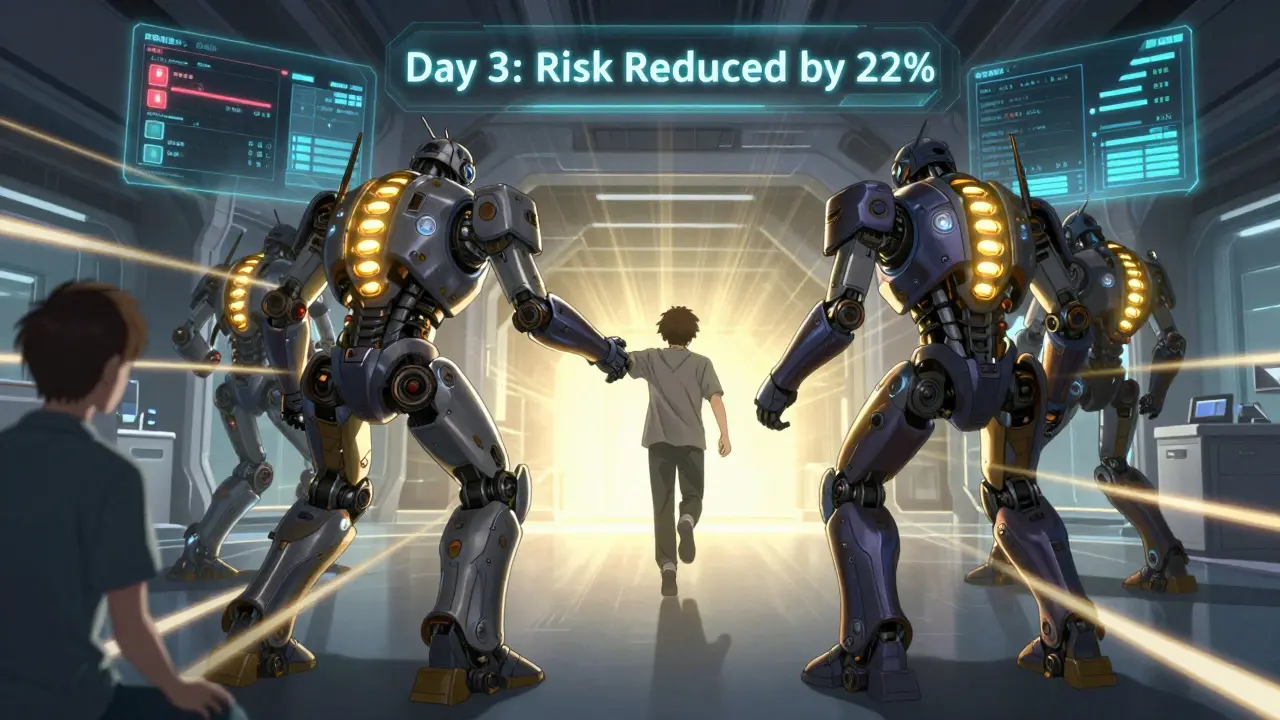
Acute low back pain shows up fast. Maybe you lifted something heavy, twisted wrong, or sat too long in a bad chair. The pain is sharp, localized, and it hurts when you move. It’s your body’s alarm system going off. This kind of pain usually lasts less than four weeks. For most people, it fades on its own. But here’s the catch: if you wait too long to act, that alarm can turn into a siren that never stops. Research shows that 90% of people with a herniated disc or muscle strain recover fully within 6 to 12 weeks-without surgery, without injections, without weeks of bed rest. The key? Early movement. Not lying still. Not popping NSAIDs and hoping it goes away. Moving gently, even if it’s uncomfortable, helps the tissues heal properly. Physical therapy for acute back pain isn’t about deep tissue massage or electric stimulation. It’s about teaching your body how to move again safely. A physical therapist will check your posture, your lifting patterns, your hip mobility. They’ll give you simple exercises-bridges, cat-cows, pelvic tilts-that rebuild control without straining the area. Most people need just 6 to 12 sessions over 3 to 6 weeks. And if they start within the first 72 hours, their chance of developing chronic pain drops by 22%. One patient from Melbourne, after lifting a suitcase wrong, saw a therapist on day three. By session five, his pain was 90% gone. That’s not luck. That’s timing.Chronic Back Pain: When the Nervous System Gets Confused
Chronic low back pain isn’t just “acute pain that didn’t go away.” It’s something else entirely. If your pain lasts longer than 12 weeks-or six months, depending on who you ask-it’s no longer about damaged muscles or discs. It’s about your nervous system. Your brain and spinal cord have become hypersensitive. They’re amplifying signals, even when there’s no tissue damage left. This is called central sensitization. Think of it like a thermostat stuck on high. Your body’s pain alarm is turned up to max, even when there’s no fire. That’s why two people with the same MRI scan can have wildly different pain levels. One feels fine. The other can’t get out of bed. Treating chronic pain the same way you treat acute pain doesn’t work. Stretching and strengthening alone won’t reset that oversensitive alarm. That’s why so many people end up doing 20 physical therapy sessions over five months and still only get 30% relief. Effective treatment for chronic back pain needs to retrain the nervous system. That’s where pain neuroscience education comes in. A therapist explains, in plain language, how pain works-not just in the back, but in the brain. They help you understand that pain doesn’t always mean damage. That fear of movement is part of the problem, not the solution. Studies show that when chronic pain patients get this kind of education, their pain drops by 30-50%, and their ability to function improves by 60-70%. One patient on Reddit said, “I thought my back was broken. Turns out, my brain was just scared. Learning that changed everything.”
Why Timing Is Everything
The biggest factor in whether acute back pain becomes chronic? How soon you start physical therapy. If you wait more than 16 days to see a therapist, your risk of chronic pain jumps by 38%. That’s not a small number. That’s a turning point. Early intervention-within the first week-cuts the risk of long-term pain by nearly half. And it’s not just about feeling better faster. It’s about preventing your body from rewiring itself into a pain cycle that’s harder to undo. Think of it like a sprained ankle. If you ignore it, you start limping. Then your hip hurts. Then your knee. Your whole movement pattern changes. The same thing happens with back pain-if you avoid bending, lifting, or twisting for weeks, your body learns to move in ways that keep the pain going. Physical therapists now use tools like the “Back Pain Stratification Tool,” a seven-question test that predicts who’s likely to develop chronic pain. If you score high, you get more intensive, early intervention-not just exercises, but education, mindset work, and graded exposure to movements you’ve been avoiding.What Physical Therapy Actually Does (And Doesn’t Do)
There’s a lot of misinformation out there. Some people think physical therapy means endless stretches, painful adjustments, or magic machines. Others think it’s useless unless you’re injured in a car crash. Here’s what it really is:- For acute pain: Movement retraining, posture correction, and gentle strengthening. Goal: Return to normal activity as fast as possible. Success rate: 84% prevent chronic pain when treated early.
- For chronic pain: Pain education, fear reduction, graded exposure to movement, and functional retraining. Goal: Rebuild confidence in your body. Success rate: 60-70% improve function, but full pain relief is rare.
Real Results, Real Numbers
Let’s look at what actually happens in real life:- 82% of patients with acute back pain report major improvement after 4-6 PT sessions.
- Only 58% of chronic pain patients say they got meaningful relief-even after 20 sessions.
- Patients who start therapy within 7 days of pain onset are 3.2 times more satisfied than those who wait 3 weeks.
- Chronic pain patients who get pain neuroscience education are 71% more likely to rate their treatment as “life-changing.”
What Comes Next?
New tools are changing the game. Apps like Kaia Health, approved by the FDA in 2023, offer AI-guided physical therapy for chronic pain. Patients using them report 45% pain reduction in 12 weeks. Medicare just introduced new billing codes in January 2024 to pay therapists more for treating chronic pain-because they finally recognize it’s not just “back pain.” It’s a brain-body condition. The future of back pain care isn’t more scans, more pills, or more injections. It’s better education, earlier action, and smarter therapy. If you have acute pain, don’t wait. See a physical therapist within a week. If you’ve had pain for months, don’t give up. Find a therapist who talks about your nervous system, not just your spine. Your body isn’t broken. It’s just confused. And it can be retrained.How do I know if my back pain is acute or chronic?
Acute back pain lasts less than four weeks and usually comes from a clear injury-like lifting something heavy or twisting suddenly. It’s sharp, localized, and gets better with rest and movement. Chronic back pain lasts longer than 12 weeks (or six months, depending on guidelines) and often feels like a constant ache or stiffness, even without a clear injury. If your pain hasn’t improved after three months, it’s likely chronic and involves changes in your nervous system, not just your muscles or spine.
Should I get an MRI for my low back pain?
For acute back pain, no-unless you have red flags like loss of bladder control, numbness in the groin, or unexplained weight loss. Most MRIs show things like bulging discs or degeneration that are normal with age and not causing pain. Getting an MRI too early can make you fear movement, which actually increases your risk of turning acute pain into chronic pain by 27%. Physical therapists can assess your movement and function without imaging.
Is physical therapy worth it for chronic back pain?
Yes-but only if it’s the right kind. Traditional stretching and strengthening alone won’t fix chronic pain caused by nervous system changes. Look for a therapist who offers pain neuroscience education. This means they explain how pain works in your brain, help you reduce fear of movement, and gradually expose you to activities you’ve been avoiding. Studies show this approach leads to 30-50% pain reduction and 60-70% improvement in daily function. It’s not a quick fix, but it’s the most effective long-term strategy we have.
How many physical therapy sessions do I need?
For acute pain, most people need 6-12 sessions over 3-6 weeks. For chronic pain, it’s usually 15-25 sessions over 8-12 weeks. But the number of sessions matters less than the type of treatment. A few sessions with a therapist who understands pain neuroscience can be more effective than 20 sessions focused only on exercises. Quality over quantity.
Can physical therapy prevent chronic back pain?
Yes-if you start early. Physical therapy within the first 14 days of acute pain reduces the risk of chronic pain by 16-22%. The earlier, the better. Starting within 72 hours cuts the risk by 22%. This isn’t just about pain relief-it’s about stopping your nervous system from learning to hurt. Movement, education, and confidence are the best prevention tools.
What should I look for in a physical therapist for back pain?
For acute pain, look for someone skilled in mechanical diagnosis and movement retraining. For chronic pain, find a therapist with certification in pain neuroscience education. Ask if they explain how pain works in the brain, not just the spine. Check if they use tools like the STarT Back screening or ask about your fears and beliefs around movement. A good therapist will treat your whole experience-not just your MRI results.
Sue Stone
January 23, 2026 AT 01:44Been there. Lifted a suitcase, thought I’d torn something. Went to PT on day 3, did three exercises for two weeks, and now I forget I ever hurt. No magic, just timing.
So simple it’s almost insulting.
Oladeji Omobolaji
January 24, 2026 AT 10:14Man, this is real talk. In Nigeria, people just suffer till they can’t walk. No PT, no education, just painkillers and prayers. This post should be translated and sent everywhere.
Thank you for saying what needs to be said.
Janet King
January 25, 2026 AT 00:00Acute pain: move gently. Chronic pain: retrain your brain. That’s it. No scans. No surgery. No magic. Just science and consistency.
Why is this so hard for people to accept?
Kerry Evans
January 25, 2026 AT 21:38Let’s be honest. Most people don’t go to PT because they’re lazy. They want a pill, a shot, or a miracle. They don’t want to learn how their body works. They want someone else to fix them.
And then they wonder why nothing works.
It’s not the system. It’s the mindset.
Anna Pryde-Smith
January 26, 2026 AT 05:30OH MY GOD. I’ve been screaming this for years. My back hurt for 18 months. I saw 7 therapists. 6 of them just stretched me like a pretzel. The seventh? She looked me in the eye and said, ‘Your brain thinks your back is on fire. Let’s convince it otherwise.’
That was the first time I cried in therapy. Not from pain. From relief.
Why is this not standard? Why is it still a secret?
Kerry Moore
January 27, 2026 AT 02:13There is a compelling body of evidence supporting early intervention in acute musculoskeletal pain. The neuroplastic changes associated with prolonged nociceptive input are well documented in peer-reviewed literature. The concept of central sensitization, as described, aligns with the biopsychosocial model of pain management.
Furthermore, the reduction in healthcare expenditure through early physical therapy is statistically significant across multiple longitudinal studies.
It is unfortunate that systemic barriers-insurance limitations, provider training gaps, and patient misconceptions-continue to impede optimal implementation.
Sallie Jane Barnes
January 28, 2026 AT 22:42I’m a nurse. I’ve seen people wait six months, get an MRI, get a steroid shot, get a referral to PT… and then finally, after three failed treatments, find someone who explains pain neuroscience.
They cry. They say, ‘I thought I was broken.’
You’re not broken. You’re just scared. And that’s fixable.
So please-don’t wait.
Laura Rice
January 30, 2026 AT 02:55OMG I JUST REALIZED WHY I’VE BEEN STUCK FOR 3 YEARS. I thought PT meant ‘stretch till you scream.’ I went to one who just did massage and said ‘do these 3 moves.’ I quit after 4 sessions because I felt worse.
But what if… what if I just needed someone to tell me my brain was lying?
I’m going back. I’m asking for the ‘pain science’ one. I’m not scared anymore. I’m just mad I waited so long.
Vanessa Barber
January 31, 2026 AT 00:59Yeah, but what if your PT is just a glorified personal trainer with a license? Or worse-paid by the session so they keep you coming back?
Not all PTs are saints. Some just want your money.
And if you’re broke, you can’t afford the ‘right’ one.
So sure, early PT is great… if you’re lucky.
Dawson Taylor
February 1, 2026 AT 05:23The most profound insight here isn’t about movement or neuroscience. It’s about the cultural myth that pain equals damage. We’ve been taught that pain is a mirror of injury. But the body is not a machine. It’s a storyteller. And sometimes, the story becomes more real than the facts.
Physical therapy, at its best, doesn’t fix the back. It helps the mind stop telling the lie.
That’s not treatment. That’s liberation.