How to Store Light-Sensitive Medications and Eye Drops Properly
 Jan, 24 2026
Why Light Matters for Your Medications
Have you ever opened a bottle of eye drops and noticed they look cloudy or have changed color? Or maybe your cream turned from white to yellow after sitting on the bathroom counter? That’s not normal. It’s degradation. Light-especially sunlight and bright indoor lighting-can break down the active ingredients in many medications, making them less effective or even unsafe. This isn’t just a theory. Studies show some eye drops lose up to 40% of their potency after just seven days in clear containers. Antibiotics, chemotherapy drugs, and even vitamin D drops can weaken significantly when exposed to light. The result? Your treatment doesn’t work like it should. You might not notice right away, but over time, your condition could worsen because the medicine isn’t doing its job.
What Makes a Medication Light-Sensitive?
Not all meds need special care, but a surprising number do. The U.S. Pharmacopeia lists 470 injectable drugs that require protection from light. That includes common ones like tetracycline antibiotics, nitroglycerin for chest pain, and certain chemotherapy agents. Eye drops are especially vulnerable because they’re liquid and often contain compounds that react quickly to UV rays. Drugs with hormones-like birth control pills or insulin-are also at risk. The key sign? Look for the label. If it says “Protect from Light,” “Store in Original Container,” or has a small sun-with-a-slash icon, treat it like a fragile item. About 78% of these medications come in amber or opaque bottles for a reason. That color blocks harmful wavelengths below 470 nanometers, the range most likely to trigger chemical breakdown. If your meds came in a clear bottle, ask your pharmacist. It might be an error-or worse, a risk.
Amber Bottles vs. Opaque Containers: What’s Best?
Pharmacies use amber glass for a reason: it blocks 98% of UV light. Opaque plastic blocks about 85%. That 13% difference matters when you’re storing something like latanoprost for glaucoma, where even small drops in potency can affect your vision. Glass is more expensive, but it’s more reliable. Plastic is lighter and less breakable, which is great for travel, but only if it’s high-quality UV-blocking material. Avoid cheap opaque containers from discount stores-they might look dark, but they don’t block enough light. Some eye drop brands, like those from Bausch + Lomb, use a dual-layer design: amber glass inside, with an opaque outer sleeve. That’s the gold standard. If you need to transfer meds to another container, use only USP-compliant amber bottles. Don’t just grab a random pill bottle from the drawer. It won’t protect your medicine.
Where to Store Them at Home
Your medicine cabinet is probably the worst place. Bathrooms get hot, humid, and bright-three things that kill medication stability. Heat above 86°F (30°C) and moisture above 60% humidity can ruin pills, creams, and drops. Instead, pick a cool, dry, dark spot. A kitchen cabinet away from the stove or sink works well. A drawer in your bedroom dresser is even better. Avoid windowsills, shelves near lamps, or any place that gets direct sunlight during the day. If you live somewhere with extreme temperatures-like Melbourne in summer, where indoor temps can hit 35°C-consider a small insulated box with a UV-blocking lining. These cost $20-$60 and keep meds stable even during heatwaves. Don’t refrigerate unless the label says so. Most eye drops and oral meds are fine at room temperature (15-25°C). But insulin and some biologics? Those need the fridge. Keep them between 2-8°C, and never freeze them.
Traveling With Light-Sensitive Meds
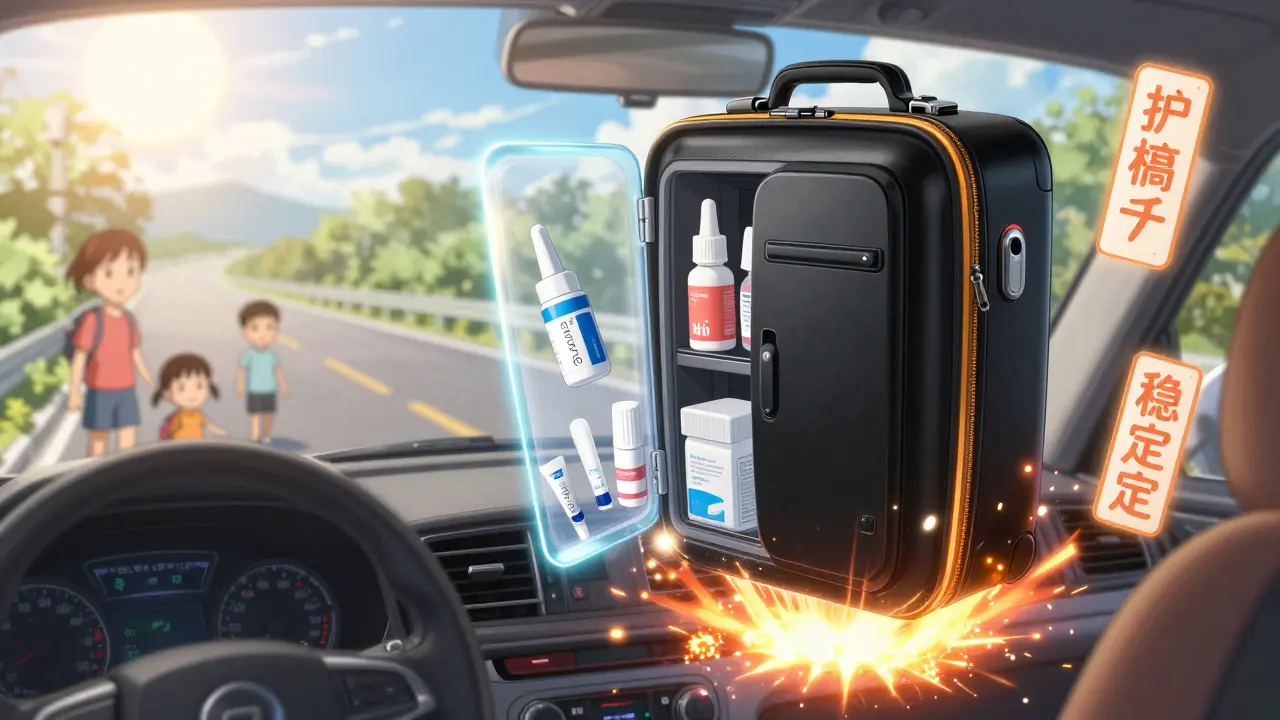
Going on a trip? Pack smart. A regular purse or suitcase is not enough. Use a dedicated insulated medication bag with a UV-blocking interior. These are designed to hold temperature and block light for 8-12 hours. If you’re flying, keep meds in your carry-on. Checked luggage can get too hot in the cargo hold. Some brands now make smart containers with built-in UV sensors that alert your phone if your meds got too much light. They’re still new, but they’re coming. Until then, keep your eye drops or creams in their original amber bottle, inside a small opaque pouch or even a wrapped towel. If you’re on a long drive, stash them in the glove compartment, not the center console-it gets hot. And never leave them in the car overnight. Even in winter, the sun through the window can degrade them.
Signs Your Medication Has Gone Bad
Trust your eyes and nose. If something looks or smells off, don’t use it. For creams and ointments: discoloration (white turning yellow or brown), separation, or grainy texture. For pills: cracking, chipping, or unusual odor. For eye drops: cloudiness, floating particles, or a strange smell-like vinegar or chemicals. Aspirin that smells like vinegar is a classic sign of breakdown. Eye drops that turn cloudy after opening? That’s a red flag. One user on Reddit lost $120 worth of tretinoin cream because they stored it in the bathroom. It turned yellow in two weeks. Another person saved their glaucoma treatment by switching to an amber storage box-his drops lasted the full six weeks instead of failing at four. If you’re unsure, call your pharmacist. Don’t guess. Taking degraded meds can be dangerous.
What Not to Do
Don’t transfer meds to daily pill organizers unless they’re specifically designed for light-sensitive drugs. Most are clear plastic and offer zero protection. Don’t store them near windows, in the car, or on top of the fridge. Don’t ignore expiration dates-even if they look fine, light exposure shortens their life. Don’t assume your pharmacist will tell you everything. Many patients don’t realize their meds need special care until they see a problem. Ask: “Is this protected from light?” If they hesitate, dig deeper. And never use expired eye drops. They can cause serious eye infections.
When to Call Your Pharmacist
If you’re unsure about storage, if your medication looks different, or if you’ve accidentally left it in the sun, call your pharmacist. They have access to databases that tell them exactly how each drug reacts to heat, light, and humidity. The American Society of Health-System Pharmacists has an online tool that checks over 12,000 medications for storage needs. You can also call the FDA’s Medication Storage Hotline at 1-855-543-3784. They can tell you if your drug is on the list of 470 that need light protection. Don’t wait until your treatment fails. A quick call now can save you money, time, and health risks later.
Real People, Real Results
People who take this seriously see a difference. A 68-year-old woman in Sydney switched her glaucoma drops to an amber storage box after her vision started fluctuating. Her drops lasted the full six weeks after opening-no more blurry days. A man in Brisbane kept his insulin in a UV-blocking cooler during summer road trips and never had a spike in blood sugar from degraded insulin. On Amazon, UV-blocking storage boxes have 4.3 out of 5 stars from over 1,200 reviews. The top comment: “Keeps my insulin stable during summer travel.” The worst reviews? “Hard to see how much is left.” That’s the trade-off. You sacrifice visibility for safety. And that’s worth it.
Final Thought: It’s Not Just About the Bottle
Storing light-sensitive meds isn’t complicated, but it’s easy to forget. You wouldn’t leave a camera lens in direct sun for days. Why treat your medicine any differently? The science is clear. The risks are real. And the solutions-amber bottles, dark drawers, insulated bags-are simple and affordable. Your health depends on this medicine working. Don’t let sunlight sabotage it.
Can I store eye drops in the fridge?
Yes, if the label says to. Most eye drops are fine at room temperature (4-25°C), but some, like certain glaucoma treatments, should be refrigerated after opening to extend their shelf life. Always check the instructions. Never freeze them. If you refrigerate, keep them in their original amber bottle inside a sealed container to avoid moisture buildup.
What if my medication came in a clear bottle?
Ask your pharmacist. Some medications are light-sensitive but were packaged in clear bottles by mistake-or because they’re stable for short-term use. If it’s supposed to be protected, request a replacement in an amber or opaque container. Never transfer it to a random bottle. Use only USP-compliant light-protective containers.
How long do eye drops last after opening?
Most last 4-6 weeks after opening, but light exposure can shorten that. If stored in proper amber containers away from heat and light, they’ll last the full time. If stored in clear bottles or warm places, they may degrade in as little as 1-2 weeks. Always check the expiration date on the bottle and discard after the recommended time-even if it looks fine.
Are UV-blocking storage boxes worth it?
If you take multiple light-sensitive meds or live in a hot climate, yes. They cost $20-$60 and protect your meds from both light and temperature swings. For insulin, chemotherapy drugs, or eye drops, they’re a small price to pay for peace of mind and effectiveness. Many users report fewer wasted prescriptions and better results.
Can I use aluminum foil to wrap my meds?
Technically, yes-foil blocks 100% of light. But it’s not practical. You have to unwrap your meds every time you use them, which increases the risk of contamination or forgetting to rewrap. It’s better to use a proper amber container that protects the med continuously without extra steps.
SWAPNIL SIDAM
January 26, 2026 AT 10:01This changed everything for me. I used to keep my eye drops on the bathroom shelf like a dummy. Now they’re in a dark drawer and I swear they last longer. No more blurry mornings.
Thanks for the tip.
Aishah Bango
January 28, 2026 AT 01:28People still don’t get it. Leaving meds in the sun is like leaving your baby in a hot car. It’s not negligence-it’s ignorance with consequences. If you can’t follow basic storage instructions, maybe you shouldn’t be taking them at all.
Simran Kaur
January 29, 2026 AT 03:47I’m from India and we’ve always stored our medicines in the coolest corner of the house-usually under the bed or in a wooden box. My grandma used to say, ‘Light is the thief of strength.’ She didn’t know the science, but she knew the truth.
Now I use an amber bottle and a small cloth pouch. Simple. Effective. No fancy gadgets needed.
Also, never trust those cheap plastic pill organizers-they’re just windows for your medicine to die in.
Peter Sharplin
January 29, 2026 AT 16:35Just to clarify something-amber glass blocks UV up to 470nm, but not all visible light. That’s why some drops still degrade slowly even in amber bottles. The real game-changer is temperature control. A study from Johns Hopkins showed that keeping latanoprost at 25°C vs 30°C doubled its shelf life, regardless of bottle color.
So if you’re in a hot climate, pair amber bottles with a cool, dry spot. A basement, a closet away from the wall, even a sealed jar with silica gel packs can help. Don’t just rely on the bottle. Control the environment too.
John Wippler
January 30, 2026 AT 08:12Let’s think bigger here. We treat our phones like sacred objects-protecting them from scratches, drops, water. But we throw life-saving medicine into a sunlit bathroom like it’s yesterday’s takeout?
There’s a metaphor here. We’re willing to spend $1,200 on a phone case, but won’t spend $25 on a UV-blocking box for something that keeps us alive.
It’s not about the bottle. It’s about what we value. Are we just surviving? Or are we truly caring for ourselves?
Maybe the real medicine isn’t in the drop-it’s in the decision to protect it.
bella nash
February 1, 2026 AT 07:18It is imperative to note that the United States Pharmacopeial Convention delineates precise parameters regarding photodegradation thresholds for pharmaceutical preparations. Failure to adhere to such regulatory guidelines constitutes a deviation from accepted standards of pharmaceutical care. One must exercise due diligence in the preservation of therapeutic agents. The consequences of noncompliance are not merely theoretical but are substantiated by empirical data contained within the United States Pharmacopeia, Chapter <1079>.
Additionally, the use of aluminum foil is discouraged as it introduces potential for contamination via direct physical contact and is not a validated method of light protection per USP standards.
Curtis Younker
February 3, 2026 AT 04:36Okay so I just bought one of those UV storage boxes off Amazon after reading this and I’m obsessed. Like, I put my insulin, my glaucoma drops, and even my vitamin D in there. It’s like a little fortress for my health. I even named it ‘The Vault.’
My wife thinks I’m weird but honestly? I slept better last night knowing my meds weren’t baking in the sun. If you’re on meds that matter, just do it. $40 is cheaper than a hospital visit.
Also-yes, you can see how much is left. Just shine a flashlight through the side. It’s fine. Don’t be lazy.
Henry Jenkins
February 5, 2026 AT 01:09Interesting piece, but I’m curious-why is the assumption always that amber bottles are the best solution? What about the environmental cost of producing glass versus recycled plastic? Amber glass requires high-temperature melting, which emits more CO2. And many of these UV-blocking plastic containers are made from PETG with UV inhibitors, which are fully recyclable.
Also, most people don’t realize that once you open a bottle, oxygen exposure is often a bigger threat than light. The real solution might be nitrogen-purged containers or single-dose vials, not just colored glass.
Amber is a band-aid. We need systemic reform in pharmaceutical packaging, not just better storage habits.
Dan Nichols
February 6, 2026 AT 20:42Everyone’s acting like this is groundbreaking news. Newsflash: pharmacists have been telling patients this for decades. You think we didn’t know eye drops degrade in light? The fact you’re surprised means you never read the label or asked your pharmacist.
Also, that ‘470nm’ number? That’s the cutoff for UVB, not UVA. UVA goes up to 400nm and still breaks down meds. So amber glass isn’t even the full story.
And don’t get me started on ‘UV-blocking boxes’-most are just black plastic with a fancy label. Read the specs. If it doesn’t say ‘ASTM D1234 compliant,’ it’s a gimmick.
Stop buying into wellness marketing. Just ask your pharmacist. They know.
Renia Pyles
February 7, 2026 AT 11:18Wow. Another guilt-trip article. Like I don’t have enough stress already. I work two jobs, raise kids, and now I’m supposed to buy a $60 box because my eye drops might get a little sun?
My drops are fine. I’ve been using them for years. If they stop working, I’ll just get new ones. I’m not spending my last $50 on a plastic box so some blog can feel virtuous.
Also, who even has a ‘dark drawer’? I live in a studio apartment. Everything’s in the open.
Rakesh Kakkad
February 7, 2026 AT 21:42Thank you for this detailed article. 🙏
As a person from India, I have seen many families store medicines in the kitchen near the gas stove. This is extremely dangerous. Heat and light both destroy potency.
I now use a small steel lunchbox with black cloth inside. It is cheap, available everywhere, and blocks all light. I place it on the top shelf of my cupboard, away from windows.
Also, I write the opening date on the bottle with a permanent marker. Simple. Effective. No app needed.
May all who read this stay healthy. 🙏
Peter Sharplin
February 9, 2026 AT 16:53Good point about the steel lunchbox. I’ve seen similar setups in rural clinics in Nepal. They use metal tins lined with black cotton. No fancy tech, just physics-light can’t penetrate, and metal insulates against heat.
And yes, writing the date on the bottle? That’s the single most underrated habit in medication safety. I do it too. It’s not about being perfect-it’s about being consistent.
Also, if you’re using insulin, write the date on the pen too. Once opened, it’s good for 28 days, not 6 weeks. That’s a common mistake.