CPAP Machines: Types, Mask Fitting, and Adherence Strategies
 Dec, 25 2025
For millions of people with sleep apnea, a CPAP machine isn’t just a device-it’s the difference between waking up exhausted and waking up refreshed. But getting one isn’t the end of the story. Many people quit using their CPAP within the first few months, not because it doesn’t work, but because it doesn’t fit-literally and emotionally. The truth is, CPAP therapy works wonders when used right, but it’s not one-size-fits-all. Choosing the right machine, finding a mask that doesn’t feel like a torture device, and sticking with it long-term are three separate challenges that need their own solutions.
What Kind of CPAP Machine Do You Really Need?
Not all CPAP machines are created equal. There are four main types, each designed for different needs and lifestyles. The most common is the traditional CPAP, which delivers a single, fixed pressure all night long. If your sleep study showed stable breathing patterns and you’re on a budget, a basic CPAP like the Philips DreamStation ($750) or ResMed AirSense 10 ($850) might be all you need. These machines are simple, reliable, and often covered by insurance after your deductible. But if your breathing changes throughout the night-maybe you snore more when you’re on your back, or you wake up gasping after a dream-then an APAP machine might be a better fit. APAP stands for Auto-Adjusting Positive Airway Pressure. Instead of pushing the same pressure all night, it reads your breathing and adjusts automatically. It’s like having a sleep specialist watching over you. Models like the ResMed AirSense 11 AutoSet ($2,100) can drop pressure when you’re breathing easily and ramp up when you need it. Studies show users stick with APAP 15% longer than with standard CPAP, mostly because it feels more natural. Then there’s BiPAP. This isn’t for everyone. BiPAP gives you two pressure settings: higher when you inhale, lower when you exhale. It’s ideal for people who need high pressure (over 15 cm H2O) or have other breathing conditions like COPD. It’s pricier-between $600 and $1,600-but for the right person, it’s life-changing. One user on Reddit said, “I tried CPAP for six months. My chest felt crushed. BiPAP felt like breathing again.” And then there’s EPAP. These are small, disposable nasal valves that cost under $150 a month. They’re not machines. They don’t plug in. They just create resistance on exhale to keep your airway open. They work for mild sleep apnea (AHI under 15), but if your score is higher, they won’t cut it. A 2020 study found they’re only 45% effective for moderate to severe cases, compared to 85% for CPAP. So don’t mistake them for a cheap alternative-they’re a limited tool. If you travel a lot, consider a travel CPAP like the ResMed AirMini. It’s smaller than a soda can, weighs less than a pound, and fits in your coat pocket. But here’s the catch: it doesn’t have a built-in humidifier. You’ll need to buy the separate $80 humidifier accessory if you’re prone to dry mouth or nosebleeds. And while it’s quiet, some users report it’s louder than standard machines at 52 dBA-think of a quiet conversation, not a whisper.Mask Fitting: The Real Game-Changer
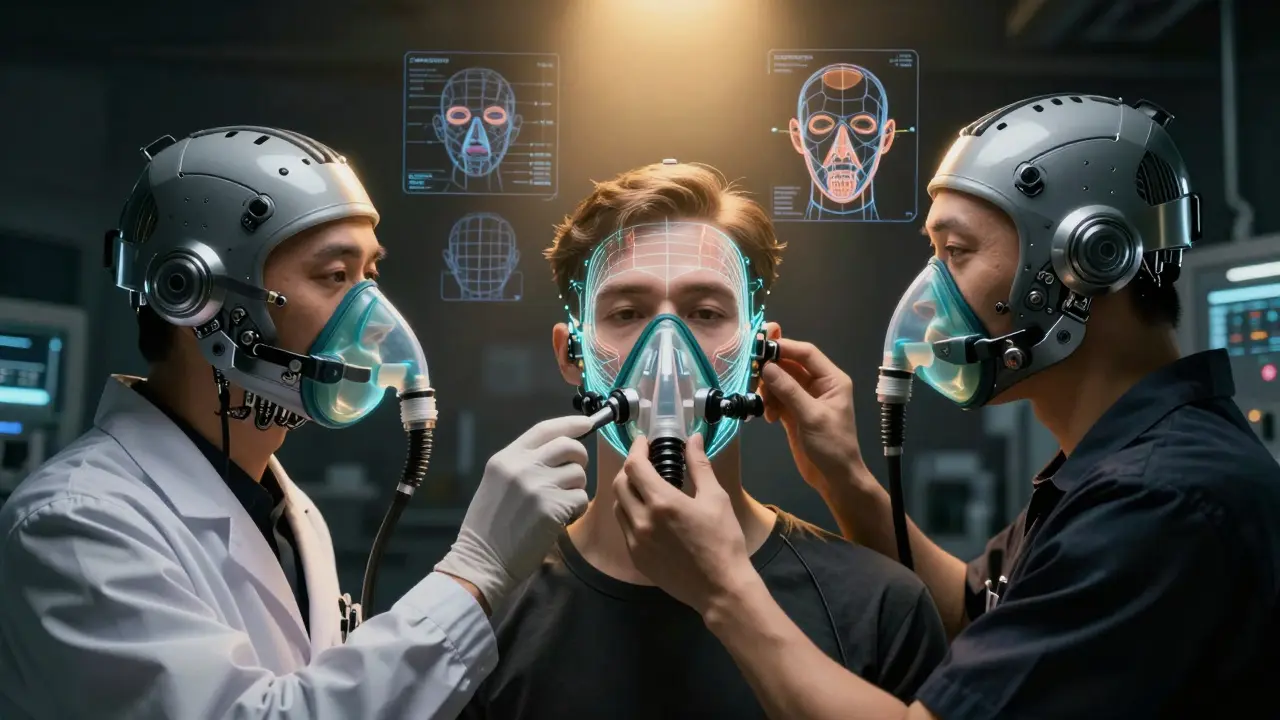
You can have the most advanced CPAP on the planet, but if your mask leaks, you’re wasting your time. And leaks aren’t just about wasted air-they’re the #1 reason people quit. A 2023 survey found that 42% of users stopped therapy within three months because of mask discomfort. There are four main mask types, and your choice depends on your face shape, sleep position, and breathing habits:- Nasal pillows: These sit at the entrance of your nostrils. They’re lightweight, barely visible, and great for side sleepers. Users like u/NasalPillowFan on Reddit say they cut their leak rate from 15 L/min to 3 L/min after switching. Best for people who don’t breathe through their mouth.
- Nasal masks: Cover your nose only. They’re the most popular-used by 45% of CPAP users. Good for moderate pressure needs and people who move around a lot in bed.
- Full-face masks: Cover both nose and mouth. Essential if you’re a mouth breather or have chronic nasal congestion. But they’re bulkier and cause more skin irritation-35% more than nasal pillows.
- Hybrid/oral masks: These are rare. Only 5% of users need them. They’re designed for people who can’t breathe through their nose at all.
Why People Stop Using CPAP (And How to Stick With It)
The scary truth? Only 46% of people using CPAP meet the therapeutic standard: at least 4 hours a night, 70% of nights. That means more than half of people who start CPAP don’t stick with it. Why? It’s rarely the machine. It’s the experience. The biggest hurdle? Getting used to it. Most people expect to sleep normally the first night. They don’t. It takes time. The Cleveland Clinic says the average acclimation period is 2-4 weeks. Some need longer. Here’s what works:- Start with daytime practice: Wear the mask while watching TV for 5-10 minutes, three times a day. Get used to the feel. Don’t turn on the machine yet. Just breathe through it.
- Use the ramp feature: This slowly increases pressure over 5-45 minutes. It helps you fall asleep without feeling like you’re being forced to breathe. 75% of users rely on this.
- Turn on the humidifier: Dry mouth and nose are the #2 complaint. Heated humidifiers (set between 86°F-95°F) reduce these complaints by 50%. If your machine doesn’t have one, get one.
- Track your data: Modern machines show your AHI, leak rate, and usage hours. Seeing your numbers improve-like dropping from an AHI of 18 to 2-is a powerful motivator. ResMed’s myAir app gives personalized coaching and boosts adherence by 27%.
What’s New in CPAP Tech (2025)
The field hasn’t stood still. In 2023, ResMed launched the AirSense 11 with AI that predicts breathing disruptions before they happen-cutting AHI by 22%. Philips’ DreamStation 3 runs at just 25 dBA, quieter than a library. Fisher & Paykel’s SleepStyle uses an “exhale relief” algorithm that drops pressure by up to 50% when you breathe out. It’s like having a gentle hand helping you exhale. Insurance rules are changing too. Starting in 2024, Medicare and most private insurers require your machine to track usage. To keep coverage, you must use it at least 4 hours a night, 70% of nights. If you don’t, they’ll stop paying. That’s why data tracking isn’t optional anymore-it’s your lifeline to continued care. And the market is shifting. More young adults are getting diagnosed. GoodRx reports a 40% jump in users aged 18-45 since 2020. Trucking companies now require drivers with severe sleep apnea to use CPAP. Schneider Logistics saw a 32% drop in accidents after enforcing the rule. Sleep apnea isn’t just a health issue-it’s a safety issue.
What to Do If CPAP Isn’t Working
If you’ve tried everything-different masks, humidifiers, ramp settings-and you’re still struggling, don’t give up. Talk to your sleep specialist. You might need a different machine. Or maybe you have something else going on. About 5-15% of CPAP users develop treatment-emergent central sleep apnea-where your brain stops telling your body to breathe. That’s not a CPAP problem. That’s a different condition called CSA. For that, you might need an ASV machine like the ResMed AirCurve 10 ($2,800), which adjusts pressure in real time for both obstructive and central events. Or maybe you just need more support. Some clinics now offer telemedicine follow-ups, where your data is reviewed remotely. That cuts the cost of repeat visits by $200. And if cost is a barrier, check out patient assistance programs. ResMed and Philips both offer payment plans.Final Thoughts: CPAP Is a Commitment, Not a Cure
CPAP isn’t a magic button. It’s a tool. And like any tool, it only works if you use it right. The goal isn’t to wear it perfectly every night-it’s to make it part of your routine. Start small. Be patient. Track your progress. And if one mask doesn’t work, try another. If one machine feels wrong, ask for a different one. The science is clear: consistent CPAP use reduces your risk of heart attack and stroke by 20-30%. It gives you back your energy, your focus, your life. But none of that matters if you stop using it. So don’t quit because it’s hard. Quit because you’ve tried everything-and found what works.Can I use a CPAP machine without a prescription?
No. In the United States, all CPAP machines require a prescription from a licensed healthcare provider. This is because CPAP therapy is a medical treatment for obstructive sleep apnea, and the pressure settings must be tailored to your specific needs based on a sleep study. Buying a machine without a prescription is not only illegal in most cases, it’s dangerous-using the wrong pressure can worsen your condition or cause harm.
Is APAP better than CPAP?
For many people, yes. APAP adjusts pressure automatically based on your breathing, which makes it more comfortable and effective if your sleep apnea varies from night to night or changes with sleep position. Studies show APAP users stick with therapy 15% longer than CPAP users. However, if your breathing is stable and you’re on a tight budget, a standard CPAP can be just as effective. Your sleep specialist can help you decide based on your sleep study results and lifestyle.
Why does my CPAP mask leak?
Leaks usually happen because the mask doesn’t fit your face properly. This could be due to the wrong size, wrong type (e.g., full-face when you’re a nasal breather), or too-tight straps that distort the seal. Facial hair, sleeping on your side, or changes in weight can also cause leaks. Check your machine’s leak rate display-if it’s over 24 L/min, your mask isn’t sealing. Try a different mask type, adjust the headgear gently, or use a CPAP pillow with cutouts to reduce pressure on the mask.
How long does it take to get used to a CPAP machine?
Most people need 2 to 4 weeks to adjust. Some take longer. The key is patience and practice. Start by wearing the mask during the day while watching TV. Use the ramp feature to ease into pressure. Don’t expect perfect sleep on night one. Track your usage and AHI numbers-seeing progress helps. If after a month you’re still miserable, talk to your provider. You might need a different mask, machine, or pressure setting.
Do I need a humidifier with my CPAP?
If you have dry mouth, nasal congestion, or nosebleeds, yes. Heated humidifiers reduce these symptoms by 50% and make therapy much more tolerable. Most modern CPAP machines come with built-in humidifiers, but if yours doesn’t, you can add one. Even if you don’t have dryness now, many users regret not using one from the start. It’s a small addition that makes a big difference in long-term adherence.
Can I travel with my CPAP machine?
Absolutely. Travel CPAP machines like the ResMed AirMini are designed for portability-they weigh less than a pound and fit in your pocket. Most airlines allow them as medical devices and don’t count them toward your carry-on limit. Just make sure you have a battery if you’re flying internationally, and consider bringing a separate humidifier if you’re sensitive to dry air. Always carry your prescription in case security asks.
Jay Ara
December 25, 2025 AT 14:21christian ebongue
December 27, 2025 AT 07:45Joanne Smith
December 29, 2025 AT 00:28jesse chen
December 30, 2025 AT 09:29Prasanthi Kontemukkala
December 31, 2025 AT 23:35Jeanette Jeffrey
January 1, 2026 AT 08:36Lori Anne Franklin
January 3, 2026 AT 02:10Ryan Cheng
January 4, 2026 AT 03:18wendy parrales fong
January 4, 2026 AT 07:10Sarah Holmes
January 5, 2026 AT 06:21Alex Ragen
January 6, 2026 AT 16:26Jody Kennedy
January 7, 2026 AT 00:40Bryan Woods
January 8, 2026 AT 23:29