Pharmacy Auxiliary Labels: What Those Color Stickers on Your Medicine Mean
 Apr, 6 2026
You pick up your prescription, and along with the standard white label, there are one or two bright neon stickers slapped on the side of the bottle. Maybe it's a red one saying "May Be Habit-Forming" or a yellow one warning you to "Take With Food." These aren't just decorative; they are pharmacy auxiliary labels is adhesive labels applied to medication containers to convey supplemental information not included on primary prescription labels. While they might look like simple stickers, they are actually critical safety tools designed to prevent the 1.3 million medication errors that happen every year in the US alone.
The real problem is that most of us forget what the pharmacist told us the second we leave the store. In fact, the Institute for Safe Medication Practices found that about 50% of patients forget their verbal instructions within just 48 hours. That's where these stickers come in-they act as a permanent, visual reminder of the most important "do's and don'ts" of your treatment.
The Psychology of Color: What the Stickers Tell You
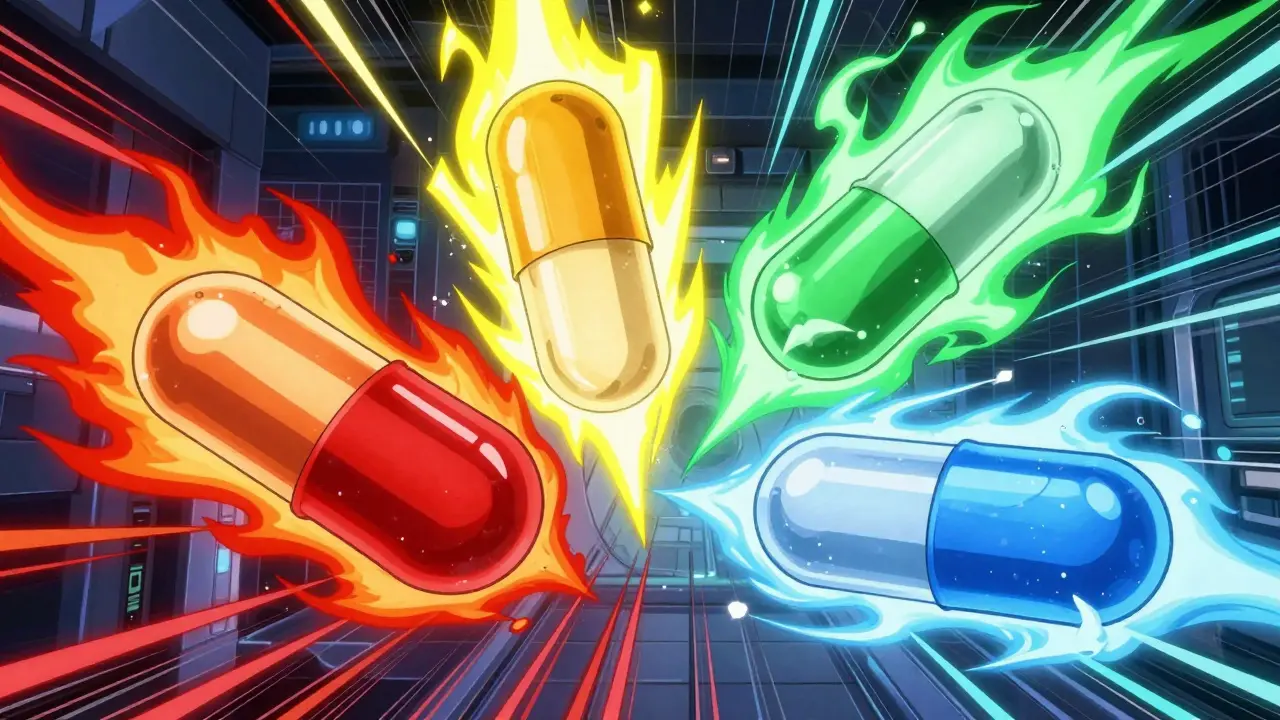
Pharmacy labels aren't randomly colored. They follow a general industry convention based on color psychology to help your brain categorize the urgency of the message before you even read the text. If you see a specific color, here is generally what it's signaling:
- Red Labels: These are for critical warnings. Think of them as "Stop" signs. They are used for high-risk alerts like "May Be Habit-Forming" or "Do Not Take With Alcohol." About 87% of patients instinctively link red to danger, which is why it's reserved for the most serious warnings.
- Yellow Labels: These signal caution. They don't necessarily mean danger, but they mean you need to be careful. Examples include warnings about drowsiness or the need to avoid sunlight while taking a drug.
- Green Labels: These are typically for general instructions. They provide helpful tips on how to use the medication effectively, such as "Take Until Finished" (which you'll see on 68% of antibiotic courses) or "Shake Well Before Using."
- Blue Labels: These usually denote storage requirements. If your medicine needs to stay in the fridge (required for about 18% of biologic meds), you'll likely see a blue label.
Common Types of Auxiliary Warnings and Their Purpose
Not all stickers serve the same goal. Depending on the drug, your pharmacist will pick from over 200 standardized messages. These generally fall into four main categories:
Safety Warnings: These prevent dangerous interactions. A common example is the "Do Not Take With Alcohol" label, which appears on 27% of antibiotic prescriptions. These labels are designed to keep you out of the emergency room.
Usage Instructions: These ensure the drug actually works. For instance, "Take With Food" is found on 41% of NSAID prescriptions. Interestingly, a study from Johns Hopkins University found that some people confuse "Take With Food" (to stop a stomach ache) with "Take After Meals" (which can actually stop some drugs from absorbing properly).
Storage Requirements: Some drugs are fragile. If a label says "Keep Refrigerated," ignoring it could make the medicine useless or even dangerous. This is especially true for insulin or certain vaccines.
Adherence Reminders: These are designed to make sure you finish the course. The most common is "Take Until Finished," which prevents antibiotic resistance by ensuring you don't stop the meds just because you feel better.
| Color | Urgency Level | Common Example | Primary Goal |
|---|---|---|---|
| Red | Critical | Do Not Take With Alcohol | Prevent Severe Harm |
| Yellow | Cautionary | May Cause Drowsiness | Increase Awareness |
| Green | Informational | Take Until Finished | Improve Effectiveness |
| Blue | Logistical | Keep Refrigerated | Preserve Medication Integrity |
Does Placement Actually Matter?
You might notice some pharmacies wrap the label vertically around the bottle, while others place it horizontally. It seems like a small detail, but it changes how often you actually notice the warning. Research in the Journal of the American Pharmacists Association shows that "interactive placement"-where you have to move or touch the label to open the vial-increases noticeability by 63%.
Even though horizontal placement is only used in about 12% of prescriptions, it has been shown to increase patient comprehension by 31% compared to the standard vertical wrap. Basically, if the label is in your way, you're more likely to read it.
The Shift Toward Digital and Visual Aids
Text isn't always enough. For people who struggle with reading or aren't native English speakers, a wall of text can be intimidating. A study in the Annals of Pharmacotherapy found that 47% more low-literacy patients understood their meds when labels included simple icons or pictures alongside the text. This is why you're seeing more pictograms-like a small picture of a sun with a cross through it for "Avoid Sunlight."
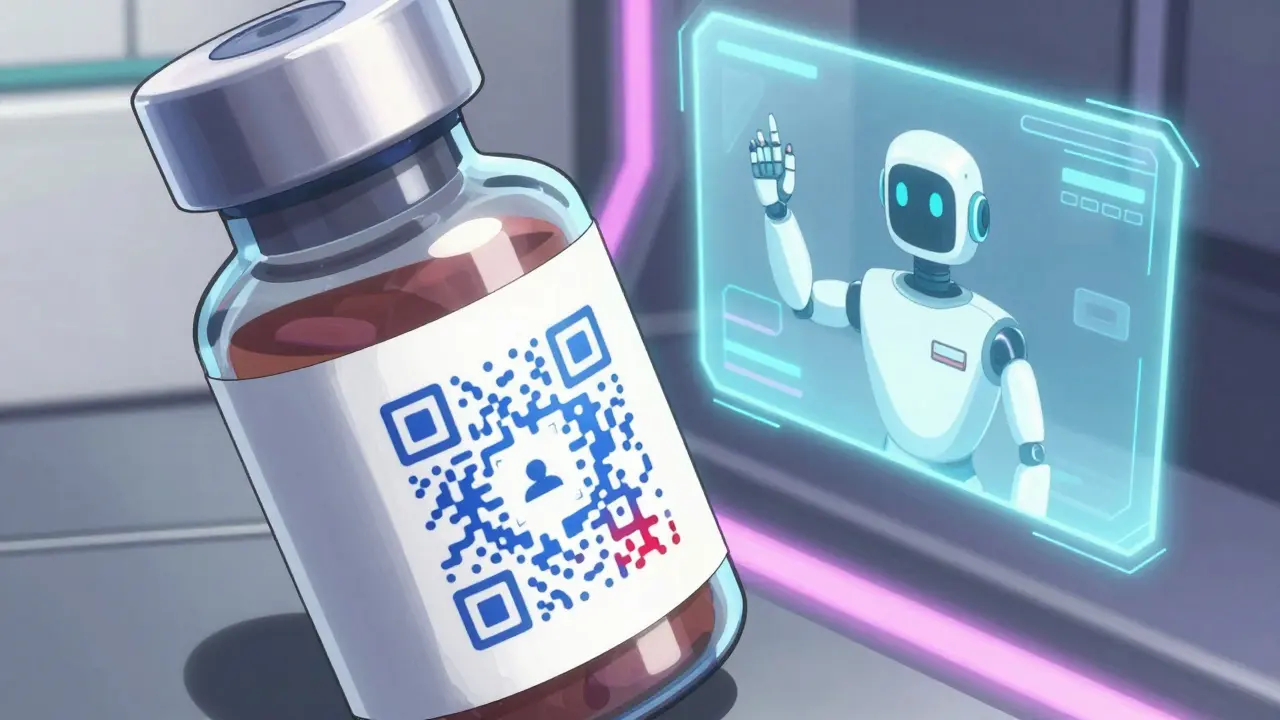
Looking forward, the industry is moving toward "digital augmentation." By 2025, many major chains are expected to use QR codes on labels. Instead of squinting at a tiny sticker, you can scan the code to watch a video on how to properly administer your medication. We're even seeing pilots of "smart labels" that use temperature-sensitive inks to tell you if a biologic drug has gotten too warm and is no longer safe to use.
Pitfalls and What to Watch Out For
While these labels are helpful, they aren't perfect. Some pharmacies suffer from "label clutter," where so many stickers are applied that they overlap, making them impossible to read. The Institute for Safe Medication Practices recommends a limit of 1 to 3 auxiliary labels per container to avoid overwhelming the patient.
Also, be aware that these labels aren't federally regulated by the FDA. While state boards strongly recommend them, the actual wording and color can vary from one pharmacy chain to another. If a label seems contradictory or you're not sure what a specific color means at your local chemist, always ask for clarification.
Are pharmacy auxiliary labels required by law?
Not at a federal level. The FDA does not regulate them. However, they are heavily recommended by state pharmacy boards, and 39 states have incorporated specific labeling requirements into their pharmacy practice acts. Some states, like California, have laws requiring specific labels for high-risk medications.
What should I do if my medication bottle has no auxiliary labels?
While most prescriptions have them, some don't. If you're taking a medication that you know has specific requirements (like refrigeration or avoiding alcohol), and you don't see a sticker, call your pharmacist to confirm if one was missed. Some medications are simple enough that they don't require supplemental warnings.
Can I just ignore the "Take With Food" label if I'm not hungry?
You shouldn't. "Take With Food" usually serves one of two purposes: it either protects your stomach lining from irritation (common with NSAIDs) or it helps the drug absorb better into your system. Ignoring it can lead to gastrointestinal distress or make the medication less effective.
Why do some labels have pictures and others only text?
Pictograms are used to increase comprehension, especially for patients with low literacy or those who speak a different language. Research shows that combining text with simple icons significantly reduces the chance of a medication error.
What is the difference between patient labels and hospital labels?
Patient labels are the colorful warnings we see at retail pharmacies. Hospital labels are often for staff and include technical notes like "Dosage Changed, Refer to Chart." These are used in institutional settings to communicate changes between nurses and pharmacists rather than giving instructions to the patient.
Next Steps for Patients
To make the most of your medication safety, try these simple habits: First, when you pick up a new prescription, check the stickers immediately. If there's a red label, ask the pharmacist specifically why that warning is there. Second, if you find the labels hard to read, ask if they have labels with pictograms or if there is a digital guide you can access via QR code.
If you are managing multiple medications for a family member, create a simple cheat sheet that translates the colors (Red = Danger, Yellow = Caution) so everyone in the house knows the urgency of the warnings at a glance.