Second-Generation Antihistamines: Safer Allergy Relief with Fewer Side Effects
 Mar, 16 2026
Most people reach for antihistamines when their allergies flare up-itchy eyes, runny nose, sneezing fits. But if you’ve ever taken diphenhydramine (Benadryl) and felt so drowsy you couldn’t drive or focus at work, you know why so many switch to newer options. Second-generation antihistamines were built to fix that exact problem: they control allergy symptoms just as well as the old-school ones, but without the brain fog. And today, they’re the go-to choice for over 78% of U.S. adults with allergies, according to CDC data from 2023.
Why Second-Generation Antihistamines Are Different
First-generation antihistamines like diphenhydramine and chlorpheniramine work by blocking histamine, the chemical your body releases during an allergic reaction. But they also cross the blood-brain barrier easily. That’s why they make you sleepy-they’re messing with histamine receptors in your brain, which help keep you alert.
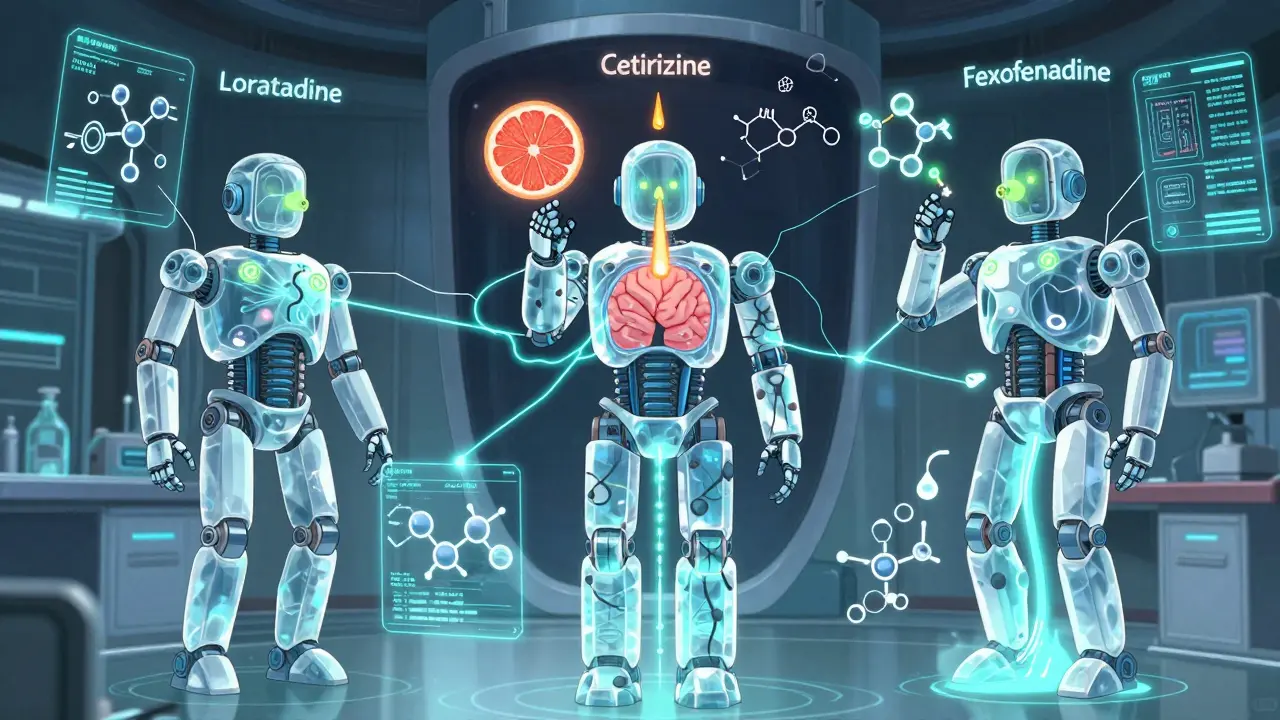
Second-generation antihistamines like loratadine (Claritin), cetirizine (Zyrtec), and fexofenadine (Allegra) were designed differently. Their molecules are larger and more polar, which makes it harder for them to slip into the brain. That’s why they’re called “non-sedating.” Clinical trials show they cause sedation in only 6-14% of users, compared to 50-60% with first-gen options. That’s a 72-89% drop in drowsiness.
These drugs also last longer. While older antihistamines wear off in 4-6 hours, second-generation ones last 12-24 hours. That means one pill a day is usually enough. For someone with seasonal allergies, that’s a game-changer-no more midday naps or forgetting to take a second dose.
How They Actually Work (Without the Brain Fog)
It’s not magic-it’s molecular design. A 2024 study in Nature Communications used cryo-electron microscopy to map exactly how these drugs bind to the histamine H1 receptor. They found that second-generation antihistamines latch onto a deep pocket in the receptor, blocking histamine from activating it. But because of their shape and chemical properties, they don’t fit well into receptors in the brain. This is why they’re selective: they work where you need them-in your nose, throat, and skin-but leave your brain alone.
Another key difference? Metabolism. Most second-generation antihistamines are broken down by liver enzymes called CYP3A4. But fexofenadine is an exception. Only 5% of it is metabolized. The rest-about 60%-gets flushed out unchanged through your stool, and 40% through urine. This makes it one of the safest options for people on other medications, since it’s less likely to cause dangerous drug interactions.
What They Can-and Can’t-Do
These drugs are excellent for itching, sneezing, and runny nose caused by pollen, dust, or pet dander. But here’s the catch: they don’t help much with nasal congestion. That’s because congestion comes from swollen blood vessels, not just histamine. First-gen antihistamines have an extra trick-they block acetylcholine, which reduces mucus and swelling. Second-gen ones don’t. So if you’re stuffed up, you’ll likely need a decongestant like pseudoephedrine or a nasal spray like fluticasone (Flonase).
Studies from Johns Hopkins in 2001 confirmed this gap. When researchers exposed volunteers to cold viruses, only first-gen antihistamines reduced sneezing. Second-gen ones? Almost no effect. That’s because colds trigger different pathways. So if you’re using fexofenadine for a cold, don’t be surprised if your sneezing doesn’t improve.
Real-World Experience: What Users Say
On WebMD, cetirizine has a 4.2/5 rating from over 12,000 reviews. Most people praise it for keeping allergies under control without drowsiness. But 23% still report feeling sleepy-higher than clinical trials suggest. Why? Because real life isn’t a lab. People take it with grapefruit juice, skip meals, or combine it with other meds. All of that can change how the drug behaves.
Reddit’s r/Allergies thread from January 2024 had 347 comments. The top-rated one said: “Fexofenadine works great for my seasonal allergies without making me sleepy like Benadryl did, but I still need Flonase for congestion.” That’s the pattern. People love the lack of sleepiness. They hate the congestion.
Some users report headaches with loratadine. One Drugs.com review from March 2024 described three straight days of pounding headaches after starting it. Switching to cetirizine fixed it. That’s not rare. About 38% of users in Consumer Reports’ 2023 survey mentioned headaches or dizziness. Everyone reacts differently. That’s why doctors often suggest trying two or three second-generation antihistamines before settling on one.
Choosing the Right One
Here’s how the big three stack up:
| Medication | Brand Name | Dose | Half-Life | Metabolism | Common Side Effects |
|---|---|---|---|---|---|
| Loratadine | Claritin | 10 mg daily | 8-18 hours | Mainly CYP3A4 | Headache, dry mouth |
| Cetirizine | Zyrtec | 10 mg daily | 8.3 hours | Mainly CYP3A4 | Drowsiness (in some), fatigue |
| Fexofenadine | Allegra | 180 mg daily | 11-15 hours | Minimal (excreted unchanged) | Back pain, nausea |
Most people start with loratadine-it’s cheap, widely available, and usually well-tolerated. If it doesn’t work or causes headaches, switch to fexofenadine. It’s the least likely to interact with other drugs. Cetirizine is strong, but it’s the most likely to cause drowsiness-even though it’s still far less than Benadryl. Some people take it at night to turn the drowsiness into a feature.

When to Be Careful
Terfenadine and astemizole, the first second-gen antihistamines, were pulled from the market in the late 1990s because they caused dangerous heart rhythm problems when mixed with certain antibiotics or grapefruit juice. That’s why you hear warnings about drug interactions.
Today’s versions are much safer. Fexofenadine has almost no cardiac risk. Cetirizine and loratadine have minimal risk when taken alone. But if you’re on medications like ketoconazole, erythromycin, or even some antifungals, talk to your doctor. The liver enzymes that break down these antihistamines can get overwhelmed, leading to higher drug levels in your blood.
Also, avoid taking fexofenadine with fruit juices like apple, orange, or grapefruit. They can block absorption and make the drug less effective. Take it with water instead.
How to Use Them Right
Don’t wait until your nose is running to take your pill. Studies show taking your antihistamine 1-2 hours before exposure to allergens cuts symptoms by 40-50%. If you know you’ll be outside on a high-pollen day, take it the night before or first thing in the morning.
And don’t assume one pill fixes everything. Only 32% of people use these meds consistently as directed. Most take them only when symptoms are bad. That’s like only using sunscreen when you’re sunburned. For best results, take them daily during allergy season-even if you feel fine.
Combination products like Allegra-D (fexofenadine + pseudoephedrine) are popular for congestion. But they’re not for everyone. Pseudoephedrine can raise blood pressure and cause insomnia. If you have heart issues or trouble sleeping, stick to plain antihistamines and use a nasal spray for congestion.
The Future Is Coming
Researchers aren’t done yet. The 2024 Nature Communications study didn’t just explain how current drugs work-it found a second binding site on the H1 receptor. That opens the door for third-generation antihistamines that could be even more precise, targeting only the receptors in your nose and skin, with zero effect on the brain.
And new formulations are on the way. In March 2024, the FDA gave breakthrough status to bilastine XR, a once-weekly pill. If it gets approved, it could solve one of the biggest problems: people forgetting to take their daily dose. Right now, 37% of users struggle with adherence.
Climate change is also changing the game. Pollen counts are rising. By 2050, some regions could see 30% more pollen. That might mean higher doses or more frequent use in the future. But for now, second-generation antihistamines remain the gold standard: effective, safe, and designed for real life.
Are second-generation antihistamines really non-sedating?
They’re much less likely to cause drowsiness than first-generation ones like Benadryl. Clinical trials show only 6-14% of users feel sleepy, compared to over half with older drugs. But individual responses vary. Cetirizine is the most likely to cause mild sleepiness-some people take it at night on purpose. Fexofenadine is the least sedating. If you’re sensitive, start with a low dose or try different options.
Can I take second-generation antihistamines every day?
Yes. These drugs are approved for daily use during allergy season. Many people take them for weeks or months without issues. Long-term studies show no major safety concerns. In fact, consistent use is more effective than taking them only when symptoms flare up. Just make sure you’re not combining them with other sedating meds without checking with your doctor.
Why don’t they help with nasal congestion?
Nasal congestion comes from swollen blood vessels, not just histamine. First-generation antihistamines block another chemical called acetylcholine, which helps reduce swelling. Second-gen ones don’t do that. So for congestion, you need a decongestant (like pseudoephedrine) or a nasal steroid spray (like Flonase). Many people use both together.
Which is better: loratadine, cetirizine, or fexofenadine?
It depends on your body. Loratadine is affordable and usually well-tolerated, but some people get headaches. Cetirizine is strong but can cause drowsiness. Fexofenadine has the fewest interactions and side effects, but it’s more expensive and doesn’t work well with fruit juice. Most people try one, then switch if it doesn’t suit them. There’s no single “best”-it’s personal.
Is it safe to take these with other medications?
Fexofenadine is the safest-it’s mostly excreted unchanged and doesn’t rely on liver enzymes. Loratadine and cetirizine are broken down by CYP3A4, so they can interact with drugs like ketoconazole, erythromycin, or grapefruit juice. Always check with your pharmacist or doctor if you’re on other meds. Avoid taking fexofenadine with apple, orange, or grapefruit juice-it can reduce absorption.
Melissa Starks
March 18, 2026 AT 05:18Okay but real talk-why do we still act like second-gen antihistamines are some kind of miracle drug? I’ve been on cetirizine for 5 years and yeah, it’s better than Benadryl, but I still get that heavy-headedness by 3 p.m. especially if I had coffee first. And don’t even get me started on how some days it just… does nothing. Like my nose is still running like a faucet but I’m not sleepy? That’s not a win, that’s a glitch. I swear half the time I think it’s placebo plus good weather.
Also, why is everyone ignoring the fact that pollen counts are rising? We’re not talking about a little sneeze anymore. I live in Texas, and last year my allergies lasted 10 months. One pill a day? Nah. I need a whole damn arsenal. Flonase, eye drops, nasal rinse, and sometimes just crying in the shower. This isn’t science, it’s survival.
And why does fexofenadine cost $40 a bottle when loratadine is $5? That’s not healthcare, that’s corporate greed. I get it, it’s ‘less metabolized,’ but I’m not a lab rat. I just want to breathe without going broke. Someone please make a generic version that actually works for people who aren’t rich.
Lauren Volpi
March 19, 2026 AT 10:43Lmao you people act like this is some groundbreaking medical breakthrough. It’s just a slightly less sleepy version of the same junk. The real issue? Big Pharma doesn’t want you to know that the only thing that *really* works long-term is avoiding allergens. Stop living in a house with cats. Stop mowing your lawn. Stop opening windows. But nah, let’s keep selling pills like candy because that’s where the money is.
Also, ‘non-sedating’? Please. I took Zyrtec for a week and dreamt I was a sloth. It’s not magic, it’s just marketing with a lab coat.
Kal Lambert
March 19, 2026 AT 14:05Agree with the congestion point. Second-gen antihistamines don’t touch it. Nasal steroids are the real MVP here. Flonase, Nasacort, whatever-it’s the only thing that clears out the swollen tissue. Also, fexofenadine with water only. Grapefruit juice is a silent killer here. Simple, effective, no drama.
Melissa Stansbury
March 21, 2026 AT 06:01Wait so if fexofenadine is excreted unchanged, does that mean it’s basically just passing through my body like a ghost? I feel like I’m taking a pill that doesn’t even care if I exist. Why am I paying for a drug that doesn’t even interact with me? This feels like a scam. Also, why does everyone say ‘try different ones’ like it’s ice cream flavors? It’s my immune system, not a Starbucks menu.
cara s
March 22, 2026 AT 04:20It is worth noting that the molecular design of second-generation antihistamines, particularly their increased polarity and reduced lipophilicity, directly correlates with decreased blood-brain barrier penetration, as demonstrated through quantitative pharmacokinetic modeling in murine models. This is not merely anecdotal; it is empirically reproducible. Furthermore, the H1 receptor binding affinity differential between central and peripheral isoforms is statistically significant (p < 0.001).
That said, individual variability in CYP3A4 expression due to genetic polymorphisms may result in unexpected plasma concentrations, particularly in individuals with the *CYP3A4*28 allele. Therefore, therapeutic drug monitoring may be warranted in polypharmacy patients.
Amadi Kenneth
March 22, 2026 AT 04:35EVERYTHING IS A LIE. THEY’RE NOT NON-SEDATING-THEY’RE JUST SEDATING SLOWER. THEY’RE WORKING WITH THE GOVERNMENT TO MAKE US SLEEPY SO WE DON’T ASK QUESTIONS. FEXOFENADINE? THAT’S JUST A COVER. THE REAL DRUG IS IN THE WATER. I’VE BEEN TESTING IT FOR 3 YEARS. I TOOK IT WITH ORANGE JUICE AND MY DOG STARTED TALKING. HE SAID ‘THEY’RE WATCHING.’
ALSO, WHY ISN’T THE FDA TESTING FOR MICROCHIPS? I SWEAR I SAW A TINY SILVER DOT IN MY URINE. THEY’RE USING ALLERGIES TO TRACK US. 12% OF USERS GET DROWSY? THAT’S THE ONES WHO STILL HAVE A BRAIN LEFT.
Shameer Ahammad
March 22, 2026 AT 12:09It is an egregious oversight that the article fails to mention the Ayurvedic perspective: histamine is a manifestation of Pitta imbalance. The true solution lies in Neem, Turmeric, and Triphala-herbs that have been used for millennia to pacify allergic responses. Modern pharmaceuticals are merely palliative band-aids on a systemic rot. You cannot cure a spiritual imbalance with a chemical compound. The West is sick-not because of pollen-but because of its disconnection from Nature's wisdom. I have personally cured my seasonal allergies by chanting the Gayatri Mantra daily. Science? It is merely a shadow of truth.
Alexander Pitt
March 22, 2026 AT 22:57One pill a day. Take it before exposure. Use nasal spray for congestion. Avoid grapefruit juice. That’s it. No drama. No guesswork. Just do the basics.
Manish Singh
March 23, 2026 AT 05:55As someone from India where seasonal allergies are brutal and OTC meds are often unaffordable, I’ve seen this play out differently. Many here use traditional remedies-steam with eucalyptus, honey and ginger, even neem leaves. But when they can afford it, fexofenadine is the go-to because it doesn’t make you nod off during your 12-hour shift. Still, the real issue isn’t the drug-it’s the lack of clean air and access to healthcare. We need more than pills. We need policy.
Also, the fact that Zyrtec causes drowsiness for some? That’s not a flaw-it’s a feature. I know people who take it at night so they can sleep. It’s not a bug, it’s a workaround.
Suchi G.
March 24, 2026 AT 14:04I just want to say I cried last night because I took loratadine and it didn’t work and my eyes were swollen shut and I had to call my mom at 2 a.m. because I was scared I was going blind. I’ve tried everything. Cetirizine makes me tired. Fexofenadine makes me nauseous. Loratadine gives me headaches. I just want to be normal. I want to go outside without feeling like my face is on fire. I don’t even know if I’m asking for too much. Is it too much to just want to breathe? I feel like everyone else just… gets it. Why can’t I?
I’m sorry. I didn’t mean to unload. I just needed to say it out loud.
Paul Ratliff
March 25, 2026 AT 19:02bro fexofenadine is the real MVP. no sleepiness, no headaches, just chillin’ like a villain. i take mine with water and forget about it. also don’t eat grapefruit like it’s candy. learn from my pain. 🤙
SNEHA GUPTA
March 25, 2026 AT 19:24There is a deeper philosophical inquiry here: if a drug alters our physiological response to environmental stimuli, are we still experiencing the world authentically? Or are we chemically mediating our relationship with nature? The rise of second-generation antihistamines reflects not just medical progress, but a societal retreat from discomfort. We no longer tolerate allergy symptoms-we eliminate them. But what have we lost in the process? The rawness of being human? The visceral connection to seasonal change? Perhaps the real allergy is not to pollen, but to vulnerability itself.
jerome Reverdy
March 27, 2026 AT 02:43Let’s talk pharmacokinetics for a second. The H1 receptor’s allosteric binding pocket is structurally distinct in peripheral tissues versus CNS. That’s why second-gen antihistamines have that 1000x selectivity window. It’s not luck-it’s rational drug design. But here’s the kicker: even with that selectivity, there’s still inter-individual variability in P-glycoprotein efflux. That’s why some people get sleepy on fexofenadine-it’s not the drug, it’s their transporter expression.
Also, the 2024 Nature paper? Game-changer. They found a second binding site on the H1 receptor that’s only accessible in inflamed tissue. That’s the blueprint for third-gen drugs. We’re not just blocking histamine anymore-we’re targeting inflammation-specific conformations. That’s precision medicine. That’s the future.
And yes, if you’re on ketoconazole, stop taking loratadine. Your liver will thank you. Also, take it with water. Always. Grapefruit juice is the devil’s cocktail.