How to Use Home Health Services for Medication Management: A Senior Guide
 Apr, 14 2026
Missing a single dose of a blood thinner or accidentally doubling up on blood pressure medication isn't just a mistake-it's a trip to the emergency room. For many seniors, managing a handful of pills is simple, but for those dealing with polypharmacy (taking five or more medications), the complexity can become overwhelming. This is where home health services is professional medical care provided in a patient's home to help manage chronic conditions and ensure safe treatment adherence comes in. By bringing skilled oversight into the living room, families can move from a state of constant anxiety to a structured system that actually works.
| Feature | Independent Management | Home Health Services |
|---|---|---|
| Error Risk | Higher (especially with 5+ meds) | Reduced by up to 60% |
| Hospital Readmissions | Standard baseline | ~20% reduction in 30-day reads |
| Reconciliation | Patient/Family led | Clinical audit of all prescriptions |
| Cost | Low (out-of-pocket) | Varies (Medicare or Private Pay) |
Getting Started with Professional Medication Management
The first step in using these services is understanding that they aren't just about someone reminding you to take a pill. It's a clinical process. Most agencies start with a comprehensive assessment. If you're working with a skilled nursing team, they typically follow a rigorous four-step process: they review every prescription to find duplicates, verify insurance coverage, cross-check for dangerous contraindications, and use "teach-back" methods to ensure the patient actually understands the instructions.
Depending on how many medications you're taking, the learning curve varies. If you're managing three pills, you might be set in two or three training sessions. However, if you have a complex regimen of eight or more medications, expect the onboarding process to take six to eight sessions. This ensures that the transition from hospital to home-the most dangerous window for medication errors-is handled smoothly.
The Power of Medication Reconciliation
One of the most critical tools in a home health nurse's kit is medication reconciliation, which is the process of creating the most accurate list possible of all medications a patient is taking and comparing it against the physician's orders. Why does this matter? Because different specialists often prescribe different drugs without knowing what the other is doing. This is how dangerous drug interactions happen.
A professional service doesn't just list the drug name. A complete list must include both brand and generic names, exact dosages, the specific schedule, the prescribing doctor, and the known side effects. Experts like Dr. Sarah Johnson from CritiCare emphasize that these lists must be updated regularly and shared across all providers to prevent adverse events. In fact, professional audits have identified duplicate medications that would have otherwise led to toxicity or overdose if left unchecked.

Tools and Tech to Stop Missed Doses
Relying on memory is a recipe for disaster. Home health services introduce physical and digital tools to create "fail-safes." Pill organizers are a classic for a reason-some data suggests they can reduce errors by up to 45%. For those with very complex needs, some agencies use individual daily medication pouches (like the WellPack system), which remove the need for the patient to manually sort pills into a plastic box every Sunday.
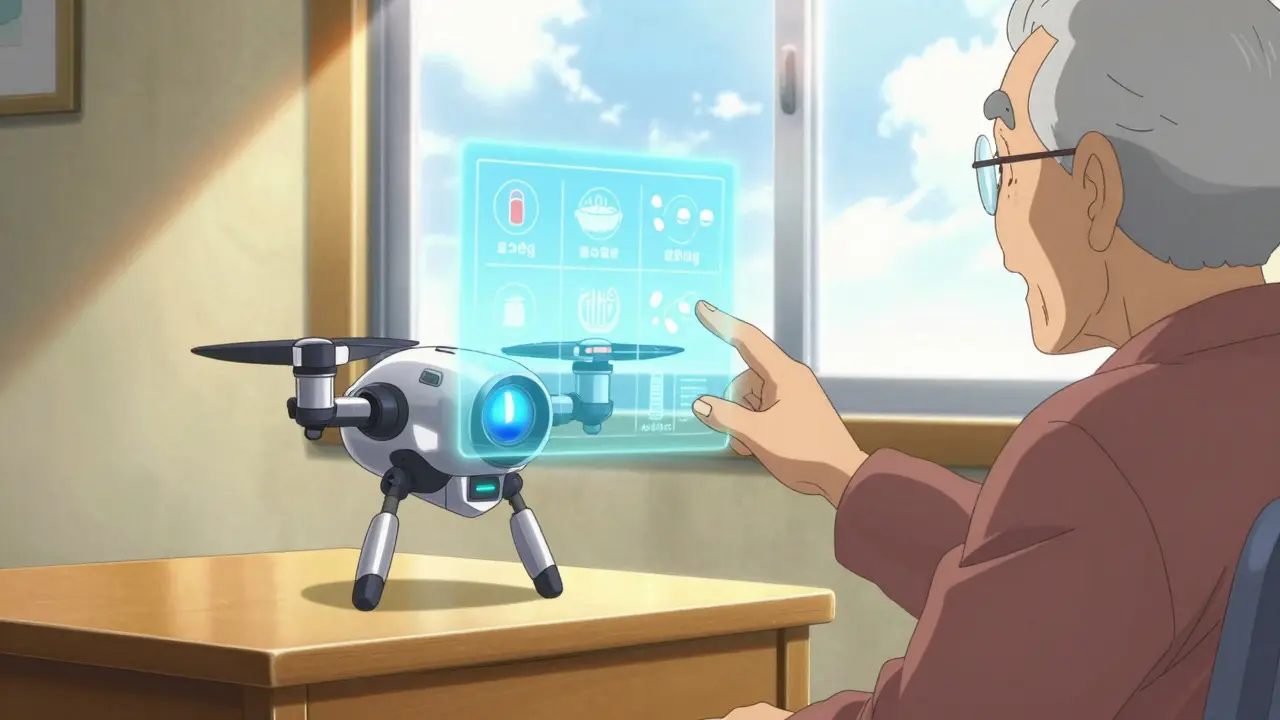
On the tech side, smartphone apps with biometric verification and alarms are becoming standard. These tools can improve adherence rates by roughly 35% because they provide an immediate prompt and a digital log for the family to check. For those who struggle with reading labels due to vision loss or language barriers, professional services often provide visual charts with large text and instructional QR codes that link to videos in the patient's native language.
Navigating the Costs and Coverage
The biggest hurdle is often the bill. If you are using a Medicare-certified home health agency, these services may be provided at no direct cost, provided the patient meets strict eligibility requirements (usually needing a doctor's order and being homebound). However, Medicare Part A often only covers intermittent skilled nursing visits, meaning they won't come every single day just to hand over a pill.
For those who need daily, non-clinical assistance, private home care agencies are the alternative. These typically cost between $20 and $40 per hour. While this is more expensive, it provides a level of continuous monitoring that Medicare doesn't offer. It's a trade-off between the strict, clinical requirements of government coverage and the flexible, albeit costlier, nature of private care.
Common Pitfalls and How to Avoid Them
Even with professional help, things can go wrong. A common issue is the "communication gap" between the home health nurse and the primary care physician. If a nurse notices a side effect and the doctor isn't notified immediately, the patient suffers. To prevent this, insist on a shared communication log where every single medication change is documented within 24 hours.
Another trap is the scheduling conflict. Many medications must be taken at precise times that clash with daily routines-like a medication that must be taken on an empty stomach at 4 AM. Work with your provider to tie medication times to "anchor events," such as meal times or bedtimes. Using a watch alarm for the "in-between" doses can increase adherence by nearly 30% compared to just hoping the nurse arrives on time.
What exactly is polypharmacy and why is it risky?
Polypharmacy is the concurrent use of five or more medications by a single patient. It is risky because the more drugs you take, the higher the chance of a negative interaction between them or a conflict with a pre-existing health condition. Professional home health services use tools like the Beers Criteria to identify which medications might be inappropriate for older adults in these complex scenarios.
Can Medicare pay for someone to just organize my pills?
Generally, no. Medicare pays for "skilled" services. This means a nurse coming to perform medication reconciliation or train a caregiver is covered, but a person coming daily just to put pills in a box is typically considered "custodial care" and is not covered by traditional Medicare. For daily assistance, you would likely need a private-pay agency or a long-term care insurance policy.
How often should the medication list be updated?
The list should be updated every single time a change is made-whether that's a new prescription, a dosage change, or a medication being stopped. It must also be fully reconciled every time a patient is discharged from a hospital or clinic to ensure the home medications don't conflict with the new hospital orders.
What is the "teach-back" method used by nurses?
The teach-back method is a communication confirmation. Instead of asking "Do you understand?" (which usually gets a "yes" even if the patient is confused), the nurse asks the patient to explain the medication instructions back to them in their own words. This proves the patient actually understands the dosage and timing.
What should I do if I notice a drug interaction?
Immediately contact the prescribing physician and the home health nurse. Do not stop taking the medication abruptly without medical guidance, as this can cause withdrawal or a rebound effect. Provide the nurse with the specific symptoms you are experiencing and the time they started after taking the dose.
Next Steps for Families
If you're feeling overwhelmed by a loved one's pill bottles, start by creating a master list of everything they take, including vitamins and over-the-counter supplements. Next, determine your budget: if you qualify for Medicare home health, get a doctor's order for "skilled nursing for medication management." If you're paying privately, interview agencies specifically about their reconciliation protocols-ask them exactly how they prevent duplicate prescriptions. Finally, set up a simple emergency folder containing the current med list and contact info for all doctors to keep by the front door for paramedics.