How to Use Lockboxes for High-Risk Medications at Home: A Practical Safety Guide
 Mar, 24 2026
Every year in the U.S., about 60,000 children end up in emergency rooms because they accidentally swallowed medications they found at home. Many of those cases involve opioids like oxycodone, benzodiazepines like Xanax, or stimulants like Adderall - drugs that can be deadly even in small doses to a child. The solution isn’t just keeping pills out of reach. It’s not enough to hide them in a drawer or use child-resistant caps. The only proven way to stop accidental poisonings and misuse is a medication lockbox.
Why Lockboxes Are Non-Negotiable
Child-resistant caps sound like a safety feature, but they’re not. Studies show that half of all kids aged 4 to 5 can open them in under a minute. Hidden spots? A 2023 Hennepin Healthcare study found that 72% of children find hidden medications within 30 minutes of searching. That’s not luck - it’s curiosity and persistence. A medication lockbox changes the game. It’s a physical barrier. No matter how smart, curious, or determined a child (or even a teen) is, they can’t get in unless they have the key, code, or fingerprint. The CDC, American Academy of Pediatrics, and SAMHSA all agree: if you have high-risk medications at home, you need a lockbox. It’s not optional. It’s basic safety - like having smoke detectors.What Counts as a High-Risk Medication?
Not all pills need a lockbox. But these do:- Opioids: Hydrocodone (Vicodin, Norco), oxycodone (Percocet, OxyContin), fentanyl patches
- Benzodiazepines: Alprazolam (Xanax), diazepam (Valium), clonazepam (Klonopin)
- Stimulants: Dextroamphetamine-amphetamine (Adderall), methylphenidate (Ritalin)
Choosing the Right Lockbox
Not all lockboxes are the same. You need to match the box to your needs.- Size: For one person on a single medication, a 6x4x3 inch box is enough. For a family with multiple prescriptions, go for 12x8x6 inches. Most hold 1-5 pounds of medication.
- Lock Type:
- Key locks: Simple, cheap, but you can lose the key. Store the key separately - not in the same room as the box.
- Combination locks: 3-4 digit codes. Good for adults who can remember numbers. Problem: kids can guess simple codes like 1234 or birthdays.
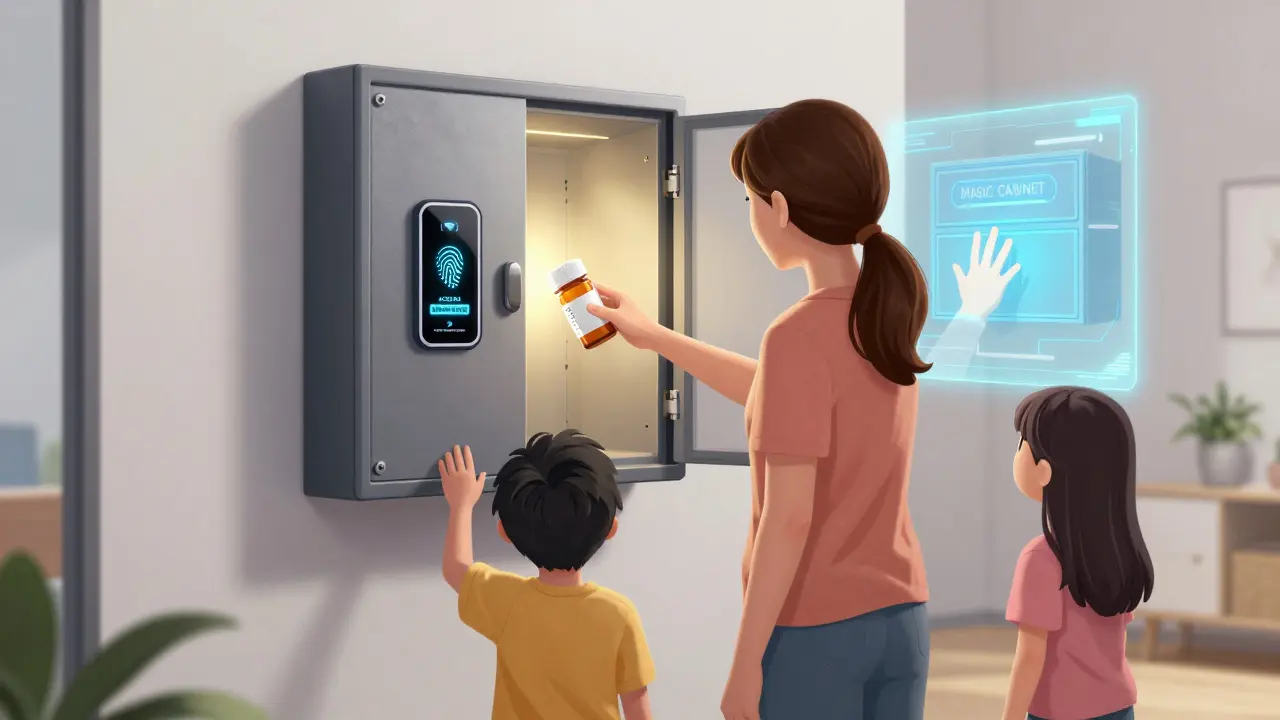
- Biometric (fingerprint): Best for households with elderly users or multiple authorized people. No keys. No codes. Just your thumb. These cost $30-$60 but eliminate access issues.
- Material: Look for steel or reinforced ABS plastic. Fire resistance up to 1,700°F for 30 minutes is a plus. You don’t need a safe, but you do need something that won’t melt or break easily.
- Special needs: If you store insulin or other refrigerated meds, get a lockbox with a cooling unit. Most standard boxes don’t handle temperature control.
Travel lockboxes exist too - 4x3x2 inches, under 2 pounds. Perfect for carrying meds on trips, especially if you’re flying or staying with family.
Where to Put It
Location matters as much as the box itself.- DO: Mount it on a wall or place it on a high shelf in a bedroom or closet. Out of sight, out of reach.
- DO NOT: Keep it in the bathroom. Humidity ruins pills and can damage the lock mechanism. Don’t put it on a nightstand, kitchen counter, or under the sink.
- Pro tip: Use a wall anchor or screw it into the drywall. Kids are strong. If it’s loose, they’ll pull it down and try to break it open.
A 2023 Hennepin Healthcare analysis found that 62% of failed lockbox setups happened because people put them in easy-to-reach places. The box isn’t magic. If it’s accessible, it’s useless.
Who Gets Access?
Limit access to two people max - usually the person who takes the meds and one other responsible adult. Never give codes or keys to teens, babysitters, or visiting relatives unless absolutely necessary.Update your access list every time your household changes:
- New baby? Add the box to your checklist.
- Grandma moves in? She might need access - but only if she’s the one taking the meds.
- Teenager starts driving? Make sure they know the box exists - and that they can’t open it.
One Reddit user, u/MedSafetyMom, shared: “After my 3-year-old nearly got to my fentanyl patch, I got a Master Lock box. Eight months later - zero incidents.” That’s the goal.
Common Mistakes (And How to Avoid Them)
Most people think they’re doing it right - until something goes wrong.- Mistake: Using a combination code that’s easy to guess (like your birthday or 0000). Solution: Use a random 4-digit code. Write it down and store it in your wallet - not on the fridge.
- Mistake: Forgetting to lock it after each use. Solution: Make it a habit - like locking your front door. Put a sticky note on the box: “Lock after every use.”
- Mistake: Storing other valuables in the box. Solution: Keep it for meds only. If you put cash or jewelry in there, people will start asking why.
- Mistake: Not checking the box regularly. Solution: Once a month, open it. Count the pills. Make sure nothing’s missing. If you notice a dose gone, talk to your pharmacist.
What About Elderly Users?
A 2022 JAMA Internal Medicine study found that 15% of adults over 75 struggle with key or combination locks. Arthritis, shaky hands, memory loss - these aren’t just inconveniences. They’re safety risks.Biometric lockboxes solve this. No turning, no remembering, no fumbling. Just press your thumb. A caregiver in Melbourne (u/CaregiverAnne on Reddit) switched from a combo lock to a fingerprint box after her 80-year-old father kept forgetting the code. “It cost $35 more,” she said. “But I sleep better now.”
What’s New in 2026?
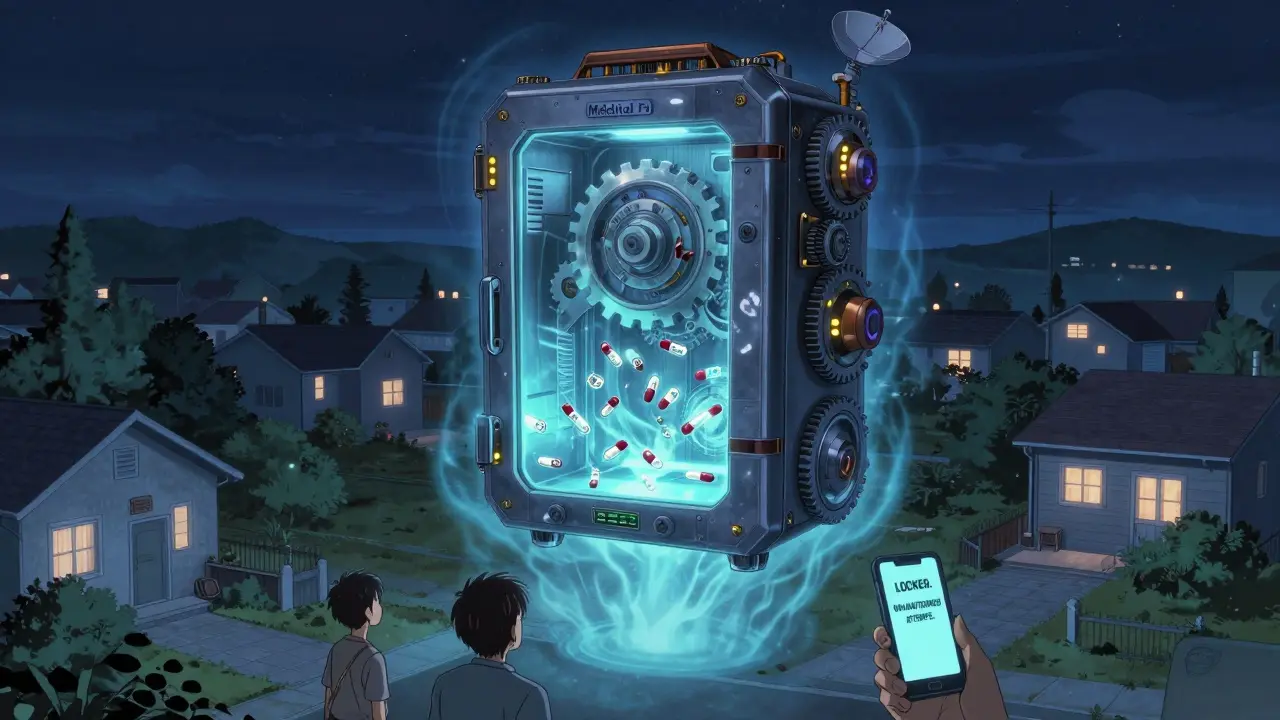
Technology is catching up. The FDA approved the first smart lockbox in May 2023 - the MediVault Pro. It records who opens it, when, and sends alerts to your phone if someone tries to force it open. Some models even notify your doctor if doses are missed.The National Institute on Drug Abuse just funded $2.5 million in research to build fingerprint-verified dispensers that release only the exact dose prescribed. No more guessing. No more over-pouring.
And in 2024, new home builders in the U.S. started including lockbox space in “Healthy Home” certification standards. That means future houses may come with a pre-installed box in the bedroom.
Real Talk: Is It Worth It?
Consumer Reports surveyed 1,200 households in 2023. 78% said they felt more at ease after installing a lockbox. 22% said it was a hassle. The hassle? Forgetting the code. Losing the key. Having to walk across the house to get a pill.But here’s the trade-off: the hassle is small. The risk is huge.
Over 700,000 people died from drug overdoses between 1999 and 2017. Two-thirds involved opioids. Most of those deaths weren’t addicts. They were kids. Teens. Grandparents who accidentally took the wrong pill. Your lockbox doesn’t just protect your family. It protects the next family down the street.
Free lockboxes are available in at least 22 states through public health programs. In Australia, local councils and pharmacies sometimes offer them too. Ask your pharmacist. Check with your local health department. You don’t have to pay $50 if you don’t need to.
Final Checklist
Before you finish, do this:
- Identify every high-risk medication in your home.
- Choose a lockbox with the right size and lock type for your household.
- Mount it on a wall or high shelf - not in the bathroom.
- Set a unique code or keep the key separate.
- Limit access to one or two adults.
- Lock it after every use.
- Check it once a month.
It’s not complicated. It’s not expensive. And it’s the single most effective thing you can do to prevent a tragedy.
Caroline Bonner
March 26, 2026 AT 09:33Okay, I just installed a biometric lockbox after my 2-year-old found my husband’s oxycodone last month - and let me tell you, it’s been a game-changer. I was skeptical at first - 'It’s just a box,' I thought - but no, it’s a *lifesaver*. The fingerprint scanner is lightning-fast, no fumbling, no forgetting codes. I even set it up in our bedroom closet, mounted with drywall anchors. No more hiding pills in makeup bags or cereal boxes - those are child magnet zones. I’ve started telling every parent I know. If you’re on opioids, benzodiazepines, or stimulants - and you’re not using a lockbox - you’re playing Russian roulette with your kid’s brain. It’s not paranoia. It’s parenting.
Chris Crosson
March 26, 2026 AT 18:02Love this guide - but can we talk about the *real* problem? We’re treating this like a lockbox issue when it’s actually a systemic one. Why are these drugs even *in* homes in the first place? Why aren’t prescriptions being dispensed in single-dose, tamper-proof blister packs with built-in locks? Why is the burden of safety on the patient instead of the system? I get the box helps - but it’s like putting a bandaid on a hemorrhage. We need policy change, not just home improvements.
Linda Foster
March 26, 2026 AT 22:29Thank you for this comprehensive and well-researched post. The statistics cited are both alarming and compelling. I have taken the liberty of printing the final checklist and laminating it for my medication cabinet. I believe adherence to these protocols is not merely advisable, but ethically imperative. I will be sharing this with my professional network in healthcare administration.
winnipeg whitegloves
March 28, 2026 AT 10:58Man, I went full MacGyver on this. Got a rusty old ammo can from the garage, bolted it to the floor joist under my bed, slapped a $12 combination lock on it, and now my meds are safer than Fort Knox. My kid thinks it’s a treasure chest - he tries to open it every morning like it’s a birthday present. I just smile and say, 'Not today, champ.' Works like a charm. No fancy tech. Just duct tape, grit, and a little bit of chaos.
Korn Deno
March 29, 2026 AT 19:56Lockboxes are a symptom, not a solution. The real question isn’t how to secure pills - it’s why we’re prescribing them in the first place. We’ve turned chronic pain, anxiety, and ADHD into chemical problems to be managed, not human experiences to be understood. The lockbox is a bandage on a society that’s been medicating its discomfort for decades. I’m not against safety - I’m against the system that makes safety necessary.
Stephen Alabi
March 31, 2026 AT 07:51While the intent of this post is commendable, it is riddled with methodological flaws. The Hennepin Healthcare study cited has a sample size of 112, which is statistically insignificant for national extrapolation. Furthermore, the CDC’s endorsement of lockboxes is based on observational data, not RCTs. The assertion that 'convenience kills' is emotionally manipulative and lacks empirical grounding. This is fear-based public health messaging - not evidence-based policy. I urge you to reconsider your sources.
Pat Fur
March 31, 2026 AT 21:27My grandma’s fingerprint box saved her. She forgot her code, lost her key, and kept taking double doses. Now she just taps her thumb. No stress. No confusion. Just medicine when she needs it. Simple. Human. Brilliant.
Anil Arekar
April 1, 2026 AT 01:37This is an excellent and necessary guide. In my community in India, we often store medications in open cupboards due to cultural norms and lack of awareness. I plan to translate this into Hindi and distribute it through local clinics. Lockboxes are not a Western luxury - they are a universal safeguard. Thank you for making safety accessible and actionable.
Donna Fogelsong
April 1, 2026 AT 19:16Lockboxes are just the first step. The government is using this to normalize surveillance. Smart lockboxes that notify doctors? That’s data harvesting. Biometrics? That’s the beginning of a national medication tracking registry. Next they’ll mandate implants. Don’t be fooled. This isn’t safety - it’s control. And if you’re not questioning it, you’re part of the problem.