Medication Errors in Hospitals vs. Retail Pharmacies: What You Need to Know
 Dec, 23 2025
Every year, millions of people in the U.S. are harmed by medication errors - and the chances of one happening depend heavily on where you get your prescription filled. In hospitals, errors are more common, but often caught before they hurt you. In retail pharmacies, they’re rarer - but when they slip through, there’s no one else to stop them. That’s the real difference.
How Often Do Errors Happen?
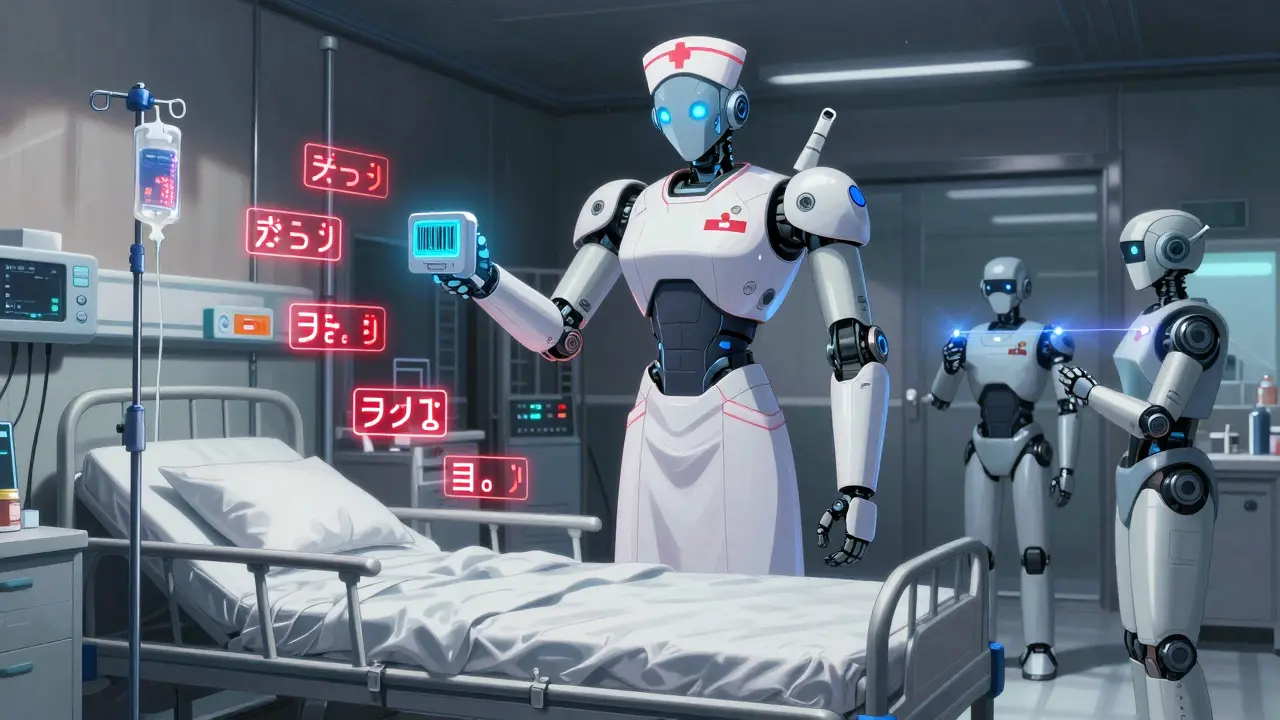
In hospitals, mistakes are shockingly frequent. One major study found that nearly 1 in 5 doses given to patients contained some kind of error. That means if you’re hospitalized and getting four medications a day, there’s a good chance one of them is wrong - wrong dose, wrong drug, wrong time. Nurses give the meds, and even with all the checks, they’re juggling dozens of patients. Timing slips. Labels get mixed up. IV bags are mislabeled. It happens. Now, look at your local pharmacy. The numbers are much lower. Studies show only about 1.5% of prescriptions have a dispensing error. That sounds small - until you realize it translates to 45 million errors a year across the U.S. because pharmacies fill over 3 billion prescriptions annually. A typical community pharmacy filling 250 prescriptions a day might make four mistakes every day. Most are caught before they leave the counter - but not all.What Kind of Errors Happen Where?
In retail pharmacies, the biggest problems are simple but deadly: wrong medication, wrong dose, wrong instructions. One classic case? A patient was prescribed estradiol - one tablet twice a week - but the pharmacist misread it as twice a day. The patient took it daily for weeks. She ended up with severe side effects and had to see her doctor again. That’s not rare. The most common error? Transcription mistakes. Someone reads the doctor’s handwriting (or electronic note) wrong, and the label says something completely different. In hospitals, it’s more complex. Errors happen at every stage: the doctor writes the wrong dose, the pharmacist fills it wrong, the nurse gives it at the wrong time. But the biggest chunk? Administration errors. Nurses give the wrong drug because the barcode didn’t scan right, or they grabbed the wrong vial from a busy cart. Timing errors are common too - giving a drug an hour late because the unit was swamped. These aren’t just paperwork mistakes. They’re real-time, high-pressure failures.Why Are Retail Pharmacy Errors More Dangerous?
Here’s the key point: hospitals have layers of safety. Pharmacists double-check. Nurses verify. Doctors review. Even patients are often asked, “Is this your medication?” before it’s given. There are multiple chances to catch a mistake. Retail pharmacies? You’re the last line of defense. The pharmacist hands you the bottle. You walk out. No one follows up. No nurse checks your name. No system asks if you’re supposed to take two pills a day or two pills a week. If the label says “take one daily” but the prescription said “take one weekly,” you won’t know - until you feel sick. That’s why a 1.5% error rate in pharmacies can be more dangerous than a 20% error rate in hospitals. In hospitals, most errors are caught before they reach the patient. In pharmacies, many slip through - and then you’re on your own.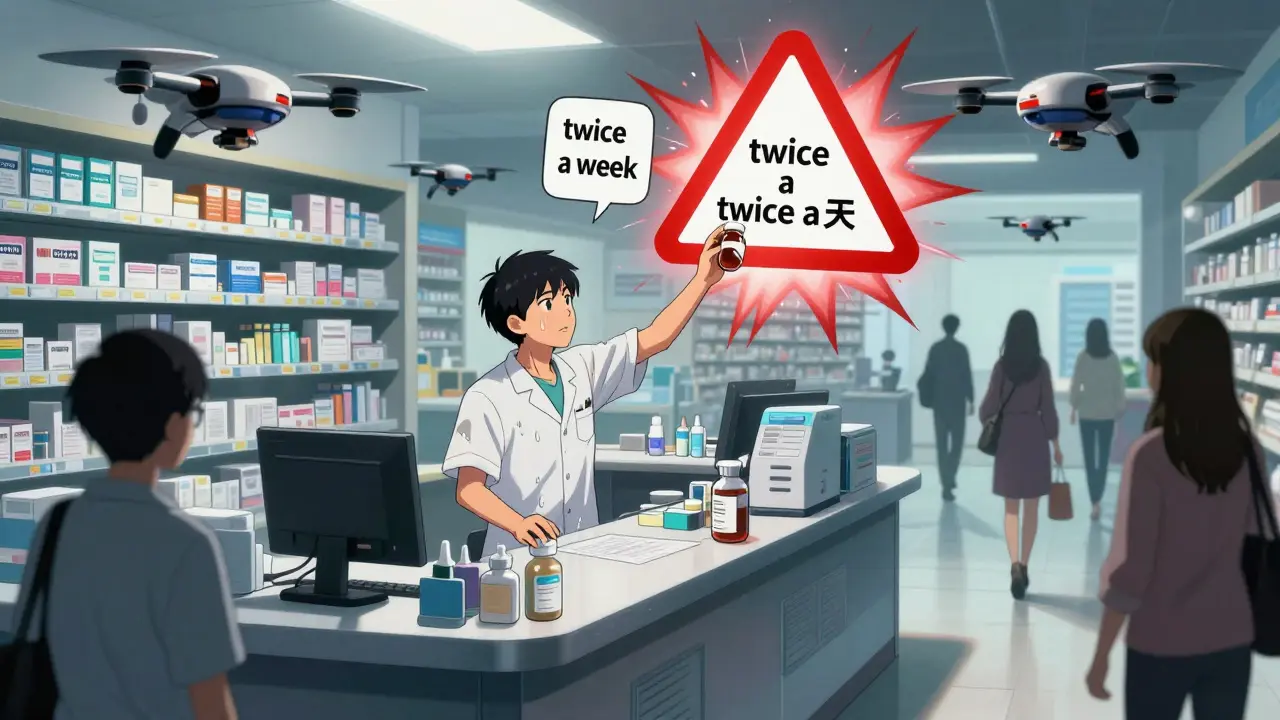
What Causes These Mistakes?
In retail pharmacies, the biggest culprits aren’t lazy staff - they’re system pressures. Pharmacists are expected to fill 300+ prescriptions a day. Rushed. Overworked. Constant interruptions. A phone rings. A customer asks a question. A technician hands them a bottle. In that split second, the brain switches tasks - and mistakes happen. Over 80% of community pharmacy errors come from these cognitive slips, not incompetence. In hospitals, it’s different. Staffing shortages. Poor communication between doctors and pharmacists. Electronic systems that don’t talk to each other. A doctor prescribes a drug, but the pharmacy system doesn’t flag it because the patient’s allergy isn’t synced. Or the nurse gets a new patient and assumes the med list is correct. It’s not about being careless - it’s about broken workflows.What Happens When Errors Cause Harm?
In hospitals, when an error reaches a patient, the consequences can be life-threatening - especially in ICUs or for people with heart or kidney problems. But because the system is so monitored, many of these are caught quickly. Still, the cost is huge: at least $3.5 billion a year just in extra medical care for drug-related injuries in U.S. hospitals. In retail pharmacies, the harm is often delayed. You take the wrong pill for weeks. You get dizzy. Your blood pressure crashes. You end up in the ER. Or worse - you don’t realize anything’s wrong until you’re hospitalized. A 2007 study found that 1 in 10,000 community pharmacy errors led to hospitalization. That’s rare per prescription - but multiply that by 3 billion prescriptions, and you’re talking about thousands of preventable hospital stays.
Are Things Getting Better?
Yes - but unevenly. Hospitals have made big strides. Barcode scanning systems cut administration errors by up to 86%. Electronic prescribing means doctors aren’t scribbling illegibly. Integrated EHRs catch drug interactions before they happen. Mayo Clinic cut hospital medication errors by 52% after linking their pharmacy system directly to patient records. Retail pharmacies are catching up - slowly. CVS Health rolled out AI-powered verification in 2022 and cut dispensing errors by 37%. Some states now require pharmacies to report errors to the board of pharmacy. California, for example, checks error logs during inspections. But most pharmacies still don’t have real-time alerts for dangerous dosing mistakes. No system warns you if you’re about to dispense 10 times the normal dose of insulin.What Can You Do?
You’re not powerless. Whether you’re in the hospital or picking up a script at Walgreens, you have a role.- Always ask: “Is this the right medicine for me?”
- Compare the pill to the label. Does it look like what you got last time?
- Ask the pharmacist: “What is this for? How often do I take it?”
- If you’re in the hospital, ask the nurse to check your name and date of birth before giving any drug.
- Keep a list of all your meds - including doses and why you take them - and bring it to every appointment.
Why This Matters
Medication errors aren’t just statistics. They’re people - your neighbor, your parent, maybe even you. One wrong pill can mean a trip to the ER. A missed dose of blood thinner can mean a stroke. A double dose of insulin can mean a coma. The system isn’t perfect. Hospitals have more errors, but more safety nets. Pharmacies have fewer errors, but fewer checks. That means the risk isn’t where you think it is. It’s not about location - it’s about awareness. And your attention? That’s the last safety net that actually works.Which setting has more medication errors - hospitals or retail pharmacies?
Hospitals have higher error rates - about 20% of doses contain some kind of mistake. Retail pharmacies have lower rates - around 1.5% of prescriptions. But the key difference isn’t just numbers. Hospitals have multiple safety checks, so many errors are caught before they harm patients. Retail pharmacies have fewer checks, so even small errors are more likely to reach patients unchecked.
What are the most common types of medication errors in pharmacies?
The most common errors in retail pharmacies are wrong medication, wrong dose, and wrong instructions - especially due to transcription mistakes. For example, a prescription for “one tablet twice a week” might be misread as “one tablet twice a day.” These errors often happen because pharmacists are rushed, distracted, or working with unclear prescriptions.
Why are pharmacy errors more dangerous than hospital errors?
Because in hospitals, nurses, doctors, and pharmacists all check the medication before it’s given. In retail pharmacies, you’re the last person to see it. If the label is wrong, you might not know - until you feel sick. There’s no second chance to catch the mistake before it harms you.
Can technology reduce medication errors?
Yes. In hospitals, barcode scanning has cut administration errors by up to 86%. In pharmacies, AI-powered verification systems - like those used by CVS - have reduced dispensing errors by 37%. Electronic prescribing and drug interaction alerts also help. But technology alone isn’t enough. Human oversight and a culture that encourages reporting mistakes without fear are just as important.
What should I do if I think I received the wrong medication?
Don’t take it. Call your pharmacy immediately and ask them to verify the prescription with your doctor. If you’ve already taken it and feel unwell - dizziness, nausea, rapid heartbeat, confusion - call your doctor or go to the ER. Keep the bottle and packaging. Report the error to your state’s board of pharmacy. Most states have a formal reporting system. Your report could help prevent the same mistake from happening to someone else.
Are medication errors underreported?
Yes - badly. The FDA gets over 100,000 reports a year, but experts say that’s less than 1% of actual incidents. In hospitals, staff fear blame. In pharmacies, patients rarely report mistakes unless they’re hurt. Without accurate data, it’s hard to fix the problem. That’s why systems that encourage anonymous, non-punitive reporting are so critical.
Dan Gaytan
December 25, 2025 AT 00:19This is such an important topic. I work in a hospital pharmacy and I see the chaos every day - nurses rushing, barcode scanners failing, med carts with 12 different antibiotics all looking the same. But you're right: the real scary part is when that error slips out the door. My cousin took the wrong blood thinner because the label said 'daily' instead of 'weekly.' She ended up in the ER with a brain bleed. No one caught it. No one checked. Just her, the bottle, and a bad label. We need better systems, but we also need patients to speak up. Don't be shy - ask. Again. And again.
claire davies
December 26, 2025 AT 13:56Oh my goodness, this post hit me right in the feels. I'm from London, and I used to work in a community pharmacy during med school - 300 scripts a day, phone ringing, someone asking for cough syrup while you're trying to verify a 50mg dose of warfarin. I once almost gave someone insulin labeled '10 units' when it was meant to be '1.0 unit.' My hands were shaking. The pharmacist caught it, but I cried in the break room. We’re not robots. We’re humans in a broken system. And yes, patients, please check your meds. But also - please be kind to the pharmacist. They’re doing their best under insane pressure. A smile and a 'thank you' might be the only thing keeping them sane.
Chris Buchanan
December 28, 2025 AT 08:37So let me get this straight - hospitals make errors 20% of the time, but we're safer there? Meanwhile, pharmacies have a 'low' 1.5% error rate… which still equals 45 MILLION mistakes a year? And you’re telling me the guy who’s filling your blood pressure pill at 6pm after a 12-hour shift is the only thing standing between you and a coma? Bro. That’s not a healthcare system. That’s Russian roulette with a prescription bottle. And CVS cutting errors by 37% with AI? That’s great. But why did it take until 2022 for that to happen? Someone had to die 10,000 times before someone said, 'Hey, maybe we should automate this.'
Usha Sundar
December 28, 2025 AT 14:48My mom got the wrong dose. She didn’t tell anyone for three weeks. Said she didn’t want to 'cause trouble.' She ended up in the hospital. Now she won’t take any med without holding it up to the light and reading the label three times. She’s terrified. I get it. But we shouldn’t have to be.
Wilton Holliday
December 30, 2025 AT 01:09As someone who’s been on 8 different meds over the last 5 years, I can’t tell you how many times I’ve stared at a pill and thought, 'Wait… this doesn’t look right.' And every time, I called the pharmacy. Twice, they admitted they messed up. Once, it was a typo in the system that never got flagged. You’re not being paranoid. You’re being smart. Keep doing it. And if you’re a pharmacist reading this - I see you. I know you’re tired. But you’re saving lives, even when no one says thank you.
Raja P
December 31, 2025 AT 15:53My uncle is a pharmacist in Mumbai. He told me they get 400 scripts a day, and sometimes only 2 pharmacists on shift. No AI, no barcode scanners, just handwritten notes from doctors who barely speak English. He once filled a prescription for 'Metformin' but the handwriting looked like 'Methadone.' He called the clinic. They said, 'Oh yeah, we meant Metformin.' He said he almost cried. This isn’t just an American problem. It’s a global one. We need better training, better tech, and better respect for the people who hold the pills in their hands.
bharath vinay
January 2, 2026 AT 05:11Let’s be real - this whole thing is a controlled distraction. Hospitals and pharmacies are just fronts. The real error? The pharmaceutical industry. They design drugs with confusing names. They lobby against labeling laws. They pay doctors to prescribe high-risk meds. The system isn’t broken - it’s designed this way. You think a nurse misreads a label? No. You think the algorithm in the EHR is supposed to miss the interaction between statins and grapefruit juice? No. It’s all intentional. The more errors, the more pills sold. The more ER visits, the more profits. Wake up.
Joseph Manuel
January 2, 2026 AT 07:28While the anecdotal evidence presented is compelling, the statistical framing is methodologically unsound. The 20% hospital error rate cited is not equivalent to the 1.5% pharmacy rate - the former refers to individual doses administered, the latter to prescriptions dispensed. These are incomparable metrics. Furthermore, the causal attribution of errors to 'systemic pressure' without controlling for workload variables, staffing ratios, or EHR integration levels constitutes ecological fallacy. The assertion that patient vigilance is the 'last safety net' is not empirically validated and may encourage maladaptive risk compensation behavior. A more rigorous analysis is required before policy recommendations can be responsibly derived.